IN-DEPTH / IN-DEPTH
Ecological recovery is bringing wildlife closer to cities – and creating a new test of coexistence
Wild neighbors move closer
By Published: Sep 02, 2026 11:15 PM

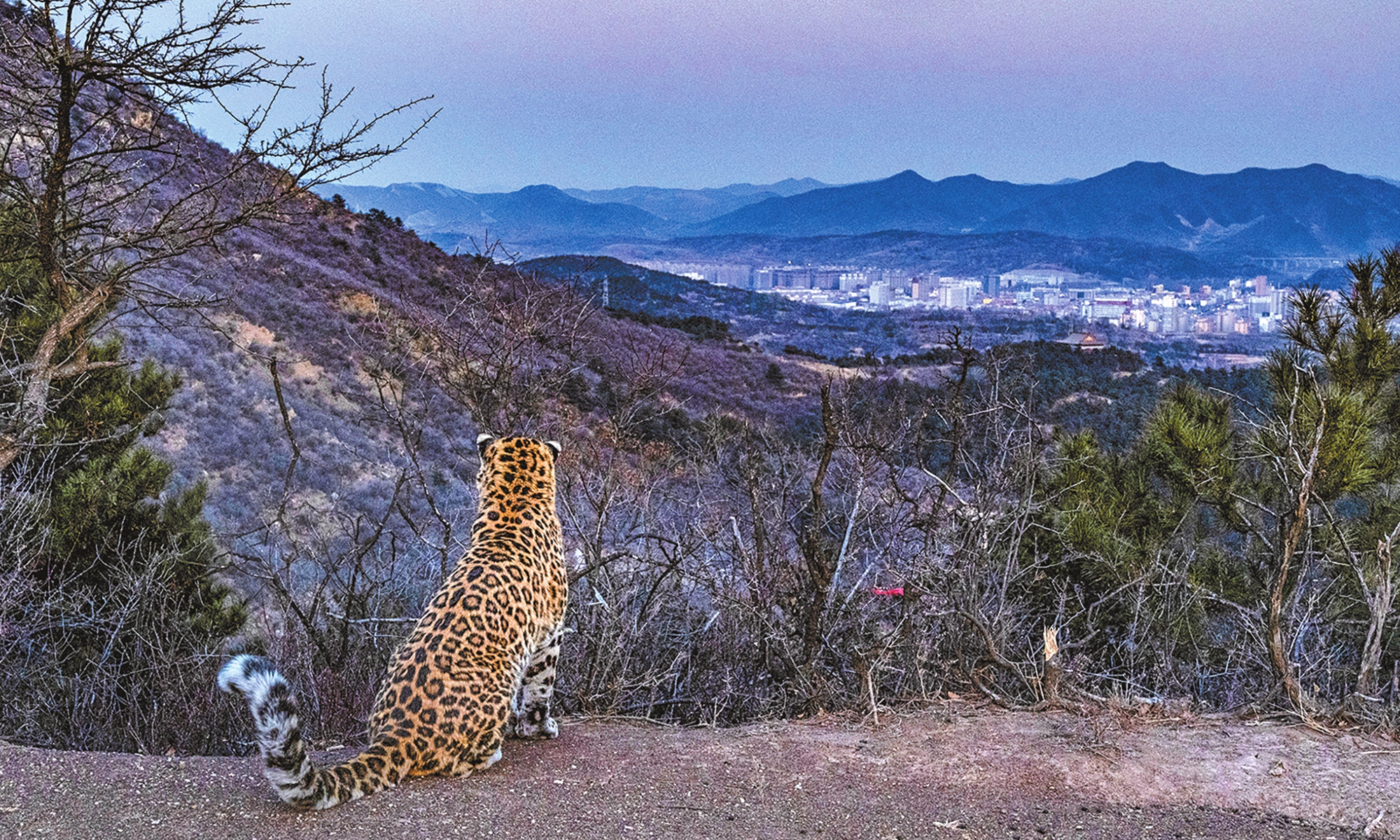
A North China leopard identified as HS2503M looks out over Heshun County in North China's Shanxi Province. Photo: Courtesy of Wang Shuo and CFCA
The snow leopard arrived after midnight.At about 1:30 am on February 24, 2026, the young male walked into a warehouse at a market in Xining, capital of Northwest China's Qinghai Province. Surveillance footage recorded the time.
Workers found it during their morning inspection. Police sealed off the site. Rescuers sent up a drone and located the animal inside. Then, they waited for a chance to sedate it.
The snow leopard was finally tranquilized and transferred to the Qinghai Wildlife Rescue and Breeding Center, according to the Qinghai provincial government website.
It was not an isolated appearance.
Since 2020, wild snow leopards have been recorded in Huzhu, northeast of downtown Xining; Datong, to the north; and Huangyuan, to the west, Qi Xinzhang, deputy director of the Qinghai Wildlife Rescue and Breeding Center and a veteran wildlife rescuer, told the Global Times. All three lie in mountainous areas extending from the Qilian Mountains around Xining. Females with cubs were also photographed in Huzhu and Datong, Qi said.
The trend isn't limited to just snow leopards.
For decades, China's rapid urban expansion was accompanied by the retreat of wildlife as forests, wetlands and other habitats shrank or became fragmented. Now, for some species, the direction of movement appears to be changing. Giant pandas have entered family compounds and crossed roads inside scenic areas; Asian elephants move through farmland, tea gardens and villages in Yunnan; and roe deer have reappeared in Beijing's suburban forests. Wild animals, once associated largely with remote habitats, are increasingly being recorded near cities and in places used by people every day.
Cities are becoming more ecologically friendly, while wildlife is rapidly learning how to use urban environments, Wang Fang, a professor at the School of Life Sciences, Fudan University, was quoted by China News Service as saying.
"As parks, residential greenery and green belts are developed, urban ecological space expands. Animals then return to cities, where they find food, water and places to live, creating better habitats for a wider range of species," Wang said.
The records bring three questions into focus. What is changing? Why are wild animals being found closer to cities and settlements? And what can be done when they reach a road, farm, warehouse or residential compound?
New neighbors around cities
At first, an infrared camera in the wooded western part of Beijing's Fengtai district recorded one roe deer.
Three years later, in August 2026, cameras recorded two - a male and a female.
Roe deer are small forest-dwelling ungulates whose core range in China lies farther north, particularly in the Northeast, making sightings in Beijing unusual.
The Beijing Daily, citing the Fengtai district ecology and environment bureau, said the species had been recorded more frequently in recent years, with more stable movement records and a gradually expanding detected range.
"In recent years, more and more wild animals have been making their way into Beijing. There is indeed a noticeable trend," Professor Deng Wenhong, director of the Department of Ecology, College of Life Sciences, Beijing Normal University, and executive director of Beijing Raptor Rescue Center (BRRC), told the Global Times.
Based on the center's rescue records, Eurasian eagle-owls, little owls and Oriental scops-owls are more likely to be encountered in urban areas than in the past, Deng said. Red-billed blue magpies, grey-headed woodpeckers and great spotted woodpeckers have also been seen in the city.
This year, some plumbeous water redstarts were spotted near Guomao Bridge in Beijing's CBD, according to Deng. Normally associated with mountain streams, the species' spread into central Beijing was closely related to changes in water quality and the management of the city's wetland systems, he said.
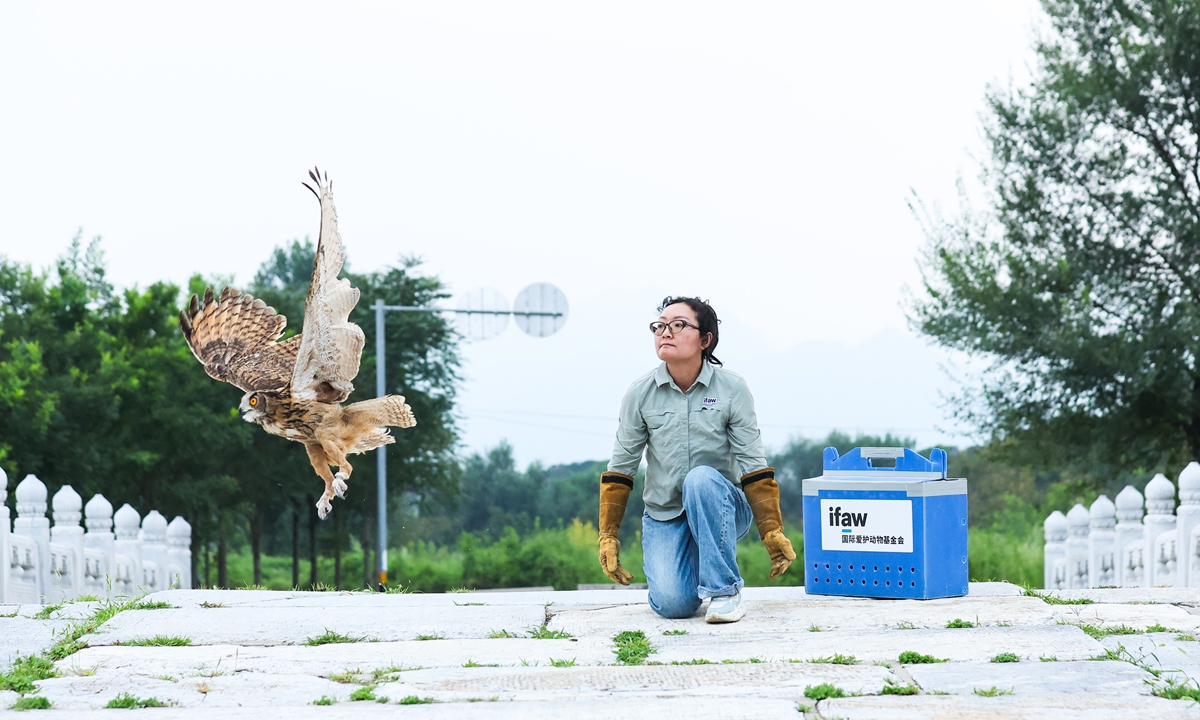
A staff member releases a rescued Eurasian eagle-owl back into the wild in Beijing on August 20, 2026. Photo: Courtesy of IFAW
Wild animals have also entered homes and workplaces elsewhere in China.In June 2025, a wild giant panda entered a compound and was eating honey in a village of Foping County, Northwest China's Shaanxi Province. One villager told her husband not to drive it away even if it knocked over the honey barrels, and reported the animal to the local protection station, according to an article published on the National Forestry and Grassland Administration website.
Protection staff identified the healthy older panda as Xiyue, meaning "joy."
Routes through a human landscape
Before a camera recorded a young North China leopard on a mountain west of Heshun County seat in North China's Shanxi Province, other cameras had traced a journey across at least five ridges, more than 10 villages and three roads.
The male, coded HS2503M, was born in 2024 and left his mother the following year. He traveled more than 60 kilometers in a straight line before settling near the county town. One camera that recorded leopard activity in the area stood 3.5 kilometers from the county government building, the Chinese Felid Conservation Alliance, known as CFCA, told the Global Times.
According to the National Forestry and Grassland Administration, there are more than 680 North China leopards in Shanxi Province. The number of identifiable individuals increased from 132 in 2019 to 222 in 2024, and the species has been recorded in nine of the province's 11 prefecture-level cities.
In Heshun, long-term camera records were also used to plan the repair of a damaged route.
A female leopard known as F2 had repeatedly used a main ridge near Shangbeishe village since cameras first recorded her there in 2015. She later raised cubs in the area, including three born in 2017. Land leveling, road widening and wind-power construction altered the terrain and vegetation, the cameras recorded fewer leopard appearances and roughly half as many identifiable individuals in the affected area. F2 was last recorded on the ridge in the summer of 2023 and was found farther west with a cub in 2024.
The Heshun county government coordinated a halt to the land project in November 2022. The boundary was adjusted in July 2023 and an area of about 5.9 hectares was retained for ecological restoration. Work began in April 2025, with near-vertical terrace walls reshaped into slopes of no more than 30 degrees, according to CFCA. Workers also planted 3,913 saplings on the first 27 mu, or 1.8 hectares. Fences were designed to keep cattle away from the young plants while leaving at least 40 centimeters of clearance near the ground for wild animals. Five Shangbeishe residents now patrol the site and maintain the trees and fences.
Cameras recorded Mongolian hares, red foxes, Asian badgers, leopard cats, roe deer and wild boars in the restoration area during 2025. On March 25, 2026, an unidentified North China leopard passed through it, according to records provided by CFCA.
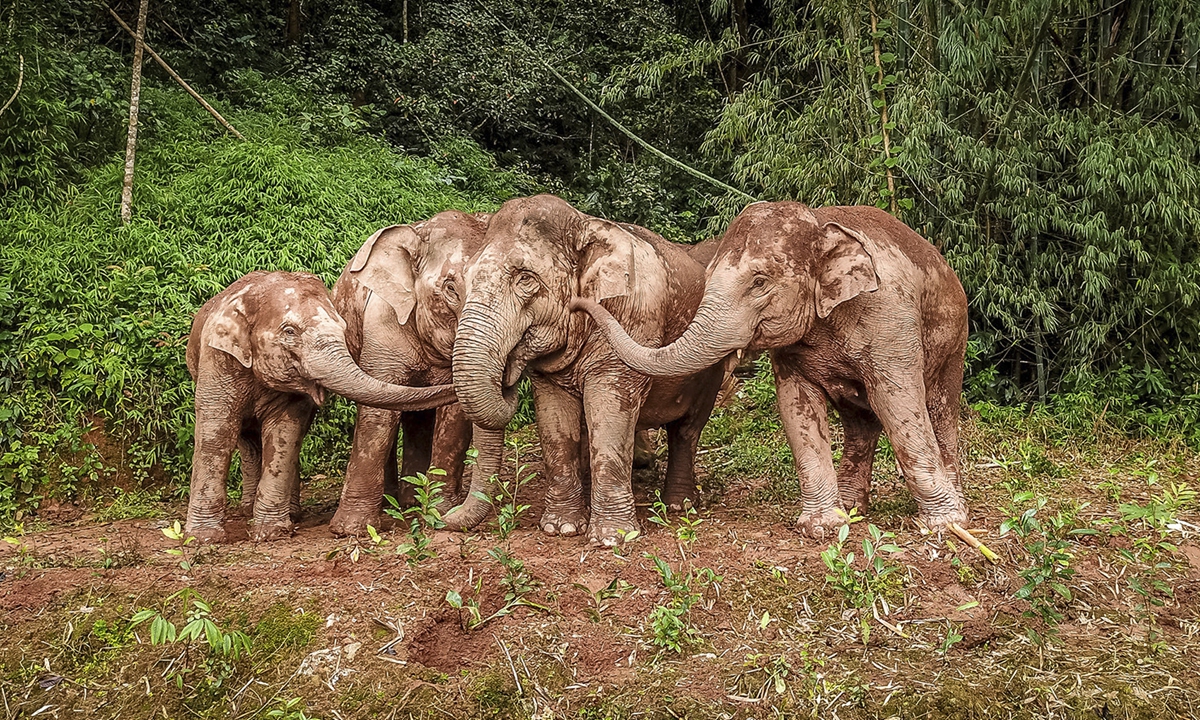
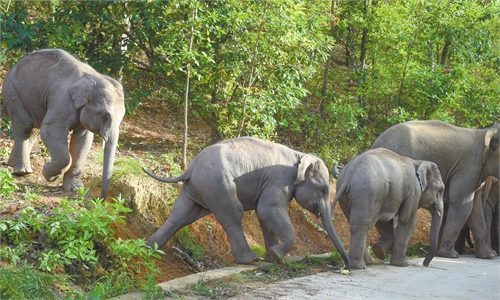
Asian elephants play in a forest near a village in Southwest China's Yunnan Province. Photo: VCG
In Beijing, Deng also put connectivity at the center of his explanation. He said trees planted during two large afforestation programs have matured into routes linking mountain, suburban and urban areas.An August 2026 report by Outlook Weekly said Beijing has added about 146,000 hectares of forest through the two programs. The number of forest blocks larger than 10,000 mu increased by 40, the report said.
Deng identified waterways as a second route. According to the 2025 Report on the State of the Ecology and Environment in Beijing, 95.2 percent of the city's monitored river length reached Class I to III water quality. The length of rivers in those categories increased by about 900 kilometers.
How to be a good neighbor
As wildlife and human spaces increasingly overlap, conflicts are becoming harder to avoid, prompting new efforts to prevent and manage them.
In Beijing, rescue workers described risks created by glass, poison, discarded materials and close human attention.
Zheng Zhishan, manager of the BRRC, told the Global Times that raptors may fail to recognize transparent glass or mistake reflections of trees and sky for real habitat, resulting in serious collisions. Some suffer secondary poisoning after eating rodents exposed to rat poison. Others become trapped inside buildings or entangled in discarded fishing line, kite string and rope netting, while some are caught on glue traps when attempting to prey on trapped rodents.
Young birds that fall while learning to fly may also be disturbed by traffic, residents, cats and dogs, preventing their parents from continuing to care for them, Zheng said.
Deng called for bird-collision prevention to be incorporated into planning and building design from the outset. Zheng advised residents who find an injured wild animal to contact a professional rescue organization rather than feed or treat it themselves.
In Heshun, Shanxi, a compensation program for cattle killed by North China leopards was launched in 2015 and later incorporated into the county budget, while wildlife-damage insurance was introduced in 2022, according to an article published on the National Forestry and Grassland Administration website.
Along the upgraded X337 county road, eight wildlife passages were built, and an infrared camera recorded a female leopard crossing the road on January 7, 2026, the Global Times learned.
China's Ecological and Environmental Code, which took effect on August 15, requires authorities to regularly survey, monitor and assess wildlife and their habitats.
Infrastructure projects, including roads, railways and waterways, must avoid important habitats and migration routes where possible; when avoidance is impossible, wildlife passages or other measures must be introduced to reduce their impact.
The code also requires stronger monitoring, early warning and protective measures in areas seriously affected by wildlife, as well as compensation for eligible losses.
Qi cited a case to explain how public awareness can shape people's response to wildlife. A driver opened the hood while washing his car and found an unfamiliar wild kitten inside. Suspecting that it might be a Chinese mountain cat, he took it to the rescue center.
"He knew it might be a Chinese mountain cat and had some idea of what the species looked like. He must have seen reports, photographs or videos about it," Qi told the Global Times. "He did not try to sell it, secretly keep it or treat it as a curiosity. He took it to a rescue center, which was the right way to handle it."
After five days of examination and care in Xining, rescuers determined that the snow leopard was fit to return to the wild. The male was nearly four years old, weighed 35.5 kilograms and was slightly thin but otherwise in healthy condition, the Qinghai provincial government website reported.
The center named him Ling Yu and released him in the Qilian Mountains on the morning of March 2 after assessing the habitat, food and water at the selected site.
Video released by the center showed the snow leopard walking into the mountains.
He stopped and turned once to glance back at his rescuers before continuing.
RELATED ARTICLES