Chinese scientists make key material breakthrough for efficient uranium extraction from seawater
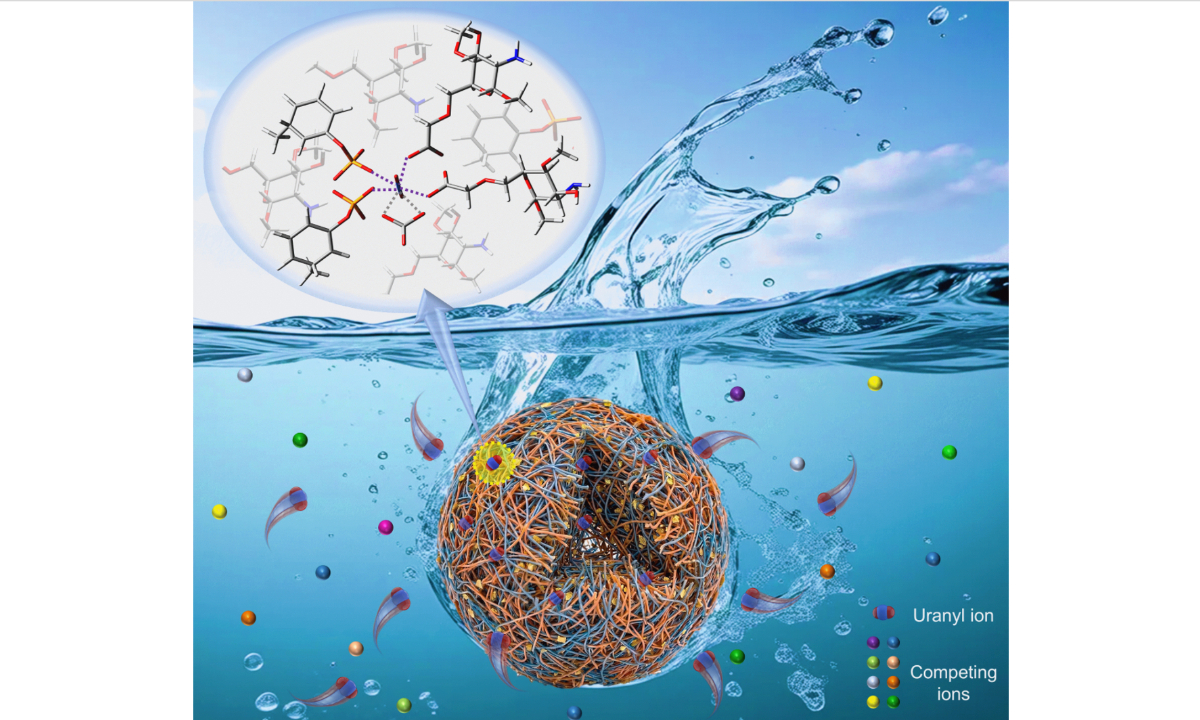
Photo: Screenshot from the website of Qingdao Institute of Bioenergy and Bioprocess Technology, Chinese Academy of Sciences,
Chinese researchers recently made a series of advances in materials for extracting uranium from seawater, developing a composite aerogel microsphere called AC-POC that combines high selectivity, high capacity and strong resistance to biofouling, enabling economically and efficiently capture of uranium from seawater.
The ocean contains a vast but highly diluted uranium resource, making economical extraction a global challenge. Because seawater contains uranyl ions at extremely low concentrations alongside competing metal ions and microorganisms, highly selective, high-capacity and biofouling-resistant adsorbents are crucial to making seawater uranium extraction practical, the Science and Technology Daily reported on Wednesday.
The research team from the Qingdao Institute of Bioenergy and Bioprocess Technology, Chinese Academy of Sciences, developed a material called PhosCage, which reached adsorption equilibrium in just five minutes under laboratory conditions. In tests using real seawater samples collected from multiple marine areas, PhosCage achieved a maximum uranium extraction capacity of 50.4 milligram per gram, 8.4 times the relevant benchmark set by the US Department of Energy.
To make the material suitable for marine engineering applications, researchers combined PhosCage with aramid nanofibers to mass-produce AC-POC, a double-network composite aerogel microsphere with interconnected pores that enhance uranyl-ion capture efficiency.
The study showed that AC-POC exhibited high selectivity in a system containing multiple competing ions. It achieved a dynamic uranium extraction capacity of 22.55 milligram per gram after 15 days in natural seawater – 3.8 times the US Department of Energy’s benchmark. Meanwhile, the microspheres’ negatively charged surface also helps prevent microbial attachment and biofilm formation, enhancing its stability in marine environments.
The study fills a gap in the use of porous organic cage materials for seawater uranium extraction and provides a theoretical and engineering foundation for developing sustainable adsorbents with high antifouling performance, high selectivity and high capacity, according to the report.
Global Times
RELATED ARTICLES