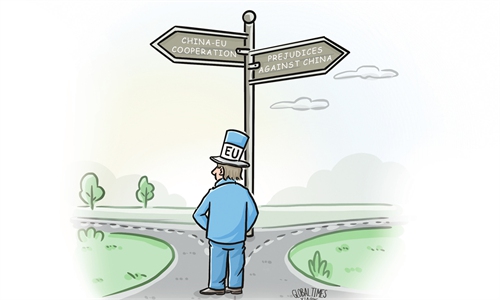
China, Europe
Some European industry voices have a new sticker for China. First it was "overcapacity," then "China Shock 2.0." Now the newest charge is that Beijing is "colonizing" supply chains. Sounds like the old slogans had gone stale, so they reached for a sharper, more dramatic label.
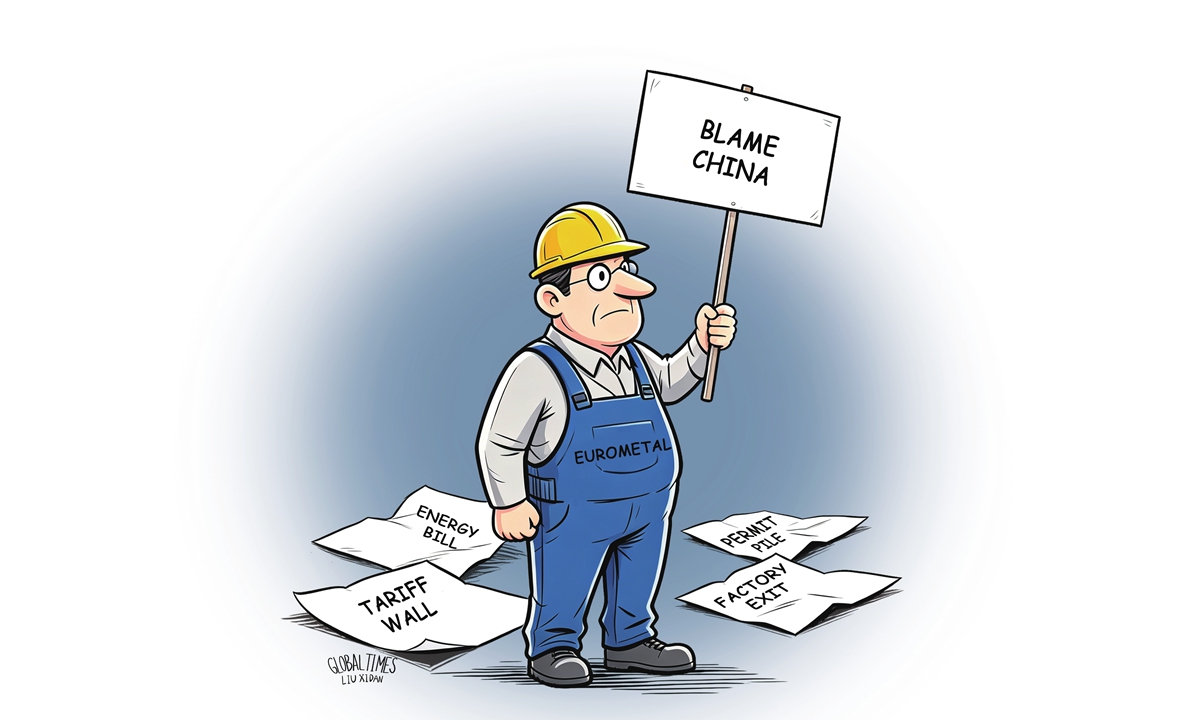
Eurometal, the European federation that represents steel, tube, and metal distribution, service centers, and trading companies, asserted that job losses in EU manufacturing will rapidly increase unless Brussels stops the "colonization" of industry by Chinese component manufacturers, Guardian reported on Sunday. Led by Eurometal, European steel industry representatives staged a protest in Brussels on Monday, with slogans including "Save the manufacturing in EU."
Both the new "colonization" theory and the protest are a polite escape: Europe lost the market contest, will not admit the gap, and would rather dress its fear of change as a dignified protest.
Eurometal is not the steel mill and not the car plant. It represents the middle: distributors, processors, service centers, and traders. Their profit is simply the difference between the buying price and the selling price. When power gets expensive, carbon taxes stack up, and permit approval often stalls, the middle feels it first.
Calling for cheaper power and faster permits takes years. Calling it a "Chinese colonization" takes one press cycle. Headlines arrive. Politicians nod. Then come the demands for tariffs and walls. That is not a plan to make European industry great again.
The European industry's good years ran on cheap, steady energy, one big EU market, huge orders from China and the US, and money that still went into factories. But today, power costs jumped amid EU sanctions against Russia and other factors. Carbon charges stacked up. Permits are slow. Fixing electricity, grids and paperwork is hard. Almost nobody lines up for that. Blaming China is easy. A crowd lines up for that.
So the labels keep getting darker. It is no longer just about goods leaving China, but about China's takeover of the supply chain.
The truth, however, is that European factories buy Chinese parts on contracts they signed voluntarily. Chinese components also arrive faster, cost less, land on schedule, and the quality holds up. That is competitiveness, not colonization.
If that counts as colonization, what does Europe call a century of its own machines and cars going the other way? Supply chains have always moved. Yesterday Europe shipped the finished goods. Today more countries turn metal into parts, and parts into machines. That is economic globalization, not colonization.
Money goes where it can work. Airbus still builds and hands over jets in China. BASF put a giant site in the country. BMW and Volkswagen are still putting EV work, smart-car partnerships and more research in China. A tariff and a parade can feed a news cycle. They cannot decide who companies will partner with to invent the next product.
These companies see it more clearly than the politicians. One doesn't win a factory contest with tariffs and a smear. The practical move is to better build up its strengths in connection with the global supply chain, pick up the speed, and keep what Europe still does well: Quality people can trust and brands that still carries weight.
"Colonization" is a heavy word. It belongs in Europe's own history books, not China-Europe trade. China doesn't run on that script. European industry won't boom because someone calls China a "colonizer." It booms when electricity is affordable, permits are approved faster, and customers still choose to buy.
RELATED ARTICLES