Photo: Screenshot from the WeChat account of China News Service
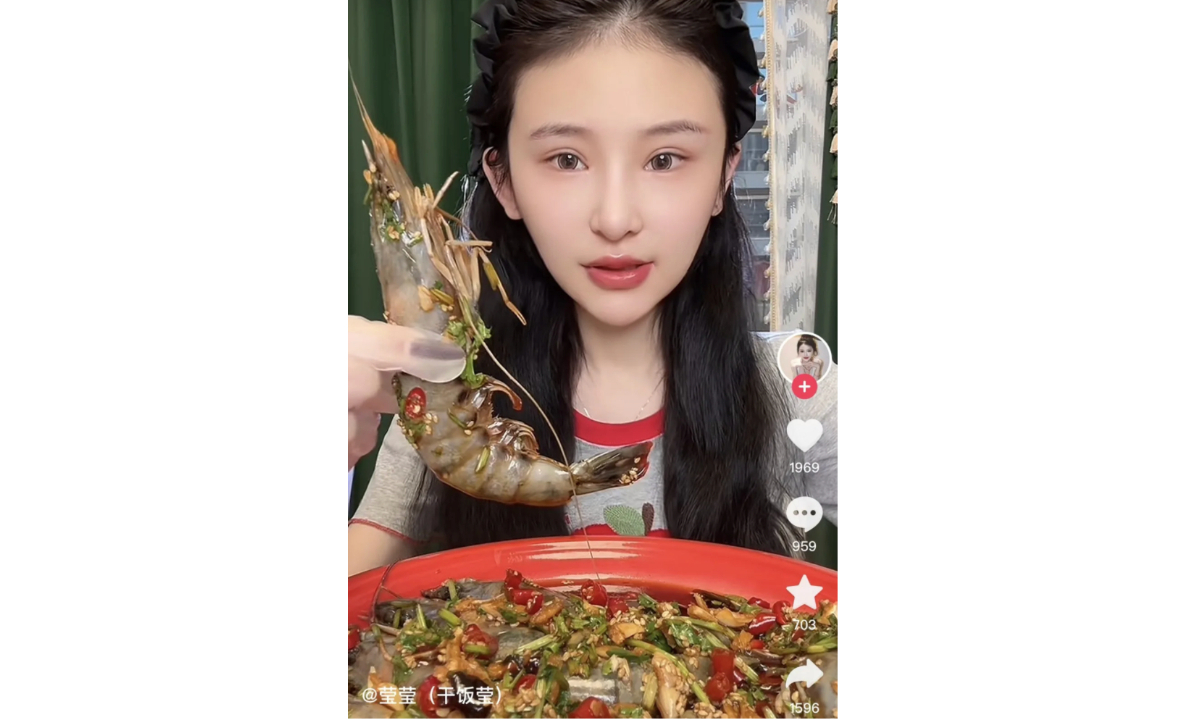
The recent death of a 24-year-old mukbang (eating livestreaming) influencer – from cardiac arrest reportedly linked to low potassium levels – has prompted doctors to warn of the health risks of self-induced vomiting and the laxative use among mukbangers, China News Service reported on Tuesday.
The parents of the influencer, who announced her death on social media last Friday, said their daughter, known online as “Yingying” and surnamed Chen, died on August 17. She had more than 1 million followers.
In her final video posted on August 14, Yingying said repeated overeating had caused her potassium levels to drop and landed her in the hospital. Her blood potassium level had fallen as low as 2.3, she said, acknowledging that the condition was caused by her eating-streaming activities. She reminded viewers that “although making money is important, health should always come first.”
This was not the first time she had been hospitalized for the same reason. In the video, she attributed her low potassium levels largely to her work as a mukbanger and her long-term habit of inducing vomiting. Yingying said eating-streaming sales can be physically demanding, noting that she once had to eat 60 to 70 preserved eggs during a livestream. Other products required her to keep eating as well. She said mukbangers often face pressure to eat more to boost sales, even when their health may not withstand the strain.

Photo: Screenshot from the WeChat account of China News Service
Chai Qichen, a doctor from the Department of General Practice at Zhejiang Hospital, explained that binge eating itself does not directly cause severe potassium loss. The key issue lies in two practices commonly seen in the mukbang industry: inducing vomiting and using laxatives. To maintain their figures while continuing to eat large amounts, some mukbangers eat in front of the camera and then force themselves to vomit off camera, or take laxatives to quickly eliminate the food they have consumed.
Potassium concentrations are much higher in gastric and intestinal fluids than in blood. Repeated vomiting or diarrhea can therefore lead to significant potassium loss and progressively lower blood potassium levels, according to Chai.
However, Yingying is not alone. Some mukbangers have pushed themselves into a vicious cycle of excessive eating and self-harm to maintain their “big eater” personas and attract viewers, The Paper reported.
Some reportedly consumed 20 to 25 kilograms of food in two hours, including more than 20 types of ingredients such as crayfish and salmon, while one influencer ate 120 potstickers and 16 packs of instant noodles in a single livestream and later reached about 190 kilograms in weight, suffering obesity-related health problems. Others have faked their eating and drinking while making exaggerated claims, misleading audiences about their consumption, per The Paper.
Extreme eating ability is directly tied to online traffic and, in turn, to advertising and livestream sales revenue, driving some influencers to ignore serious health warnings for profit. Several cases have ended in death.
Eating-streaming influencer “Paopaolong,” 29, died of heart failure after his weight reached 160 kilograms. “Wenweige,” who had end-stage kidney disease and required regular dialysis, continued high-intensity eating livestreams before his death. Alcohol streamer “Sanqiange” died after reportedly drinking four bottles of baijiu, a fiery Chinese grain liquor, during a livestream PK session, The Paper reported.
China has long imposed legal and regulatory limits to curb unhealthy and excessive eating-streaming content, which remains a key target of the nation’s “Qinglang Operation.” The Anti-Food Waste Law, which was passed in 2021, explicitly prohibits the production, publication and dissemination of audio and video content that promotes excessive food consumption and binge eating. In addition, the code of conduct for online streamers, issued in 2022, explicitly prohibits livestreamers from engaging in practices such as staging fake eating, inducing vomiting and binge eating, The Paper reported.
Global Times
RELATED ARTICLES


