Chinese economy not stalling, but in a period of growth engines reconfiguration: Kazakh scholar

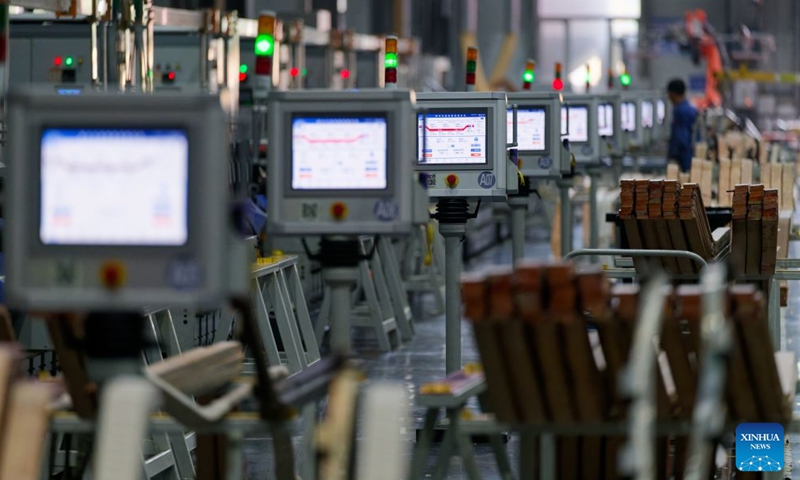
This photo taken on July 28, 2026 shows an intelligent manufacturing equipment working at a workshop of Harbin Electric Machinery Co., Ltd. in Harbin, northeast China's Heilongjiang Province.(Xinhua/Zhang Tao)
The current phase of China's economic transition represents a reconfiguration of its growth engines rather than what some Western media recently hype as an economic "stall." Data released by the National Bureau of Statistics (NBS) showed that China's GDP still expanded by 4.3 percent in the second quarter, while industrial output grew by 4.5 percent in July, indicating that economic activity continues to expand amid far-reaching structural transformation.
The strongest evidence is the changing composition of growth. In the first half of 2026, the value-added output of high-technology manufacturing rose by 13.3 percent and equipment manufacturing by 9.3 percent, compared with 5.4-percent expansion for industry overall - a gap that has widened further in recent months as new drivers accelerate. Investments in information services as well as in computer software and database have maintained double-digit growth, while service retail sales continue to outpace traditional goods retail.
These trends show that new growth drivers are becoming economically significant and are partly offsetting the adjustment in property and construction. These sectors have become economically significant. Their continued expansion could support broader employment, income growth and consumption, contributing to more balanced and self-sustaining development.
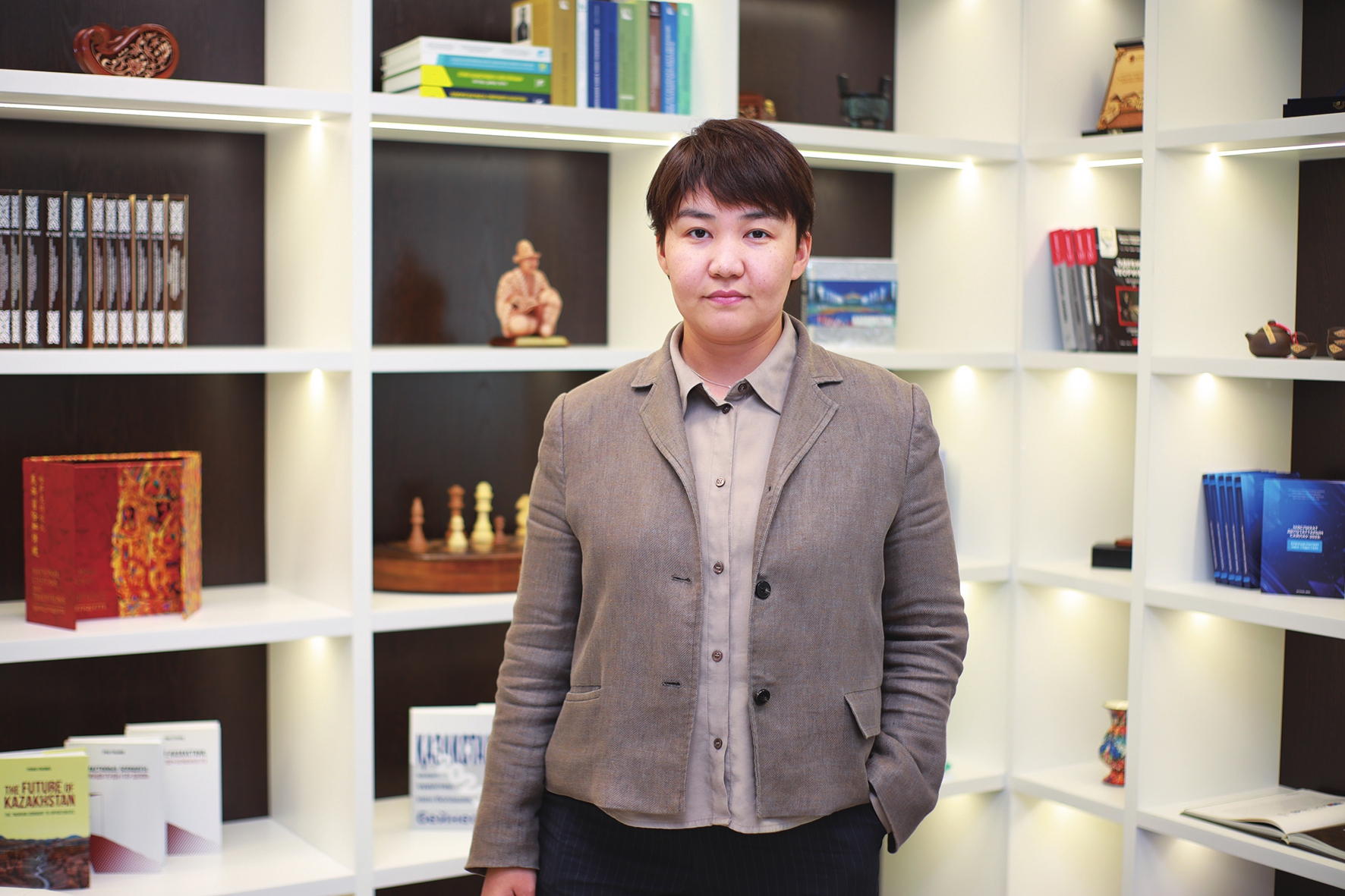
Zhadyra Assetkyzy Photo: Courtesy of Zhadyra Assetkyzy
It is obvious that China is rebalancing the way it generates economic growth. The emerging model places greater emphasis on technological innovation, advanced manufacturing, digital and green industries, modern services and productivity growth, alongside the transformation of traditional sectors, stronger domestic demand and a unified national market.
This forms part of broader nationwide and even global processes of economic transformation. A parallel can also be drawn with Kazakhstan, which is undergoing what some describe as "dual modernization." This means pursuing two stages of modernization simultaneously: diversifying beyond raw materials and strengthening institutions while also developing artificial intelligence, digital technologies and a knowledge-based economy. A central objective is to channel revenues from oil, gas, uranium and critical minerals into long-term technological and human capital.
Some Western media outlets' pessimism about the Chinese economy has centered on weak domestic demand and existing structural imbalances, while some also suggesting that the economy's reliance on exports is unsustainable. This does not capture the whole picture of China's economic transition and high-quality development.
China's economic transition is being supported by industrial upgrading that is increasingly linked to employment, household incomes and domestic demand. Although household consumption remains cautious and the property adjustment continues to weigh on investment and confidence, China's economic performance should be viewed in the context of expanding domestic industries and technological upgrading rather than attributed primarily to exports.
With regards to addressing weak domestic demand, China has also been taking proactive, people-centered steps to strengthen household purchasing power and employment, which should help consumption rebound on a more solid footing.
China has set a goal of raising total retail sales of consumer goods to around 60 trillion yuan (roughly $8.8 trillion) by 2030 and further strengthening consumption's role in driving economic growth, according to a government plan on expanding consumption during the 15th Five-Year Plan period (2026-2030). Trade-in subsidies and wider access to childcare, healthcare, tourism and cultural services are intended to convert income growth into stronger consumption and improved living standards overall.
China's economic transition should be understood within the broader transformation of the world economy. Climate constraints, demographic aging, artificial intelligence, and geopolitical uncertainty are prompting countries to rebuild industrial capacity, diversify supply chains, and boost domestic demand. China's long-term prospects therefore hinge on whether industrial upgrading can raise productivity, improve household welfare, and foster indigenous technologies and value chains. These shifts will also reshape and strengthen China's role as a partner in regional economic cooperation.
One important dimension of this broader transformation that carries global significance is the global green transition, which is no longer just about building more renewable energy. It is increasingly becoming one of the major industrial transformations of the 21st century. Consequently, green industry is emerging as one of the most promising areas of collaboration within the SCO and Central Asia-China cooperation frameworks. The platform on China-SCO green industry cooperation, launched in Tianjin in September 2025, is already moving toward practical implementation.
For China, the platform creates opportunities for Chinese enterprises to enter new markets, establish industrial partnerships and share technologies and technical expertise. For other SCO members, on the other hand, its value can extend beyond access to Chinese equipment, with localization and interoperability representing logical priorities for its next stage of development. In practice, this would involve expanding local production and supplier participation while aligning standards and certification procedures, thereby facilitating the cross-border movement of technologies, finance and industrial products, as well as the implementation of joint projects across SCO markets.
The author is a senior expert at the Department of Asian Studies for the Kazakhstan Institute for Strategic Studies (KazISS) under the President of the Republic of Kazakhstan. bizopinion@globaltimes.com.cn
RELATED ARTICLES