Foreign businesses eye deeper China ties as record scale CIFIT highlights opening up amid rising global protectionism
Foreign governments, firms eye deeper China ties at CIFIT
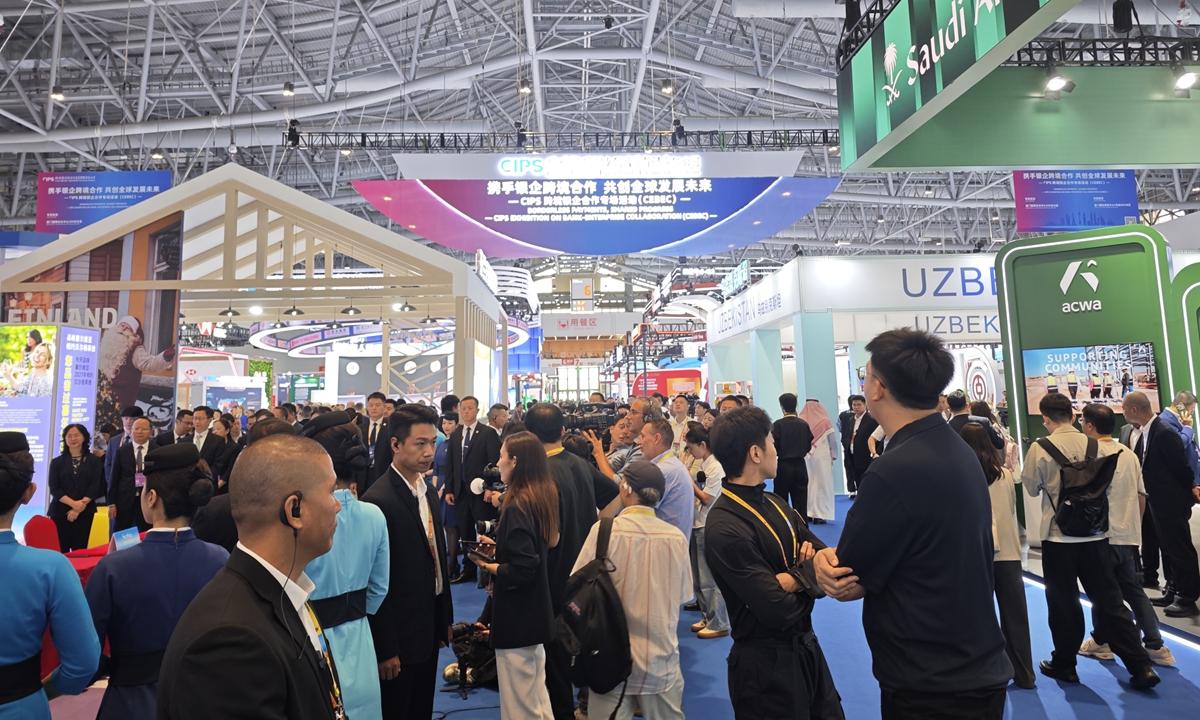
A glimpse of the exhibition at the 26th China International Fair for Investment & Trade in Xiamen, East China's Fujian Province, on September 8, 2026 Photo: Yin Yeping/GT
The China International Fair for Investment and Trade (CIFIT), now in its 26th edition, officially opened on Tuesday in Xiamen, a coastal city in East China's Fujian Province, with its exhibition space reaching a record high.
Foreign government officials and business representatives attending the CIFIT told the Global Times that they see the event as a valuable window to better understand China's economic development and market opportunities. Many expressed strong expectations of expanding their presence in China while exploring broader global cooperation with the country.
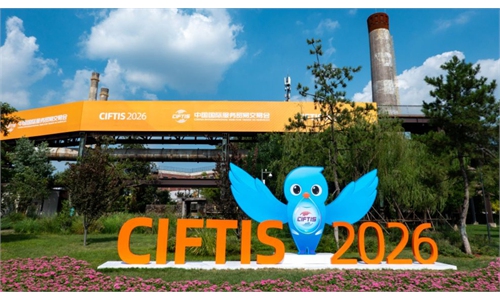
The opening of the 26th CIFIT came just one day before the China International Fair for Trade in Services (CIFTIS) is set to open in Beijing on Wednesday. The back-to-back launch of the two major international economic events reflects China's sustained efforts to expand high-level opening-up and create more opportunities for businesses worldwide to tap into the Chinese market despite a complex global situation, a Chinese expert said.
At the entrance to the Xiamen International Expo Center, the new venue of the event, an 18-meter-tall golden key has become a striking CIFIT landmark, symbolizing the opening of doors to investment and cooperation.
Inside, that symbolism quickly turns into action. Government representatives, businesspeople and investors from around the world move between meetings, exchange business cards and discuss projects, whether negotiating cooperation or looking for the next opportunity, a Global Times reporter observed.
This year's CIFIT features several highlights. The event's exhibition space reaches a record 200,000 square meters, up more than 60 percent from last year.
For the first time, the CIFIT has introduced a dual Guest Country and dual Guest Province mechanism, with more than 1,200 government institutions and business delegations from 129 countries and regions, as well as 30 international organizations, registered to attend.
Commenting on the importance of being part of this event, Amedeo Teti, head of the Department for Market and Consumer Protection at Italy's Ministry of Enterprises and Made in Italy, told the Global Times that the "CIFIT is very important and well-known around the world. Meanwhile, China is very important for our investments, and we believe that being here and maintaining this good relationship with China creates a win-win situation."
Teti, who is attending the CIFIT for the first time, said that his delegation had already held several meetings with Chinese companies, with more scheduled during the event. Talking about the future of China-Italy cooperation, he said that the two countries already enjoy very good cooperation, with further potential in sectors such as the automotive industry, electric vehicles, batteries and energy.
"We have learned a lot from China, particularly from its vision of technological development. What is good is that China does not tell other countries that they have to follow the Chinese model. China is open to discussion and dialogue and seeks cooperation," the Italian official said, noting that this is a vision of being not a competitor, but a partner.
Natig Khalilov, Chief Adviser of the Office of the Trade Representative in the Embassy of Azerbaijan to China, is an old friend of the CIFIT, which he has participated in several times already. Compared with previous years, Khalilov said that he can clearly see that this year's CIFIT is larger in scale and has attracted more participants.
This year, several Azerbaijani government departments and institutions are attending the event to introduce the country's business environment and investment and trade opportunities, according to Khalilov.
China and Azerbaijan have great potential for cooperation across many sectors, particularly in new energy. Several Chinese state-owned enterprises have entered the Azerbaijani market as both contractors and investors in solar and wind power projects. Khalilov said that the two sides could further expand cooperation in areas such as energy storage, while the "CIFIT provides a valuable platform for meeting new partners."
Martin Fencák, General Manager of Peikko Construction Material (China) Co Ltd, attended the event as part of the Finnish delegation, describing the CIFIT as a valuable platform that "enhances our visibility and gives us opportunities to meet with local governments and other partners and explore further cooperation."
The Finnish company already has several projects in the region, and plans to expand its footprint in China. "This is the biggest construction market in the world, so we are definitely in the right place, and this is a market where we want to maintain a long-term presence. There are also areas here that maintain rapid growth," Fencák said, giving examples of industrial plant construction and the renewable energy sector.
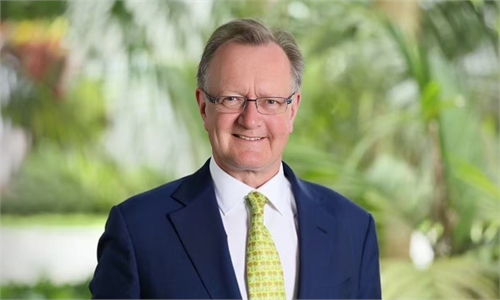
ABB Group CEO Morten Wierod attended the CIFIT on Tuesday, during which he said that the company will further expand manufacturing capacity, strengthen local research and development, and upgrade service capabilities. China is one of ABB's largest markets globally, with significant growth potential across many areas and great strategic importance, Wierod said, indicating that such cooperation will continue to deepen.
The growing interest among foreign governments and businesses in seeking partnerships in and with China has not come out of the blue.
In the first seven months of this year, China saw 38,000 newly established foreign-invested enterprises, while foreign investment in high-tech industries rose 32.7 percent year-on-year. Foreign companies are increasingly drawn to China's complete industrial chains, innovation ecosystem and talent pool, with many multinationals viewing China not merely as a manufacturing base, but as an important market for sharpening their global competitiveness, the People's Daily reported.
China's hosting of events such as the CIFIT, despite the challenges in organizing such a major event, demonstrates the country's initiative and efforts to promote opening-up and cooperation and share development opportunities with the world, Nana Emmanuel Mbafong, head of the Cooperation with Emerging Countries Division at Cameroon's Ministry of Economy, told the Global Times on Tuesday.
Mbafong said that Cameroon hopes to participate in more such events.
Amid rising trade protectionism and growing trade and investment barriers, China's hosting of major international events such as the CIFIT and the CIFTIS sends a clear message: "the stronger the protectionist headwinds, the greater the need for openness and cooperation. Such efforts help bring greater stability and predictability to the global economy," Zhou Mi, a researcher at the Chinese Academy of International Trade and Economic Cooperation, told the Global Times on Tuesday.
For businesses, this openness has practical value, Zhou said, noting that as tariffs, investment restrictions and geopolitical tensions add uncertainties, companies increasingly value not only market size but also policy stability, complete supply chains and growth potential.
RELATED ARTICLES