Arctic shipping route moves toward regular operation, but commercialization needs broader cooperation: Sea Legend executive
Commercialization of the transit requires stronger co-op on rules, safety and environmental standards
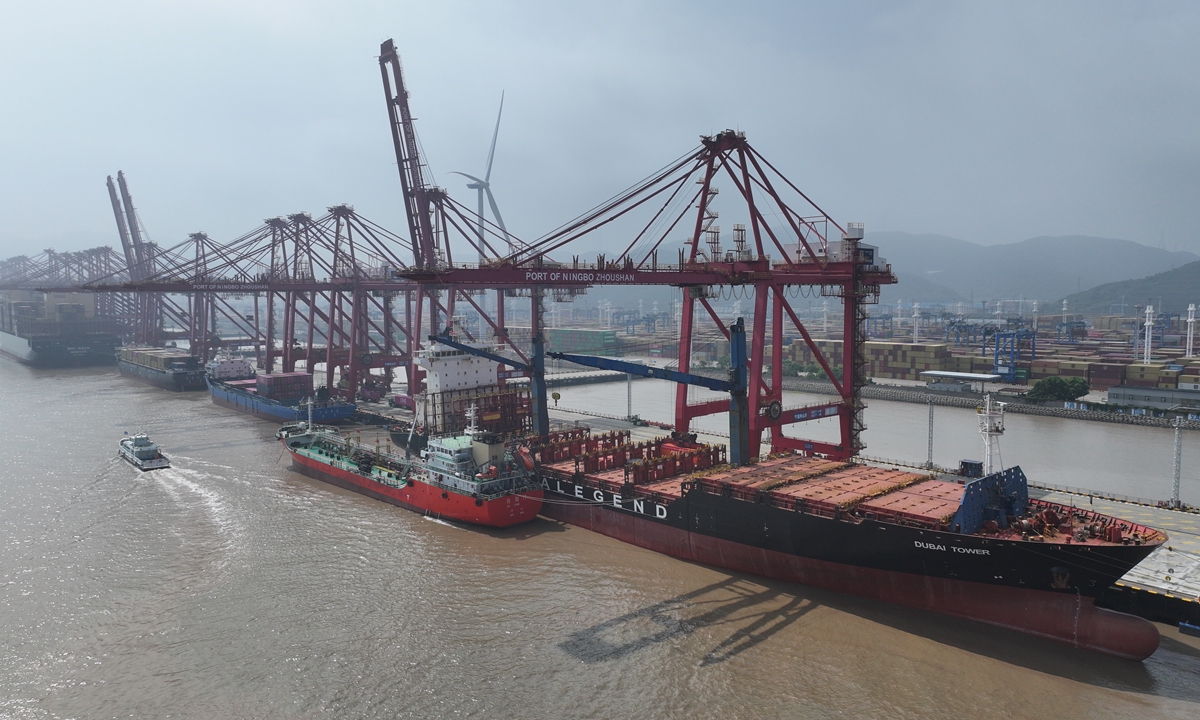
The "Dubai Tower" container vessel berths at Ningbo-Zhoushan Port in East China's Zhejiang Province on August 15, 2026. Photo: Courtesy of Sea Legend Shipping
The Arctic shipping route is moving toward normalized operations, with a Chinese shipping executive saying that his company aims to extend the navigation window to six to eight months in the next three to five years. But turning the route into a commercial corridor will require stronger international cooperation on rules, safety and environmental standards.Li Xiaobin, chief operating officer of Sea Legend Line Ltd, which operates the route, told the Global Times at the 8th Silk Road Maritime International Cooperation Forum in Xiamen, East China's Fujian Province, that the Arctic shipping route has "important strategic value" as an alternative corridor linking China and Europe. It could help reduce the impact of geopolitical tensions on global shipping.
China has shown strong interest in and a clear vision for the development and use of Arctic routes, Li said, describing them as not only an important backup passage between China and Europe, but also shipping routes of historic importance.
The company began trial operations on the route last year and has already achieved short-term regular service, Li said. For now, the company plans to keep operating for about three to four months each year during the Arctic navigation season. Over the next three to five years, it aims to extend that to six to eight months by using higher-specification vessels.
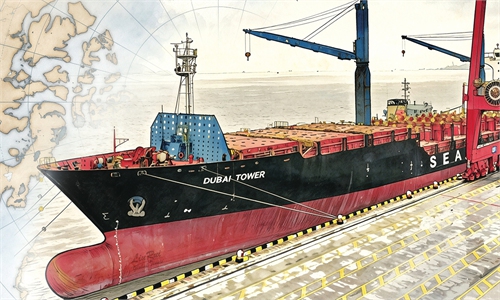
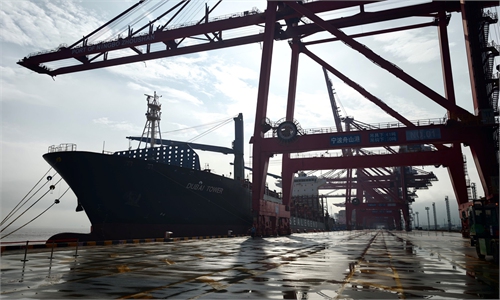
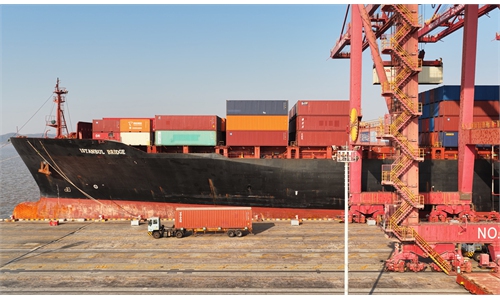
Sea Legend Shipping's container vessel Dubai Tower departed Ningbo-Zhoushan Port in East China's Zhejiang Province on August 15. The new service reportedly would consolidate cargo from multiple Chinese ports before calling at Ningbo-Zhoushan Port and sailing for Felixstowe in the UK, with connections to other European ports including Rotterdam, Netherlands, Wilhelmshaven in Germany, and Gdynia in Poland, Chinese maritime industry portal CNSS reported.
This is the first of eight planned voyages that Sea Legend will run through the Arctic this season. According to Li, the maritime service uses the Arctic's Northeast Passage to reach Europe directly. It could give China another trade option outside vulnerable maritime chokepoints while offering countries engaged in the businesses new transit and commercial opportunities.
Li also said that geopolitical risks have made the route more attractive because it is farther from traditional shipping lanes and could offer an alternative if key sea routes such as the Red Sea or the Strait of Hormuz are disrupted.
"We aim to turn the route into a 'major alternative channel,' and eventually enable year-round navigation within five to 10 years," Li said. "That makes it strategically important for building a more diversified, efficient and resilient international shipping system."
In recent years, more countries including China, Russia, and South Korea have signaled their willingness to boost the competitiveness of the Arctic shipping route.
As more countries double down on the route, Europe is hitting the brakes. The South China Morning Post reported on September 4 that despite being the main destination for goods transported along the route, Europe opposes the commercialization of Arctic transits, due to concerns including the impact on fragile polar ecosystems.
Jian Junbo, director of the Center for China-Europe Relations at Fudan University's Institute of International Studies, told the Global Times on Wednesday that Europe should not view the Arctic shipping route through a geopolitical lens.
He said that a shipping route is an international public good that should be accessible to all countries and that it contributes to economic and trade development as well as the stability of regional logistics supply chains.
On the commercialization of Arctic shipping, Li said that the Arctic region is governed by multiple frameworks, including the UN Convention on the Law of the Sea and the Arctic Council, but that legal definitions of navigable waters in the Arctic are not fully consistent and practical situations still need to be assessed on a case-by-case basis.
He stressed that commercialization will only be possible if countries and stakeholders reach consensus under frameworks such as the International Maritime Organization. Arctic shipping must be made safe, environmentally sound and commercially viable through coordinated governance, rather than fragmented national rules, he said.
Without such coordination, commercial operations could be constrained by different management systems and governance standards, leading to unclear direction and inconsistent rules, Li said.
However, analysts said that the route is still too difficult, dangerous and expensive to support a regular service, and the operation season is short — basically August and September, with maybe a few days in July and October.
The main bottlenecks are the need for higher-grade vessels, better equipment and experienced crew members, as well as weather, environmental and legal constraints, Li said.
A notable development at Tuesday's forum came when Sea Legend Line Ltd and Fujian Silk Road Maritime Operation Co signed a joint Arctic route meteorological routing service agreement. Under the deal, all seven vessels scheduled for Sea Legend's 2026 Arctic operations will use the meteorological navigation service, providing full coverage for the vessels and key decision support for safe and efficient navigation in icy polar waters, according to the organizers.
RELATED ARTICLES