From smart healthcare to intelligent tourism, CIFTIS shows tech as core engine driving services industry upgrades
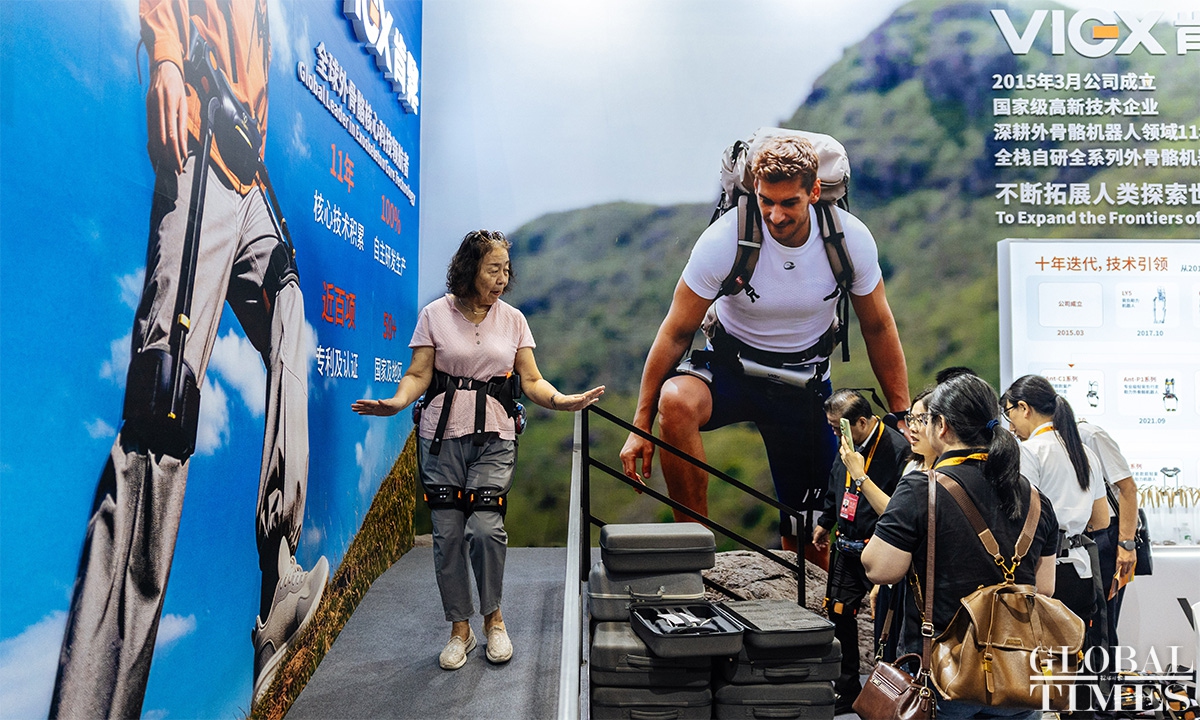
Photo: Li Hao/GT
Walking into the telecom and IT exhibition hall at the ongoing 2026 China International Fair for Trade in Services (CIFTIS), a visitor might do a double-take – there, on a dental chair, sits a human skull.
Why a dental chair in an IT pavilion? The answer lies in a smart dental service pod developed by Beijing Feitebasi Tech Co, a provider of new-energy intelligent commercial vehicle solutions, together with a robotics firm and a medical device maker.
Shaped like a touring car, the pod houses an imaging room of cone beam computerized tomography and a fully functional dental treatment area equipped with a robotic arm and vision system.
Chen Yizhou, senior product manager of Beijing Feitebasi, told the Global Times on Wednesday that the robot assists dentists by drilling and placing implants – essentially replicating most procedures of a brick-and-mortar clinic.
Putting a dental clinic on wheels expands access to oral care, Chen noted, enabling services to reach more communities, mountainous areas, and elderly or mobility-limited populations.
In the same hall, Shenzhen Kenqing Technology Co caught attention with a staircase and ramp set up at its booth – a fitting demo for its AI-powered exoskeleton robots.
The Global Times reporter tried on its motion assist robot and immediately felt leg strain ease significantly when climbing steps. Regional sales manager Chen Ziyan told the Global Times that sensors detect leg movements, and AI-driven motors provide assistance, reducing lower-limb effort by up to 30 percent.
“Our products have been deployed in various scenic spots across China, including the Five Sacred Mountains and Zhangjiajie in Central China’s Hunan Province,” said Chen, adding that the product has received exceptionally positive feedback at Mount Tai, deeply integrating into and reshaping the form of tourism services.
Robots are not the only stars on CIFTIS's tech stage. In the services consumption exhibition hall, two heavy-lift unmanned helicopters displayed by China Flightwin-Innovation Technology drew crowds of visitors.
One single-rotor model carries up to 450 kilograms, withstands Force 6 winds during takeoff and landing, and Force 7 in flight, equipped with fire-suppression bombs, supply pods, and medical rescue kits – ideal for fighting remote wildfires, delivering supplies after geological disasters, and evacuating injured patients from inaccessible areas like the Qinling Mountains, Gao Peng, sales director of the company, told the Global Times on Wednesday.
The larger tandem-rotor model boasts a 1-ton payload. Both are operated autonomously via ground control terminals and have been procured by some provincial agencies, Gao said.
The 2026 CIFTIS opened Wednesday in Beijing, with more than 100 new products and services expected to make their debut, covering fields such as information and communications, fintech, and digital and intelligent healthcare.
From medical care and tourism to rescue services, the message from this year’s CIFTIS is clear: technology is steadily emerging as the critical force transforming and upgrading services industries across the board.
RELATED ARTICLES