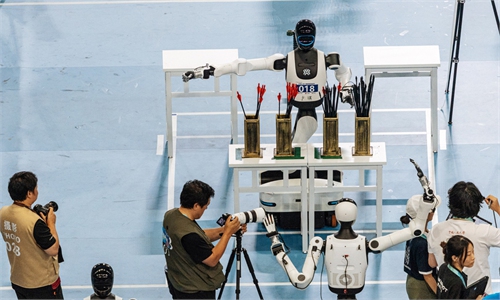
China recognizes 11 new occupations including embodied intelligence robot technician
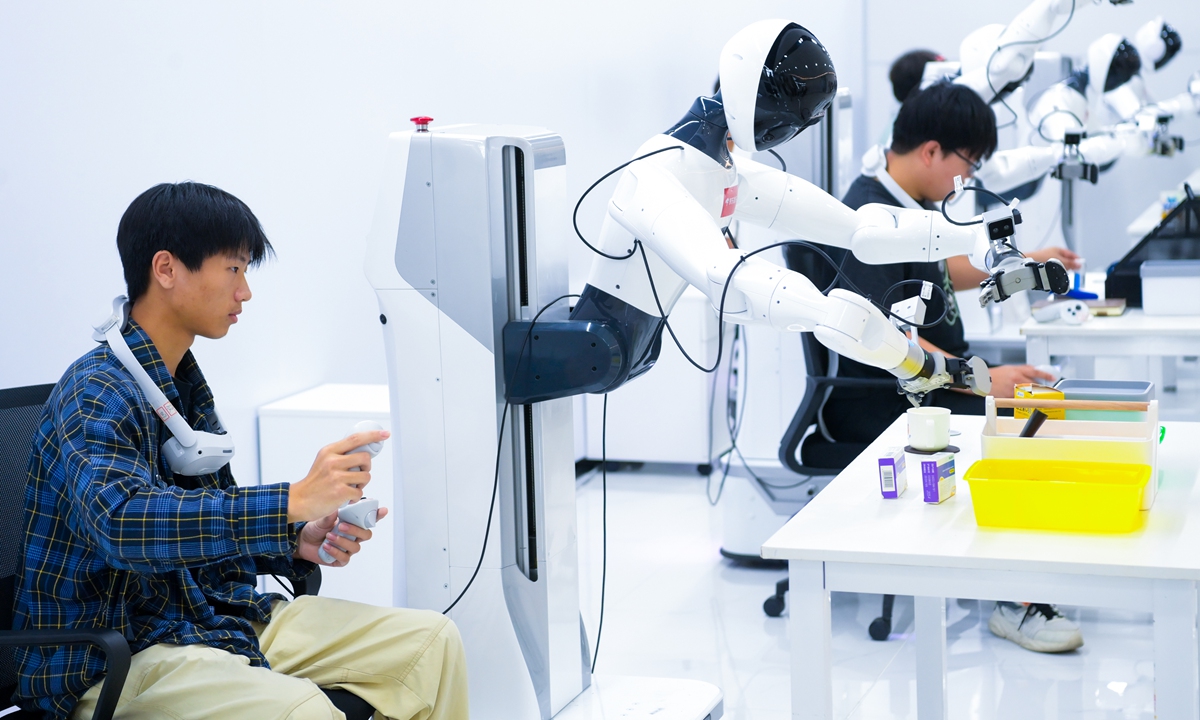
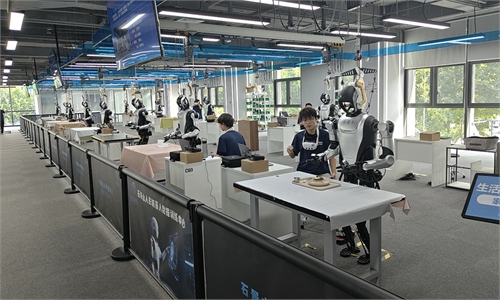
Staff members conduct data collection for various scenarios at a company's embodied?AI robot data collection and training center in Suqian, East China's Jiangsu Province on September 3, 2026. Through real-robot simulation, on-site operations, and human-robot collaboration, the center precisely captures multi-dimensional core data such as vision, motion, and environment data, laying a solid data foundation for the optimization and iteration of embodied-AI models. Photo: VCG
China on Wednesday recognized 11 new occupations including shore-based ship management engineering technician, embodied intelligence robot technician, and sports data analyst, and it also recognized 23 new job specialties including community workers and age-friendly renovation designers, according to a document released by the Ministry of Human Resources and Social Security and other government departments.
An analyst said that recognition of the newly released occupations meets the requirements of fostering new quality productive forces and creating more high-quality jobs, reflecting new technologies, new trends, and new types of consumer demand. The steady stream of emerging occupations not only offers new job opportunities but also drives the rapid growth of related industries, becoming a new engine for achieving high-quality full employment.
According to the document, among the newly recognized occupations, five are digital occupations, including digital twin engineering technician, embodied intelligence robot technician, and industrial product digital modeling engineer, accounting for 45.5 percent of the total number of new occupations announced this time.
In addition, the 15th Five-Year Plan (2026-30) period is a critical period for the comprehensive green transition of China's economic and social development, and also a decisive period for achieving the goal of peaking carbon dioxide emissions. Among the newly released occupations, three are green occupations -- microgrid administrators, hydrogen fuel cell manufacturing workers and water electrolysis hydrogen production workers, according to the document.
Since 2019, China has announced eight batches of 121 new occupations.
Whether in the fast-growing new economy and new business formats, or in traditional industries undergoing transformation and upgrading, a large number of new occupations and job specialties have emerged in recent years, reflecting new opportunities brought about by the development of new quality productive forces and new space for employment amid the demand for high-quality living standards, Li Changan, a professor at the Academy of China Open Economy Studies at the University of International Business and Economics, told the Global Times on Wednesday.
New occupations mean new opportunities. Behind them often lie considerable demand for talent and a sizable workforce gap. The emergence of one batch of new occupations after another has expanded the pool of jobs and created new space for employment, Li said, adding that new occupations also drive the rapid growth of related industries, becoming a new engine for achieving high-quality full employment.
During the 15th Five-Year Plan (2026-30) period, China aims to explore new employment space in the digital, green and silver economies. The ministry said that it will formulate national standards for the new occupations to guide vocational education, skills training and talent assessment.
RELATED ARTICLES