Fossil shows dinosaur had chronic bone infection, scientists find
By Published: Sep 13, 2026 12:02 PM

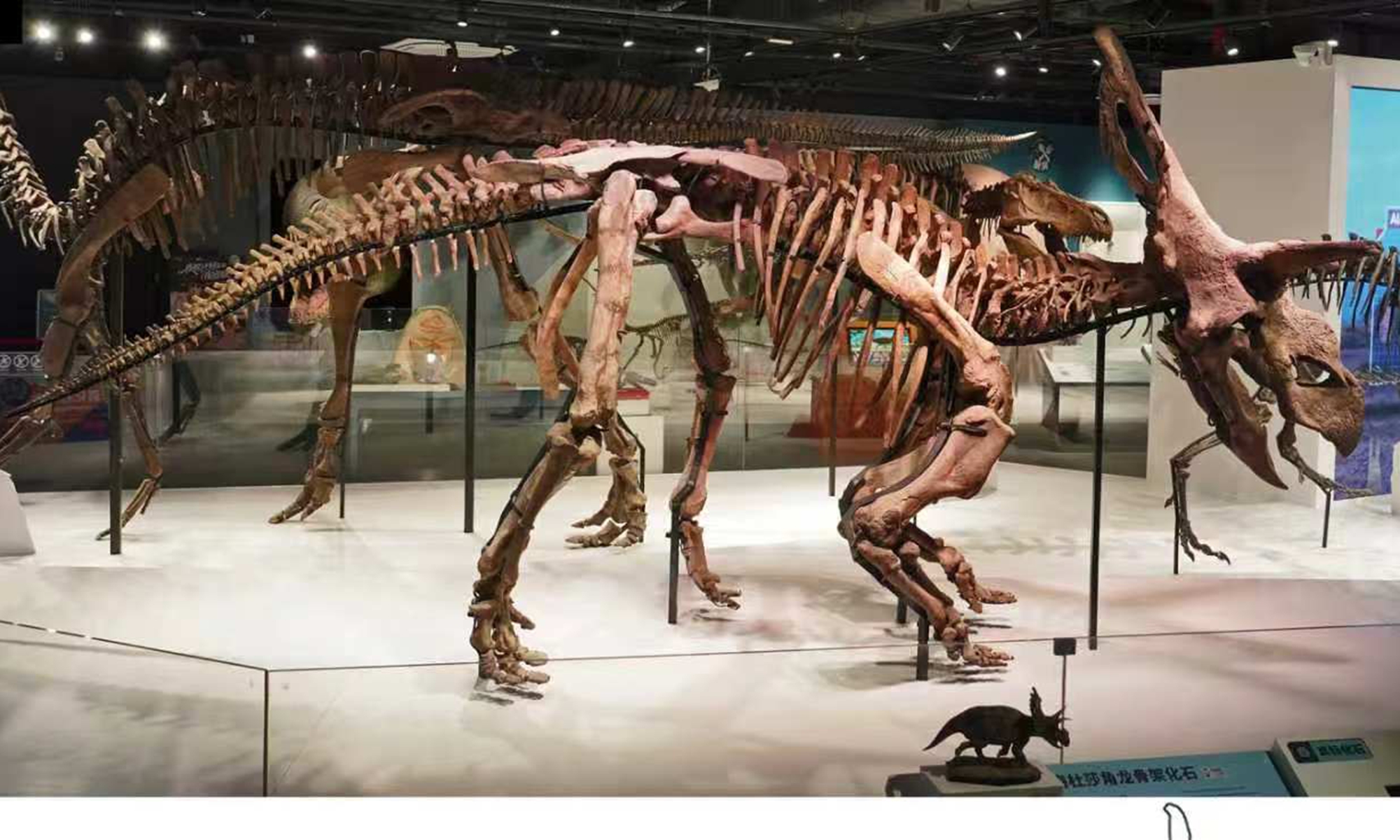
Picture of Medusaceratops.
Dinosaurs got sick, too. Scientists have found evidence that a horned dinosaur that lived during the Late Cretaceous period (lasting from 100.5 million to 66 million years ago) suffered from chronic osteomyelitis, a severe bone infection, and survived with the condition for an extended period.
A joint research team led by Xing Lida from the China University of Geosciences (Beijing), working with the Zhengjia Museum of Natural Science in Guangzhou, Indiana University in the US and other institutions, identified the disease in the fossilized remains of a Medusaceratops. The findings were recently published in the international paleontology journal Fossil Record.
Medusaceratops was a herbivorous ceratopsian dinosaur that lived in North America during the Late Cretaceous period. Measuring about six meters long and weighing roughly two tons, it was a relative of the better-known Triceratops. Its most distinctive feature was three pairs of curved horn-like structures along the edge of its neck frill, resembling the snake-covered hair of Medusa in Greek mythology, from which the dinosaur takes its name, Xing told the Global Times.
The specimen examined in the study was unearthed in the US state of Montana. With roughly 85 percent of its skeleton preserved, it is a nearly complete specimen and is now housed at the Grandview Museum of Natural Science in Guangzhou, South China's Guangdong Province.
Detailed examinations and CT scans revealed severe abnormalities in the dinosaur's seventh tail vertebra. The transverse processes on both sides of the vertebra had been almost completely destroyed, while its surface showed honeycomb-like bone tissue and abnormal cauliflower- and beak-shaped bone growths.
CT imaging further showed that old bone was being destroyed while new bone was forming inside the vertebra — a pattern characteristic of a long-term bone infection, according to researchers.
The strongest evidence came from the right side of the vertebral body, where researchers identified a sinus tract extending from the internal lesion to the exterior of the bone. Such a tract can form when pus produced by an infection builds up inside the bone and eventually breaks through the bone wall, creating a drainage channel.
Researchers said the finding provided strong evidence for a diagnosis of deep chronic osteomyelitis while helping rule out other possible causes, including tumors and bone cysts.
Scientists believe that the infection may have begun after trauma fractured part of the vertebra, allowing bacteria to enter the bone. Exactly how the dinosaur was injured remains unclear. Possible causes include fighting with another dinosaur, a predator attack or an accidental fall.
The affected seventh tail vertebra was located near the front of the tail, an area where important hind-limb muscles originated. The vertebra would therefore have been subjected to repeated muscular and mechanical stress whenever the animal moved.
The dinosaur likely experienced persistent pain and may have had difficulty walking. Yet the fossil evidence suggests that it did not die soon after the injury.
A thick layer of new bone formed around the lesion, while extensive and mature hardened tissue developed inside the vertebra. Researchers said these features indicate that the animal survived for a considerable period as its body continued to fight the infection and repair the damaged bone.
The case provides new evidence of the ability of ceratopsian dinosaurs to survive severe trauma and prolonged infection, offering scientists a rare glimpse into how dinosaurs responded biologically to serious disease.
The research team also reviewed 81 previously reported cases of infection in dinosaurs worldwide as of June 2026. They found that osteomyelitis was the most commonly reported type of infection and that most cases showed evidence of previous trauma, including fractures and puncture wounds.
The findings suggest that bone infections in dinosaurs may often have developed following traumatic injuries, rather than arising spontaneously.
RELATED ARTICLES