ARTS / CULTURE & LEISURE
Chinese film ‘Once Upon a Time in the Middle East’ reaches global audiences, reflecting on war’s causes and nature
‘Once Upon a Time in the Middle East’ reaches global audiences, reflects on war’s causes and nature
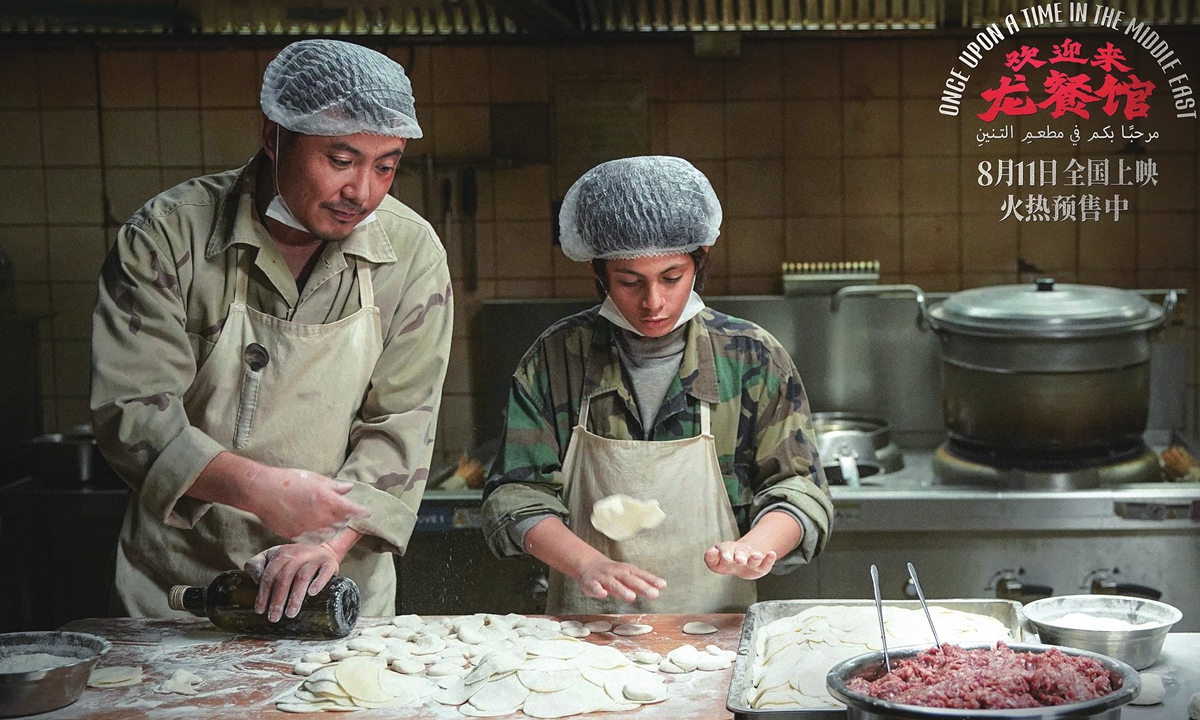
A still from the movie Once Upon a Time in the Middle East Photo: Courtesy of Douban
Chinese anti-war film Once Upon a Time in the Middle East is expanding its global reach, with the film hitting in China's Hong Kong and Macao and rolling out in the markets of New Zealand, Malaysia and Australia on Friday.For many audiences, the film's release beyond the Chinese mainland brings not only its story of war and ordinary people to international viewers, but also a narrative that differs in important ways from many Hollywood war films.
At one point in the film, when an US soldier refers to people in Iraq as terrorists, Xu Fu, a Chinese chef working in the region who acts as the film's protagonist, responds with a pointed question: "There wouldn't be any terrorists in this region if it weren't for you guys, right?"
For Ryan Magnolia, a US actor who plays one of the US soldiers in the film, the scene particularly stayed with him. "What a powerful moment," Magnolia said.
Having watched the film with US and other foreign friends, Magnolia told the Global Times that many of them came away with greater sympathy for what he called the "true victims" of the war: civilians in the Middle East, especially children.
He said the film's portrayal of the conflict was particularly significant because it not only humanizes people on different sides, but also looks at how extremism can emerge from the circumstances surrounding war. "It's not something that Hollywood tends to show — how people end up joining these extremist groups and shows, really, the cause of all these," Magnolia said. "This stuff doesn't happen in a vacuum. This is cause and effect."
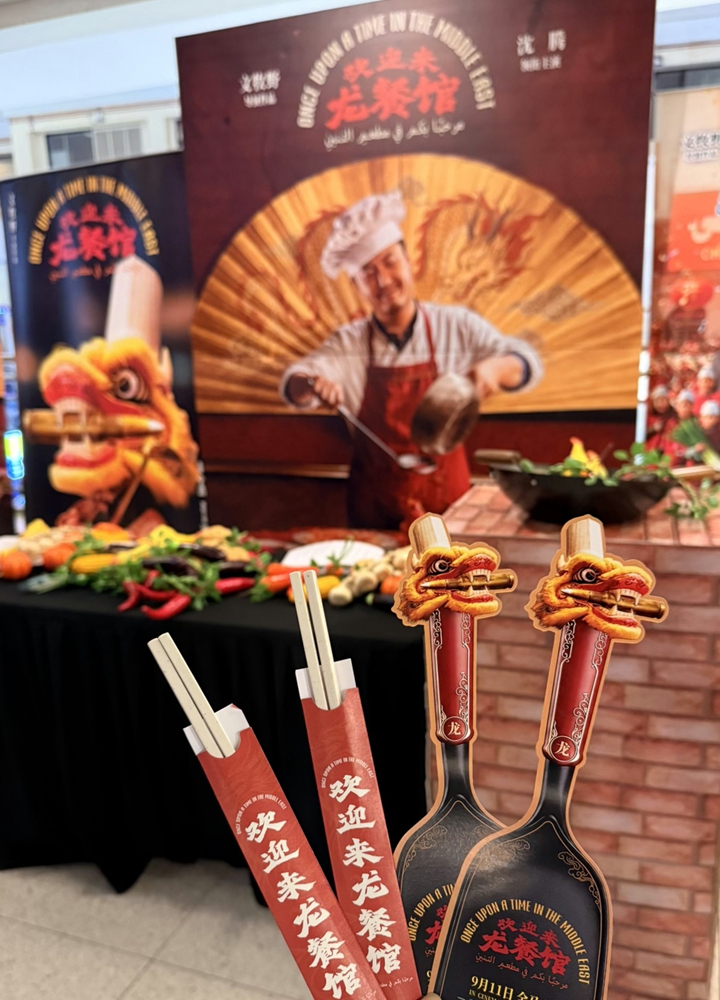
Promotional materials in Malaysia Photo: Courtesy of Moon
'The true victims of war'Magnolia, who has lived in Shanghai for nearly 15 years, has long been involved in theater, drama, and music. He was recommended for the role by a US friend, who encouraged him to audition for the film.
When he first received the script, however, Magnolia said he was given little information about the larger story. The director told him simply, "You're a US soldier. This is the invasion of Iraq and you are manning a checkpoint."
What also stood out to him was the way the film shows people on different sides of the conflict. "It was very interesting to see everyone was humanized in this film," he said, adding that the director's approach showed that "there's no pure good, there's no pure evil."
Looking ahead to the film's global release, Magnolia said he hoped international audiences would see the shared humanity at the heart of the story. "I hope that this movie lets people realize that we are much more similar than we are different at the end of the day," he said, adding that people everywhere want the same basic things: "to live in peace, share good meals, be close to friends and family."
For Magnolia, however, the film's message should not end when the credits roll. "While we can get this discussion started with a film, don't let that be the end of your understanding, the end of your activism, the end of your humanity and humanitarian aid," he said, calling on audiences to continue seeking understanding and thinking about how people can find common ground and peace.
The film opened in China's Hong Kong and Macao on Friday, while its overseas release began the same day in Australia, New Zealand and Malaysia. It is set to open in Singapore on September 17 and Japan on September 18.
A different war narrative
The film's overseas release has also given audiences in different markets a chance to engage with its reflections on war from their own perspectives. While the film takes a critical look at the causes and consequences of conflict, it does so through the experiences of ordinary people, tying its anti-war message closely to everyday life.
Hong Kong audience member Sherry Hu told the Global Times that several of her friends from the Chinese mainland had recommended the film to her even before its release. She described it as "the most moving film I've seen in the past two years, without a doubt," adding she was particularly touched by its portrayal of "the brutality of war and the complexity of human nature."
Jennifer, a student in Australia, said the film also made her reflect on the value of everyday peace. "My biggest takeaway after watching the film was that things that seem ordinary, such as living a stable life and having a good meal, are actually worth cherishing," she told the Global Times.
The film also resonated with foreign audiences at the screenings. Based on conversations with viewers around her, one audience member said many of them could relate to the film's anti-war message, particularly its portrayal of how ordinary people, especially children and families, are often among those most affected by war. For general audiences, she said, the film's most direct message was the brutality of war and the value of a peaceful life, along with a hope that such tragedies would become less common and that the world could become more peaceful.
For some viewers, the film's subject matter came as a surprise. Moon, a Malaysian movie fan, said that she initially expected a lighthearted comedy centered on food and humor, but was surprised to find a film with much greater depth and meaning. Many local people around her had watched it, and the audience reviews and reactions she had seen were overwhelmingly positive, she said.
The difference between Once Upon a Time in the Middle East and typical Hollywood war films, however, lies not simply in whether it takes an anti-war stance, but in where it places war within the story and where it positions the audience's viewpoint, according to Zhang Peng, a cultural researcher and associate professor at Nanjing Normal University. Rather than organizing its narrative around heroic growth, spectacular battle scenes or individual redemption, the film brings the focus down to dining tables, food and the basic instinct to survive, allowing the brutality of war to emerge through the destruction of everyday life. Hollywood films have also critically reflected on war, but the suffering is often presented through the lens of trauma. This film goes a step further by prompting questions about why wars happen, who initiates them, who benefits and who ultimately bears the cost.
This approach can make the film's critique more direct for Western audiences, particularly when viewed against the backdrop of the US invasion and occupation of Iraq and the continuing conflicts and interventions in the region. It also leaves room for empathy and human connection through its food-centered story and moments of humor, allowing its anti-war message to reach a broader audience, noted Zhang.
RELATED ARTICLES