CHINA / SOCIETY
Family farm develops Lingzhi mushroom industry in Milin, China's Xizang
Published: Sep 16, 2026 10:05 AM
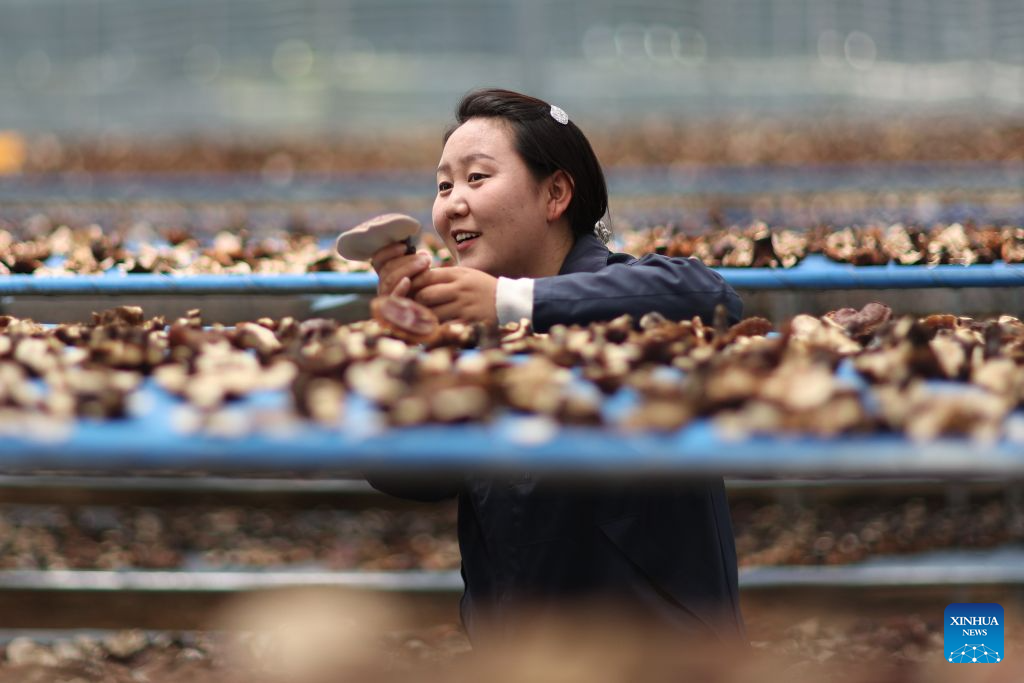
A college graduate staff member checks aired white-fleshed Lingzhi mushrooms in a greenhouse in Milin, Nyingchi, southwest China's Xizang Autonomous Region, Sept. 14, 2026. In 2008, Milin County (now Milin City) in Nyingchi registered Nyima's family as a poor household and offered him a 150,000-yuan (about 22,348.95 U.S. dollars) loan. Starting by collecting wild white-fleshed Lingzhi, or Ganoderma leucocontextum, Nyima explored artificial cultivation and built a spawn workshop and a simulated wild cultivation base in 2012.

Nyima's daughter Tsomo graduated from the Central University of Finance and Economics. In 2019, she left her state-owned enterprise job and returned to the demonstration family farm founded by her father. The farm needs college-educated young people, so I came back, she said.

The two generations divide up responsibilities. Father Nyima oversees the whole farm, elder brother Tsering Norbu handles core spawn cultivation technology, and Tsomo focuses on marketing and sales to drive the farm's technological and brand upgrade.

The farm's Lingzhi base and greenhouses cover over 1,000 mu (about 66.7 hectares), with an output value reaching 9.2 million yuan (about 1.37 million U.S. dollars) in 2025. The farm has not only provided 35 stable jobs and hired four local college graduates, but also offered free spawn bags and technical guidance to the villagers. (Xinhua/Jiang Fan)
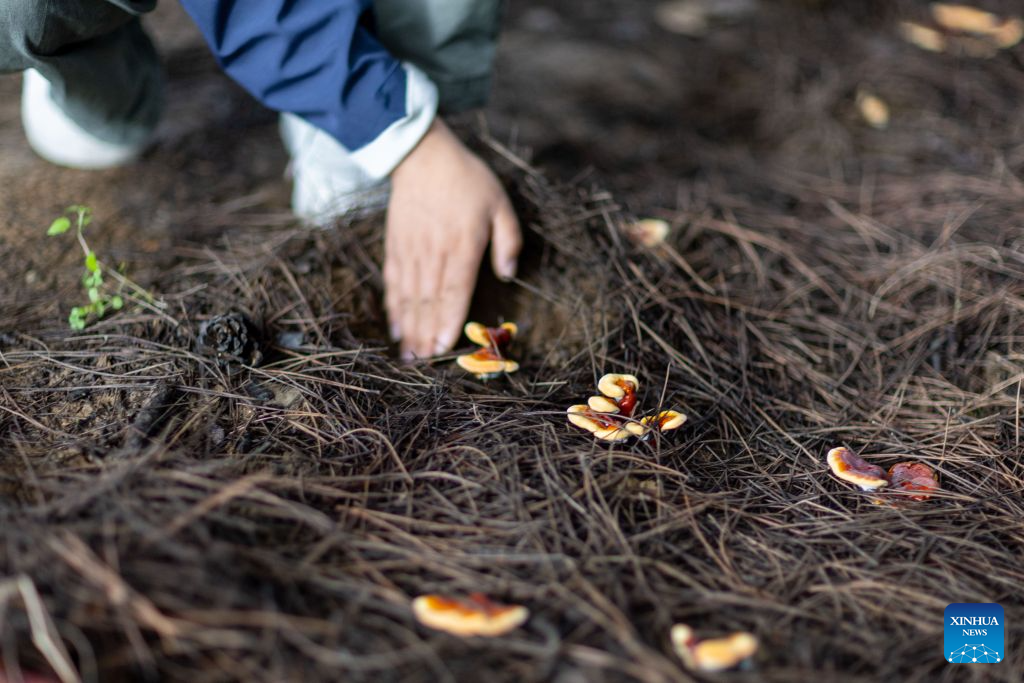
A college graduate staff member checks aired white-fleshed Lingzhi mushrooms in a greenhouse in Milin, Nyingchi, southwest China's Xizang Autonomous Region, Sept. 14, 2026. In 2008, Milin County (now Milin City) in Nyingchi registered Nyima's family as a poor household and offered him a 150,000-yuan (about 22,348.95 U.S. dollars) loan. Starting by collecting wild white-fleshed Lingzhi, or Ganoderma leucocontextum, Nyima explored artificial cultivation and built a spawn workshop and a simulated wild cultivation base in 2012. Nyima's daughter Tsomo graduated from the Central University of Finance and Economics. In 2019, she left her state-owned enterprise job and returned to the demonstration family farm founded by her father. "The farm needs college-educated young people, so I came back," she said. The two generations divide up responsibilities. Father Nyima oversees the whole farm, elder brother Tsering Norbu handles core spawn cultivation technology, and Tsomo focuses on marketing and sales to drive the farm's technological and brand upgrade. The farm's Lingzhi base and greenhouses cover over 1,000 mu (about 66.7 hectares), with an output value reaching 9.2 million yuan (about 1.37 million U.S. dollars) in 2025. The farm has not only provided 35 stable jobs and hired four local college graduates, but also offered free spawn bags and technical guidance to the villagers. (Xinhua/Jiang Fan)


A college graduate staff member inspects the Lingzhi mushrooms in a greenhouse in Milin, Nyingchi, southwest China's Xizang Autonomous Region, Sept. 14, 2026.(Xinhua/Jiang Fan)
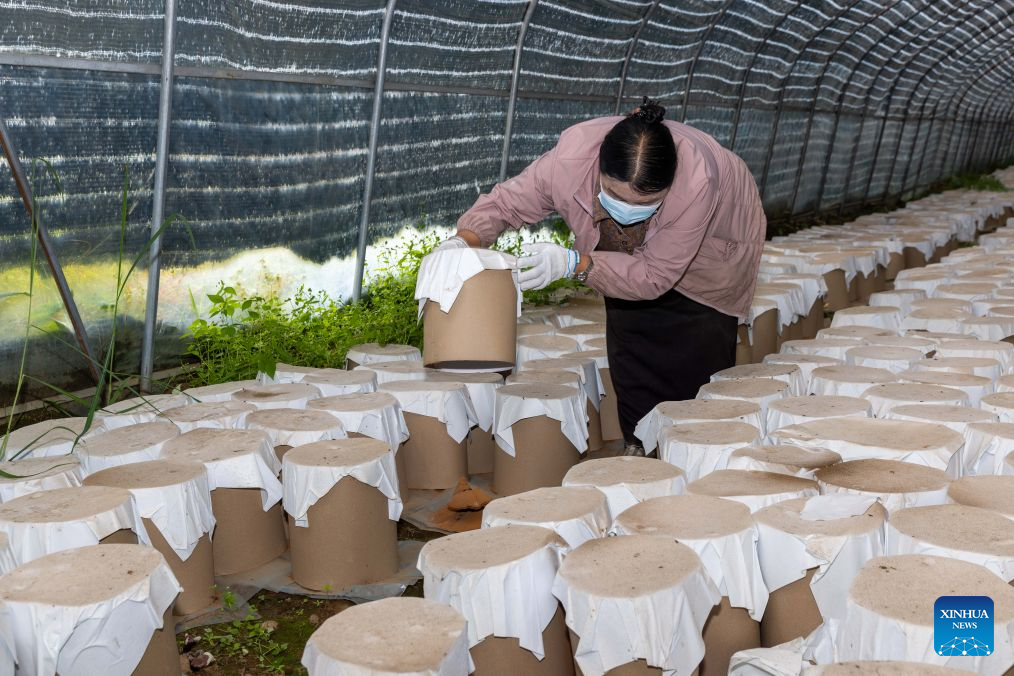
A college graduate staff member inspects the Lingzhi mushrooms in a greenhouse in Milin, Nyingchi, southwest China's Xizang Autonomous Region, Sept. 14, 2026.(Xinhua/Jiang Fan)
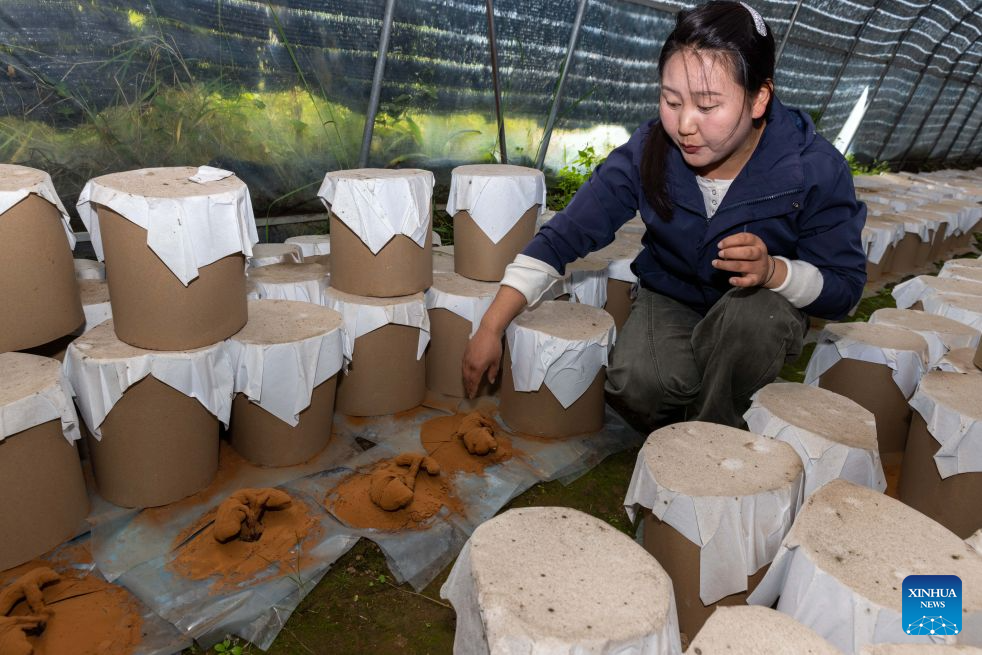


A staff member inspects the production of Lingzhi mushrooms spore powder in a greenhouse in Milin, Nyingchi, southwest China's Xizang Autonomous Region, Sept. 14, 2026.(Xinhua/Jiang Fan)

A staff member inspects the production of Lingzhi mushrooms spore powder in a greenhouse in Milin, Nyingchi, southwest China's Xizang Autonomous Region, Sept. 14, 2026.(Xinhua/Jiang Fan)


A college graduate staff member inspects the production of Lingzhi mushrooms spore powder in a greenhouse in Milin, Nyingchi, southwest China's Xizang Autonomous Region, Sept. 14, 2026.(Xinhua/Jiang Fan)

A college graduate staff member inspects the production of Lingzhi mushrooms spore powder in a greenhouse in Milin, Nyingchi, southwest China's Xizang Autonomous Region, Sept. 14, 2026.(Xinhua/Jiang Fan)