ARTS / CULTURE & LEISURE
China’s Hubei Provincial Museum launches official AI guide fluent in 12 dialects
By Published: Sep 16, 2026 08:22 PM

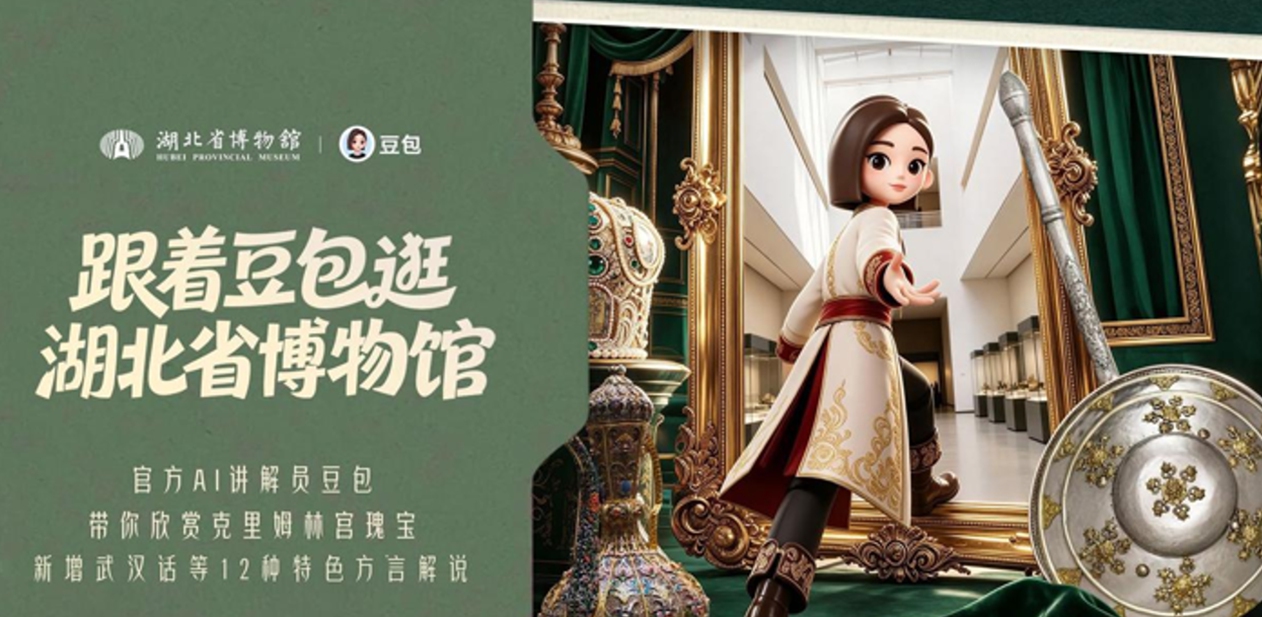
Photo: Courtesy of Hubei Provincial Museum
At the Hubei Provincial Museum in Wuhan, the capital city of Central China's Hubei Province, visitors can now point a smartphone at a bronze sword more than 2,000 years old and ask, in the local Wuhan dialect, why it still looks sharp. The answer comes back in the same accent.The AI assistant Doubao, a popular AI chatbot and virtual assistant developed by ByteDance, recently became the museum's official AI guide, offering commentary in 12 Chinese dialects, including Wuhan dialect, Cantonese, Shanghainese, Sichuanese and Northeastern Mandarin.
The service is part of a broader effort by Chinese museums to use generative AI to turn static exhibits into interactive conversations, and a test of whether the technology can feel local rather than robotic, according to a press release that the museum sent to the Global Times on Wednesday.
The experience is simple. Users open Doubao's app, tap a "museum guide" button, and aim the phone at an artifact. The AI recognizes the object and delivers a tailored explana-tion, while reminding users to wear earphones and keep their voices down. The same func-tion works through video calls, allowing visitors to ask follow-up questions as they walk.
At Hubei Provincial Museum, that means asking about the Sword of Goujian, a 2,500-year-old bronze sword from the Spring and Autumn period (770BC-476BC), the chime bells of Marquis Yi, or the tiger-and-bird drum.
The museum is also hosting "Treasures of the Kremlin," an exhibition of 129 items from Moscow's Kremlin Museums, spanning the 17th and 18th centuries and featuring figures such as Peter the Great and Catherine the Great.
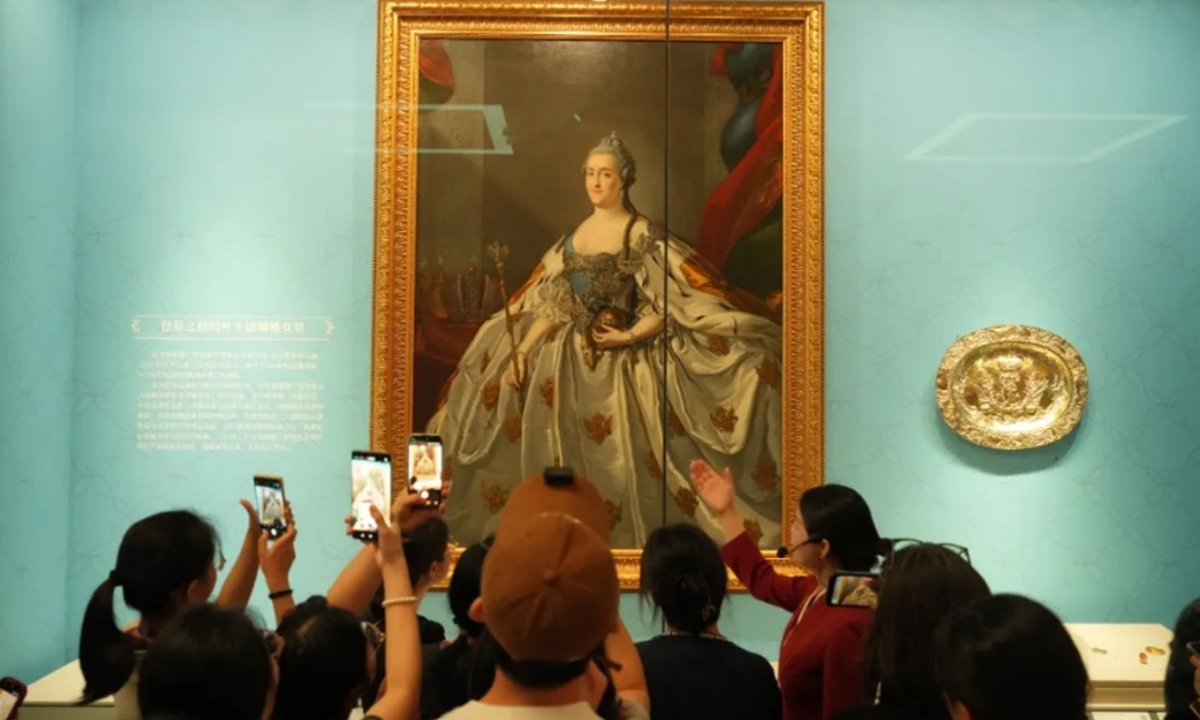
Photo: Courtesy of Hubei Provincial Museum
More than 90 percent of the items are said to be authentic imperial objects, from crowns and scepters to medals, court dress, weapons and silverware. Visitors can scan an exclusive QR code to activate Doubao's professional guidance, tracing the history of the Romanov dynasty, Peter the Great's reforms and Catherine the Great's era through interactive AI commentary, the press release noted."This time, Doubao, as the museum's official AI guide, not only brings personalized, pro-fessional commentary, but also uses dialects such as the Wuhan dialect to make local audi-ences feel especially close to it," museum curator Zhang Xiaoyun told the Global Times.
"AI technology opens new imaginative space for cultural communication, turning artifact explanation into a continuous conversation in which you can ask questions as you walk," Zhang added.
The dialect feature is the hook. The AI tool also supports Cantonese, Hokkien, Shang-hainese, Hakka, Wuhan, Tianjin, Shaanxi, Sichuan, Henan, Jinan, Northeastern and Bei-jing dialects. More are planned, Hubei Daily reported.
The company recently integrated its SeedRealtime native audio-video full-duplex model, which lets the AI watch an exhibit, listen to a question and organize an answer at the same time. "In a noisy gallery, it can distinguish who is speaking and which object the visitor means," Li said.
Visitors spoke highly of the service. Dai Jianye, a renowned Chinese scholar who experi-enced the AI tour on-site, praised the system's flexibility and intelligence. "When I view a cultural relic, many random, imaginative questions pop up in my mind, and the AI can al-most always respond accurately and professionally," Dai said.
Many local museums have also rolled out customized AI interpretation services featuring local cultural IPs, diversifying intelligent exhibition experiences and accelerating the digital transformation of China's cultural heritage dissemination. In Wuhan's Huangpi District Museum, an AI staffer launched in June uses Hua Mulan, a legendary Chinese folk heroine, and Cheng Yi, a well-known Chinese philosopher from the Song Dynasty (960-1279), as digital figures, offering tours, exhibition information and history lessons, a sign that muse-ums want differentiated, localized experiences rather than a one-size-fits-all chatbot.
RELATED ARTICLES