IN-DEPTH / IN-DEPTH
How a warming planet is becoming a force that redraws the world’s balance of power
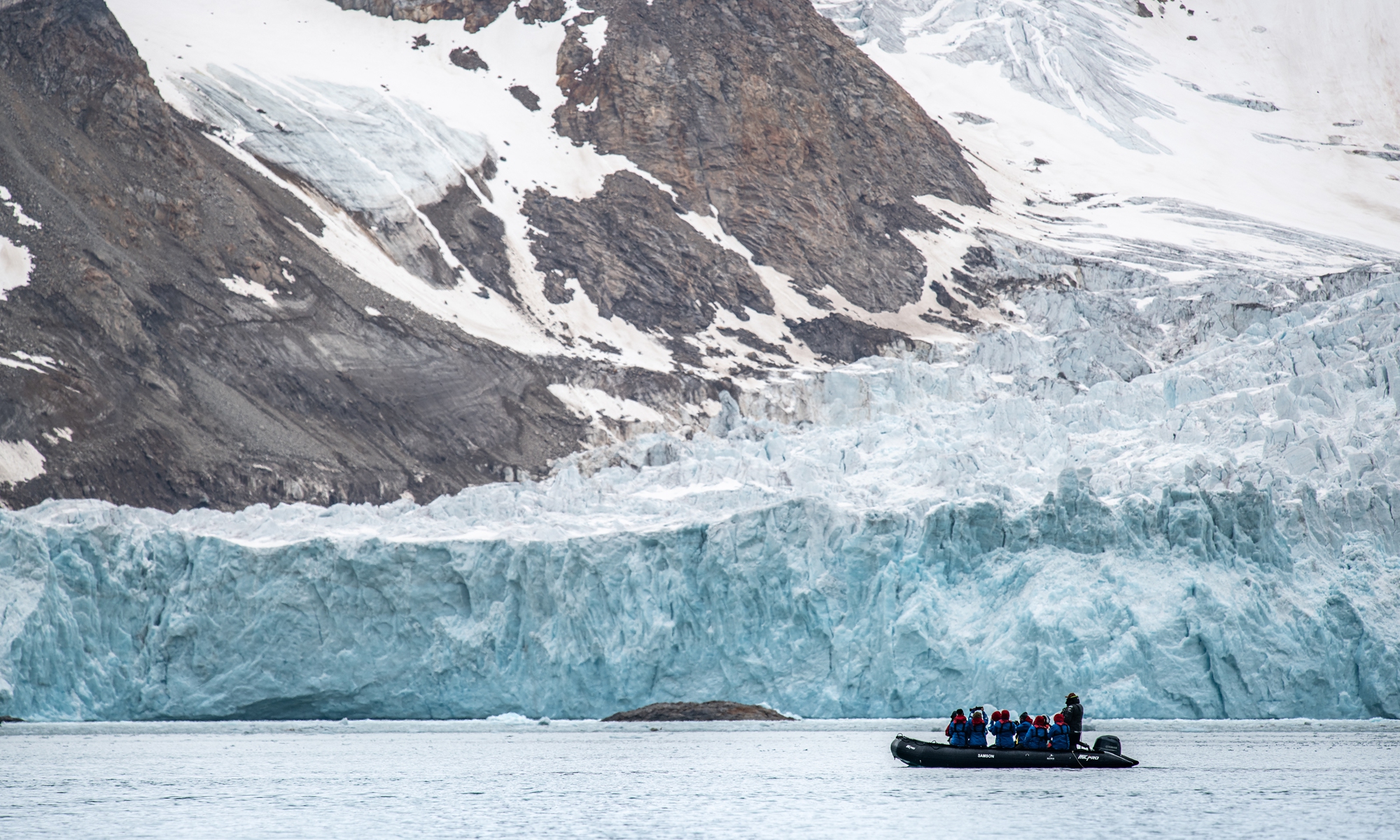
Tourists cruise through Fuglefjorden in inflatable boats to get a close-up view of a glacier in northwestern Svalbard, Norway, on July 11, 2026. Photos on this page: VCG
In recent years, extreme weather events and the natural disasters they trigger have occurred frequently around the world, highlighting the impact of climate change on ordinary people's lives, personal safety and socioeconomic development.
Yet the challenges brought by climate change extend far beyond people's livelihoods.
Climate change is also reshaping the global geopolitical landscape, becoming an issue that affects social stability, national governance, cross-border relations and regional security.
Some scholars have said that no country can remain immune to climate change, and that countries need to strengthen discussions and coordination on the various problems it creates through multilateral platforms such as the UN, the Shanghai Cooperation Organization and the Group of 20.
Rise of the Arctic
On the evening of August 22, shipping through the Strait of Hormuz remained severely disrupted, with traffic far below normal levels, while vessels in and around the strait continued to face attacks and tensions persisted. Thousands of kilometers to the east, at the Port of Busan in South Korea, the container ship PanStar Acro slowly pulled away from the dock with a blast of its horn and headed toward Europe.
The contrast was striking - one chokepoint in the west under severe pressure while an Arctic route in the east was opening up.
In December 2025, Arkhangelsk Region Governor Alexander Tsybulsky said the Trans-Arctic Transport Corridor could offer global logistics a new option and could reshape the global maritime map and trade structure, according to the Xinhua News Agency.
The reality of climate change is now accelerating that prospect, and it is changing not only shipping and trade, but also the strategic importance of the Arctic.
"Everyone knows climate change is a risk… What is less well understood is that climate change has already become the most systemically important geostrategic force," the Financial Times observed.
Nowhere is that assessment more evident than in the Arctic. Global warming is reducing Arctic sea ice, improving navigability on some Arctic routes during parts of the year. Compared with the Suez Canal route, Arctic routes can significantly shorten voyages for particular Asia-Europe port pairs.
For example, a 2025 Arctic express service from Ningbo to Felixstowe in the UK took about 20 days, close to half the time of the Suez route, Xinhua reported. At the same time, the Arctic's buried natural resources are becoming increasingly attractive. An assessment by the US Geological Survey estimates that the Arctic may contain about 13 percent of the world's undiscovered oil and 30 percent of its undiscovered natural gas.
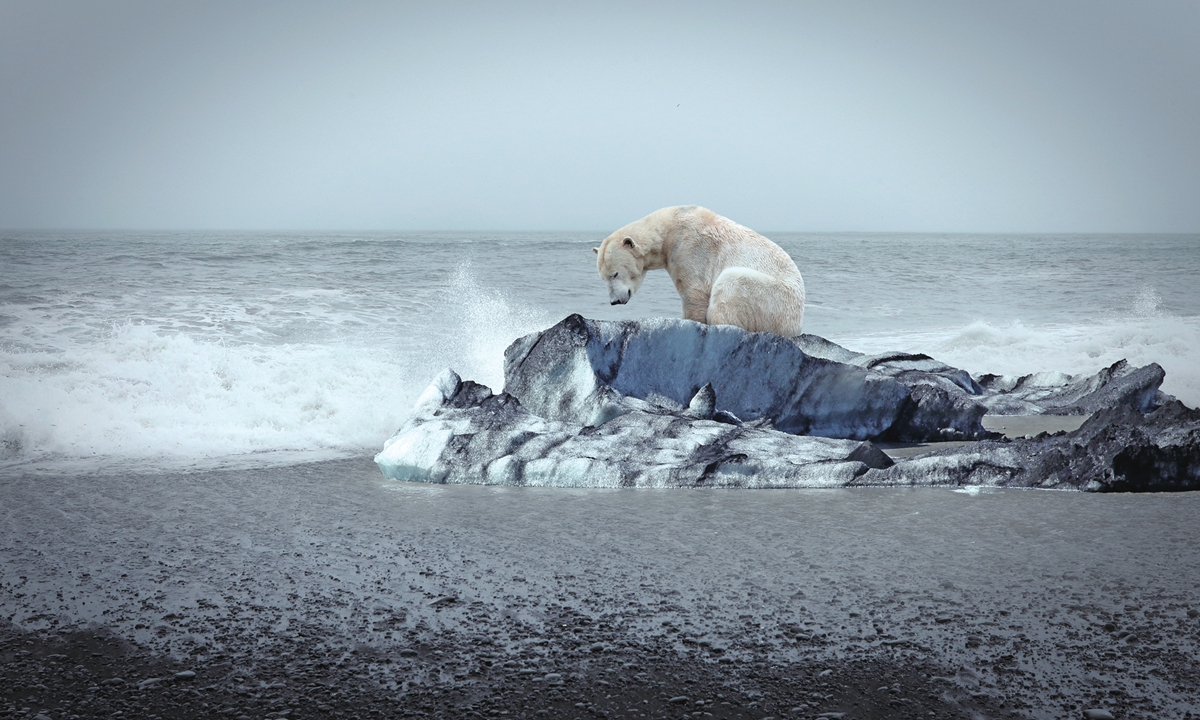
A polar bear rests beside the water.
The combination of longer shipping opportunities and greater resource accessibility is pushing this frigid region into the spotlight of geopolitical competition.
The Arctic's growing geopolitical importance can be seen in the intensified moves by major powers.
Since taking office, the current US administration has repeatedly raised the prospect of US control over Greenland and pushed to expand the US icebreaker fleet. In February 2026, the US Coast Guard announced that contract awards had been completed for 11 Arctic Security Cutters. The vessels have not all been delivered; the first is expected in early 2028.
Canada has also stepped up its efforts. On August 24, Canada announced an investment of more than C$11 billion to build six new Coast Guard icebreakers. On March 12, Canada also announced a series of measures to strengthen security and development in its North and Arctic, including C$32 billion to upgrade northern forward operating locations and the base at Goose Bay, and C$2.67 billion for Northern Operational Support Hubs and Nodes, according to the government's website.
The European Arctic Summit was held in Rovaniemi, Finland, on September 13 and 14. In a post-summit statement, leaders from more than 10 EU member states highlighted the Arctic's growing strategic importance to the security of Europe as a whole.
On September 7, European Commission President Ursula von der Leyen, during a visit to Nuuk, the capital of Greenland, announced a 200 million euro ($232 million) EU-Greenland partnership investment package and said it would support a stronger and more engaged EU presence in Greenland and the Arctic, the website of EU reported.
Russia is also continuing to develop the Northern Sea Route and Arctic port and transport infrastructure while advancing a comprehensive development plan for the Arctic and the Trans-Arctic Transport Corridor through 2050.
A longer navigable season along Arctic routes could relatively diminish the importance of traditional maritime chokepoints. Tsybulsky has said the Trans-Arctic Transport Corridor could offer global logistics an alternative to the route through the Strait of Malacca.
The Financial Times has likewise pointed to Arctic shipping as a possible alternative to traditional routes including the Panama Canal. At the same time, traditional maritime chokepoints are themselves being affected by climate pressures.
Climate change and energy-security pressures are driving a transformation of the global energy system. The Guardian reported in 2026 that an energy-geopolitical order long shaped by oil, natural gas and coal is being challenged by the rapid expansion of renewables, electrification and clean-technology industries. Project Syndicate and other media and research organizations have discussed the geopolitical implications of a possible shift from "petrostates" toward "electrostates."
'Threat multiplier'
One morning in January 2025, 18-year-old Cheikh Diouf and his father were making repeated trips to carry manure to their family fields in Senegal's Thies region, AP reported. When he returned home alone, however, he received an urgent phone call from his sister-in-law: His father was arguing with a group of herders. By the time the young man reached the field, his father was dead - killed by machete blows - and the attackers had disappeared. Diouf and his family believe herders were responsible after livestock entered the family's cassava field. He told the AP that, if he encountered the herder responsible, he would avenge his father.
Tensions between farmers and herders have long been common in West Africa, but climate change is aggravating the problem. An AP analysis of data from the Copernicus Climate Change Service found that Senegal's average annual rainfall over the past 30 years was about 27 percent lower than during the period from 1951 to 1980. Declining rainfall and rising temperatures are drying out grazing land even as farmland expands. As herders and their livestock move across the region in search of pasture, encounters and disputes with farmers can become more frequent.
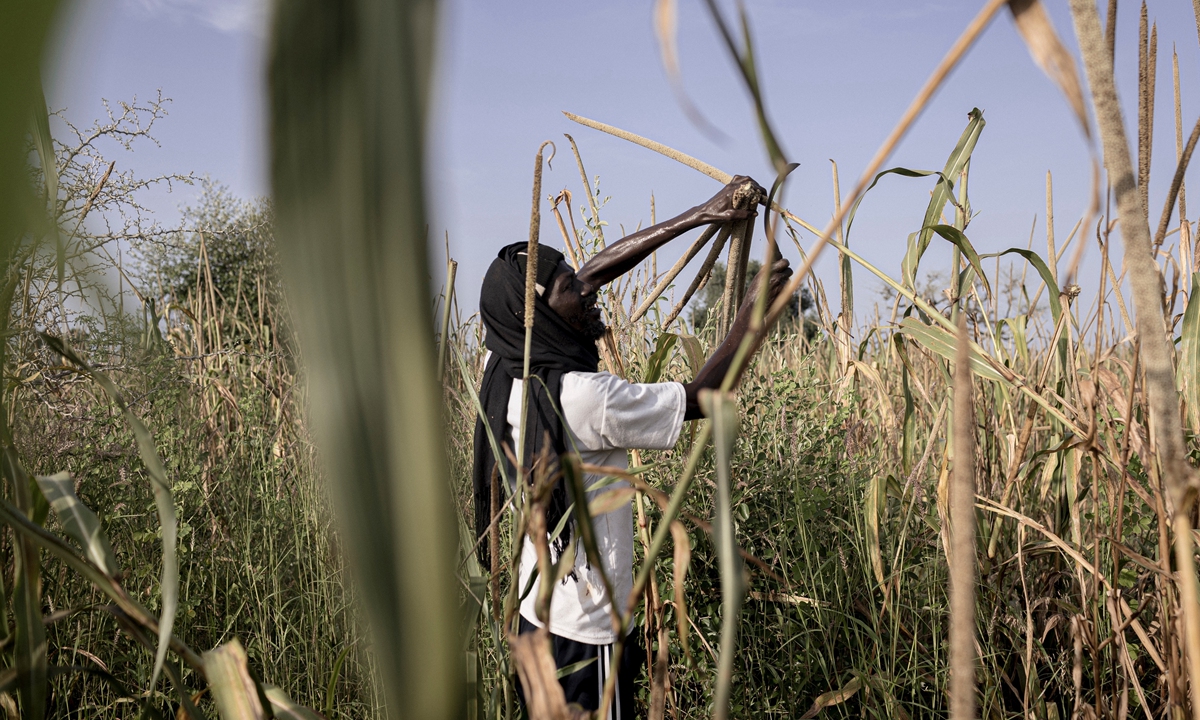
A farmer collects samples from his millet crops near Ndofane, Kaolack region, Senegal, on October 14, 2025.
What happened to Diouf's father is one example of how climate change can intensify risks of intercommunal and livelihood-related conflict. Research and media reports show that climate change and food insecurity can amplify existing conflict risks. Severe droughts and extreme weather reduce harvests in many regions, while wars and geopolitical tensions can disrupt supply chains for food and agricultural inputs. When people can no longer sustain their livelihoods, competition over land, water and other resources, as well as forced migration, may increase. These pressures can weaken governance in fragile areas and create conditions that armed groups may exploit for recruitment.
Research generally treats climate change as a threat multiplier interacting with political, economic and social factors, rather than as a single direct cause of war.
Climate, development and security
The impact of climate change is extending into the realm of traditional security. Even NATO's nuclear deterrence and broader military capabilities could be affected.
According to an article published by the Carnegie Endowment for International Peace, sea-level rise, extreme weather and higher temperatures could pose significant challenges to nuclear systems and related operations at bases in the US and overseas. Citing open-source reporting and research, the article said roughly 100 US B61 nuclear bombs for dual-capable aircraft (DCA) are believed to be deployed at six air bases in Belgium, Germany, Italy, the Netherlands and Türkiye. The areas surrounding those bases may face hazards including flash floods, wildfires and extreme heat.
The Carnegie Endowment cited the example of Türkiye's Incirlik Air Base, which was hit by flash flooding in 2019. In just two days, 248.9 millimeters of rain inundated the base. Although the munitions storage facilities housing US nuclear weapons were not affected, the article noted that more severe flooding could threaten relevant facilities. If infrastructure supporting US nuclear weapons and DCA were flooded, related missions could become impossible to carry out.
Chatham House has said that record high temperatures, drought, wildfires, flooding and more intense hurricane and tropical cyclone seasons will reduce or degrade the capabilities of NATO personnel, equipment, weaponry, tactics and infrastructure. Under the emissions trajectory cited in the report, more than 400 million people worldwide could be exposed each year by 2030 to temperatures exceeding the workability threshold. NATO member states are already seeing higher temperatures affect military operations. During a military exercise in Poland in 2019, temperatures inside armored vehicles exceeded 40 C, preventing soldiers from operating them for more than a few hours.
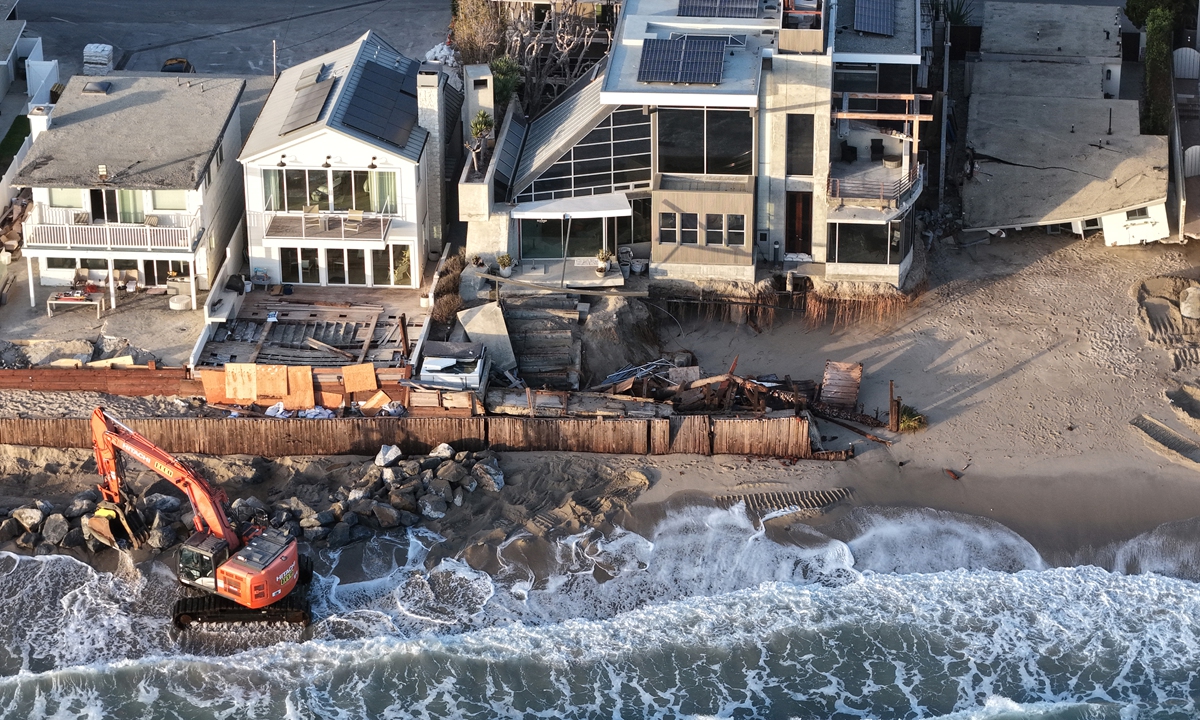
In an aerial view, a Pacific Ocean wave washes up near a worker using heavy machinery to protect damaged beachfront homes with boulders on September 14, 2026, in Dana Point, California.
Climate change is also testing the resilience of NATO's military facilities and infrastructure. Citing US Department of Defense material, Chatham House said about two-thirds of US military bases are particularly vulnerable to sea-level rise and extreme weather events. Major port hubs supporting NATO's eastern flank also face climate threats.
How should the international community respond to conflict risks triggered or intensified by climate change? The France-based think tank Centre for Economic Policy Research has said that studies on climate change and violent conflict show robust social safety nets can provide people with income protection during climate shocks and help reduce the risk of violence. Another potentially effective measure is greater political inclusion. Evidence suggests that when marginalized groups are included in political decision-making, the link between climate shocks and violence becomes weaker.
Zhao Long, a senior fellow at the Shanghai Institutes for International Studies, told the Global Times that climate change is gradually changing the paradigm of economic competition. Traditional economic competition has largely centered on resource endowments, industrial structures and positions within industrial chains. In the future, however, the green transition and low-carbon industries closely associated with climate change will shift economic competition toward a comprehensive contest encompassing resources, technology, capital and rules.
In the face of these far-reaching impacts, climate governance and security governance will need to become more closely interconnected. Cross-cutting issues involving energy security, food security, water security, supply chain security, migration and development security require the international community to establish an integrated "climate-development-security" governance framework, Zhao said.
RELATED ARTICLES