Photo: Courtesy of Liu Yansui
Chinese scholar Liu Yansui published a new article in the September 17 issue of Nature, calling for cities and the countryside that supports them to be managed as a unified system, warning that urban greening cannot secure sustainability if rural communities and ecosystems decline.
The article, "Green initiatives for cities must not forget the countryside around them," was co-authored by Huang Xinxin. It examines how the movement of people, changes in land use and the supply of ecosystem services to cities could leave rural areas without the capacity to sustain themselves.
Liu, academic vice president of Henan University, told the Global Times that expanding parks and green roofs should not be confused with a green transition across an entire region.
"If a city becomes greener at the cost of rural decline, that green transition is incomplete, fragile and unsustainable," Liu said.
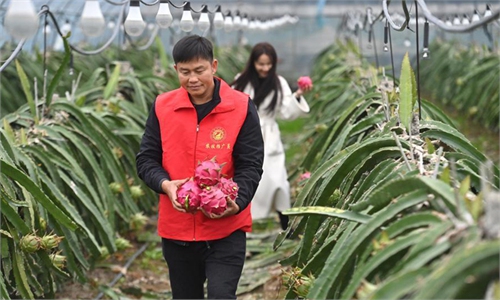
Cities depend on rural areas for food, freshwater, carbon sequestration and biodiversity. Yet the costs of resource depletion and ecological damage remain in the places supplying these resources, Liu said. Without investment, compensation and public services flowing back, the exchange could become increasingly unequal.
The article notes that 67 percent of the global population is projected to live in urban areas by 2050. However, the trend has contributed to the steady decline of rural regions that migrants have left behind. Up to 400 million hectares of land have been abandoned worldwide since the 1950s, and up to half of the world's rangelands are considered degraded.
The pressures extend across regions. About 4,000 of Spain's roughly 8,000 municipalities have fewer than 13 residents per square kilometer, according to the article. It also points to Japanese municipalities facing severe population decline and the expanding informal settlements in Latin America.
Liu said rural-to-urban migration is a normal part of industrialization and urbanization. The problem arises when resources move predominantly in one direction without investment and services flowing back to the countryside.
Urbanization and rural revitalization must pursue two goals together: helping those who move to cities build stable lives there and ensuring sustainable livelihoods for those who remain in the countryside, he said.
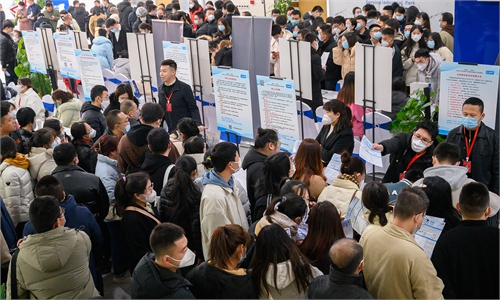
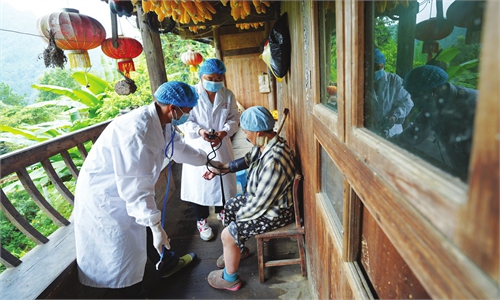
As working-age people leave, rural infrastructure and public services weaken, prompting more families to move. Communities also lose social networks, local culture and the capacity to organize themselves, Liu said. Meanwhile, cities with insufficient housing, jobs and social security can inherit problems displaced from the countryside.
The article describes this linked erosion of demographic, economic and environmental resources as a "rural decline syndrome." Liu attributed the limited results of some policy responses to fragmented governance.
The European Union's agricultural subsidies, for example, are heavily concentrated: 20 percent of beneficiaries received 80 percent of direct payments between 2014 and 2020, according to the commentary. In Japan, investment in rural roads and broadband has not halted population decline in some communities.
"Roads and networks are necessary conditions for development, but they are not sufficient," Liu said. They need to be coordinated with land management, ecological restoration, local industries and population policies.
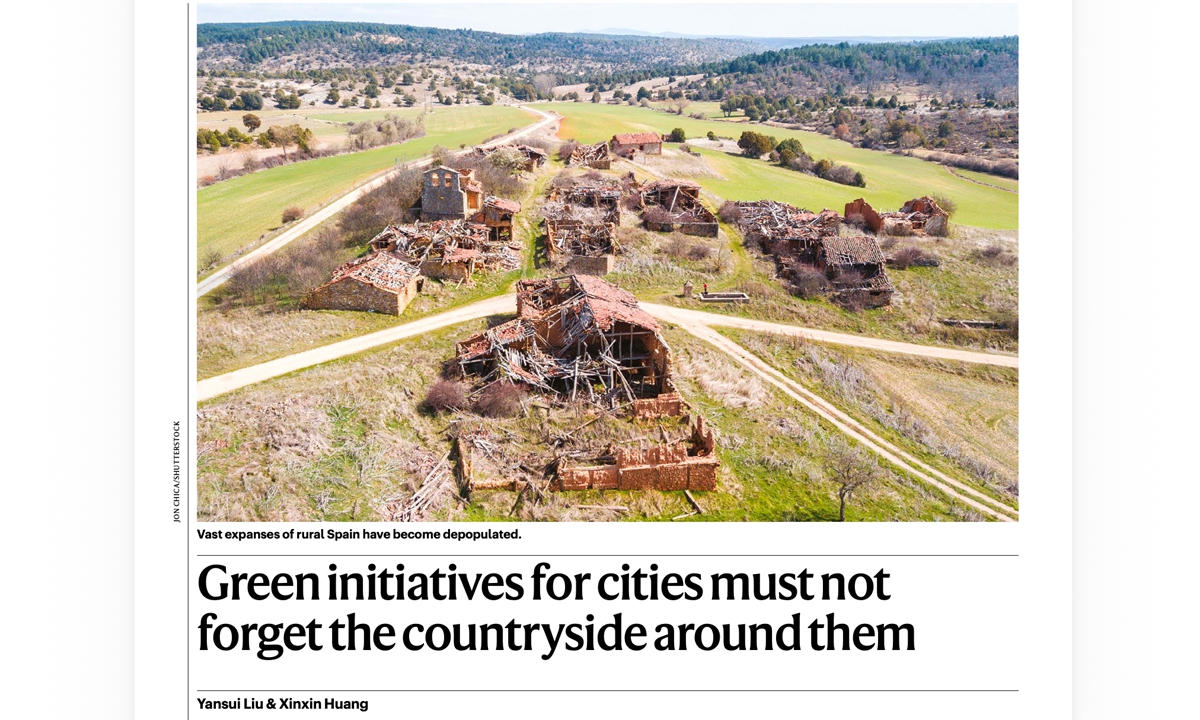
Photo: screenshot of the article
The article sets out a framework called Geo-STEP, short for Geographical Science-Technology-Engineering-Practice, which combines scientific assessment, geospatial monitoring and engineering interventions.
Liu explained that scientists first assess how population, land, water, carbon and industry interact and where imbalances arise. Remote sensing, soil and hydrological observations, and spatial modeling guide engineering work to restructure land, water systems and ecological spaces across a watershed or region.
The practice component brings these measures into spatial planning, policy and community governance, with monitoring used to adjust decisions over time. Its aim is to improve ecological productivity alongside people's livelihoods, he said.
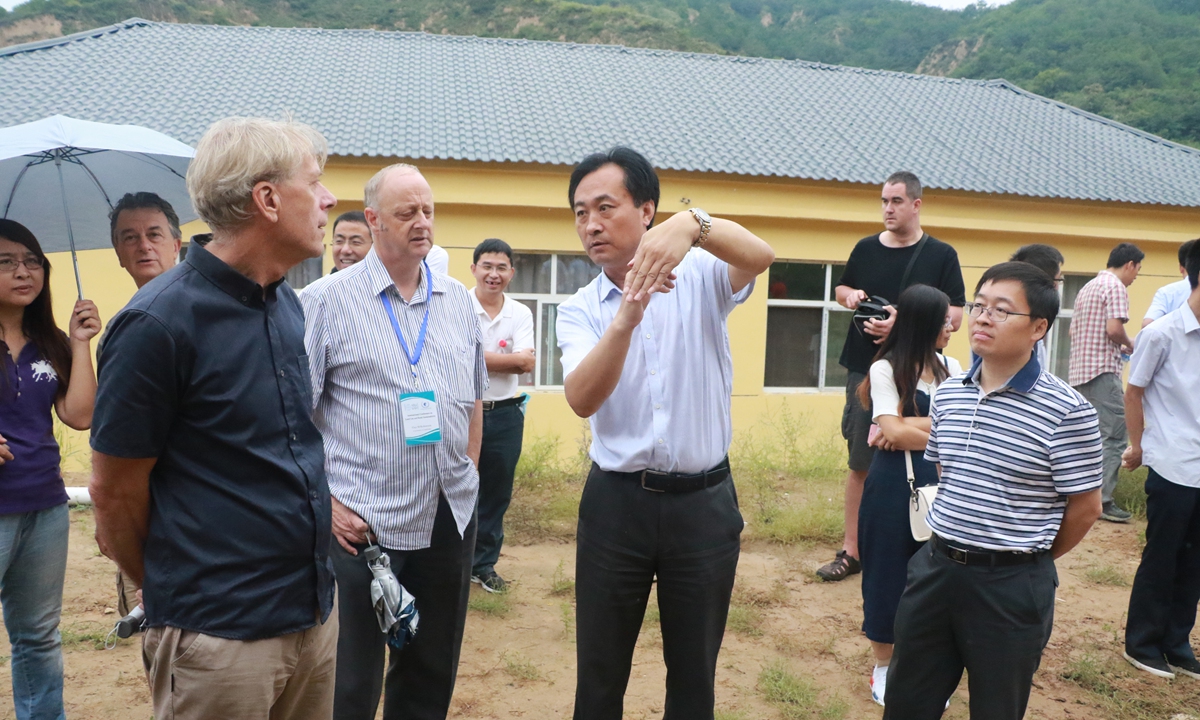
Gully land consolidation around Yan'an on China's Loess Plateau illustrates the approach. The article describes how workers stabilized slopes, planted vegetation and built drainage channels and dams, while satellite observations, soil surveys and hydrological models informed the designs.
The work helps reduce runoff and sediment reaching downstream waterways, while newly created cropland supports agricultural production. The article also describes increased soil organic carbon storage through sediment deposition and inputs from plants and roots.
Liu said the experience should be understood as coordinated management of water, land, ecosystems and livelihoods across a watershed. Geo-STEP offers a toolbox that can be adapted to local conditions.
In the East African Highlands, he suggested combining traditional terracing with satellite-based hydrological monitoring to protect upstream water sources and control downstream sediment, with communities playing a central role.
In West African areas where cities and countryside meet, planning should coordinate urban expansion, smallholder livelihoods, ecological corridors and public services, Liu said. This could help reduce the pressures forcing people to leave rural areas.
For depopulating rural areas in countries such as Spain and Japan, precision agriculture, reliable broadband and shared workspaces could help sustain local employment. Carbon markets and ecological compensation could turn environmental assets into income and jobs, he said.
Putting these approaches into practice requires long-term regional investment that brings land consolidation, watershed restoration, infrastructure and public services under a common spatial plan, according to the article.
Liu called for carbon trading, water-quality payments and biodiversity compensation to ensure that people protecting rural ecosystems receive fair returns. Cities' consumption of food, water and ecosystem services should be linked to long-term investment in the places supplying these resources, he said.
"Data on land, water resources, soil, carbon stocks and population dynamics should not be locked away in research institutes," Liu said.
Open platforms and training should help local governments and planners use that information, he said. Changes in climate, population and land use require continuing adjustments.
"Only by planning and managing cities and the countryside as a single system can we achieve a truly comprehensive and sustainable green future," Liu concluded.
RELATED ARTICLES