Chinese FM holds phone talks with Rubio on high-level interactions; phone call reflects 'shared resolve' to stabilize ties: expert
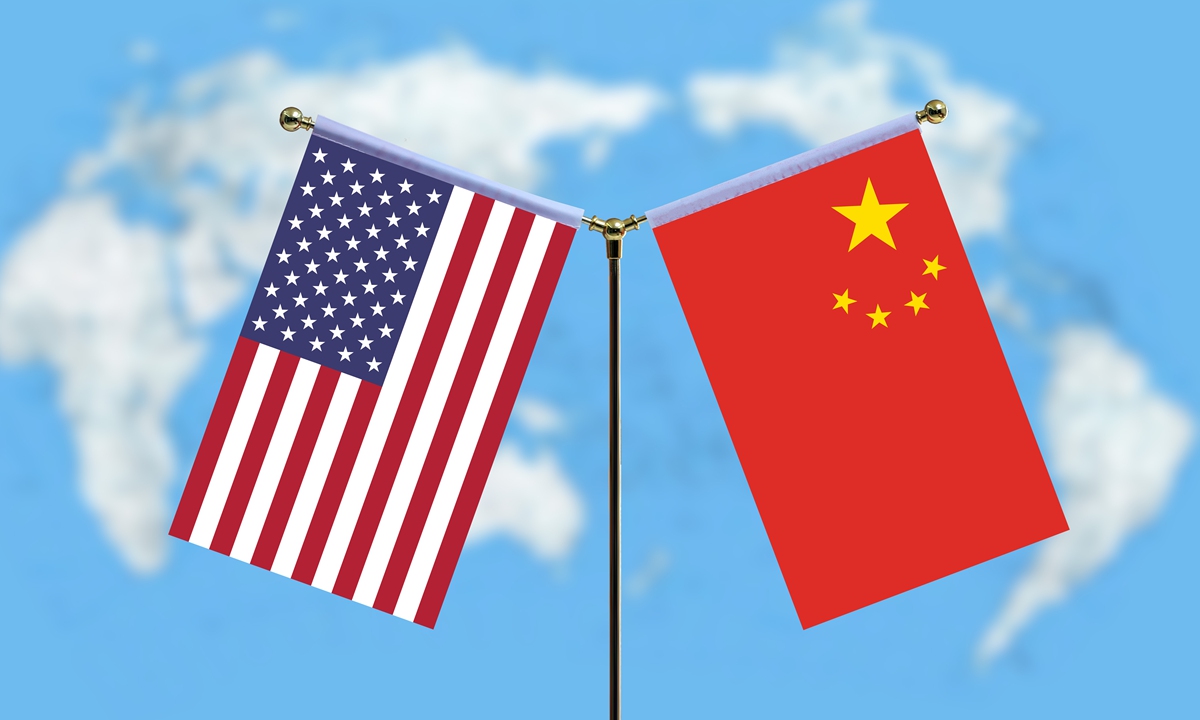
Photo: VCG
Chinese Foreign Minister Wang Yi spoke by phone on Thursday with US Secretary of State Marco Rubio on high-level interactions between the two countries, the Xinhua News Agency reported.During the talks, Wang, also a member of the Political Bureau of the Communist Party of China Central Committee, said that China-US relations have for some time generally moved forward along the track of constructive strategic stability charted by the two heads of state, which helps meet the expectations of the international community.
Noting that head-of-state diplomacy is the anchor of China-US relations, Wang said the two sides should prepare for the next stage of high-level exchanges in a spirit of equality, respect and mutual benefit, strengthen communication, advance cooperation, manage differences, respect each other's core interests, and send a positive message that the two countries are committed to advancing a constructive bilateral relationship of strategic stability and jointly promoting world peace and development, Xinhua reported.
The emphasis on preparations for the next stage of high-level exchanges in this phone conversation reflects a "shared resolve" on both sides to further stabilize China-US relations through sustained high-level engagement, Yang Xiyu, a senior research fellow at the China Institute of International Studies, told the Global Times on Thursday.
Yang said high-level interactions between China and the US this year have reflected an overall trend toward greater stability in bilateral relations. At a time when some existing conflicts prove difficult to resolve and risks of new frictions are taking shape, stronger strategic stability between China and the US, the world's two largest economies and major powers, would also contribute to greater strategic stability of the whole world.
Against this backdrop, communication between the two countries' top diplomats carries significance beyond bilateral ties, as it can help lay the solid groundwork for high-level exchanges while also bringing greater certainty to the international community, Yang said.
The latest phone talk came amid continued contacts between the two sides over high-level exchanges.
In late August, when meeting US Ambassador to China David Perdue, Wang called on the two countries to earnestly implement the important consensus reached by the two heads of state and remove disruptions and overcome obstacles to high-level exchanges, according to Xinhua.
Earlier this month, the Chinese Foreign Ministry also said China and the US are in communication regarding interactions between the two heads of state within the year. During the press conference on September 10, spokesperson Guo Jiakun said that head-of-state diplomacy plays an irreplaceable role in providing strategic guidance to bilateral relations.
Yang said the two sides have now reached greater clarity over the strategic direction of bilateral relations, but turning that consensus into concrete policies and actions still takes a lot of efforts.
The emphasis on implementation has also featured prominently in recent official interactions.
After the leaders' summit in Beijing in May, Wang said that building a constructive China-US relationship of strategic stability is not a slogan. It should be a goal both sides uphold and entail concerted actions. Now that our presidents have set the direction, we should add more substance to this new vision and translate it into concrete policies and measures, so as to write a new chapter in China-US relations.
The vision of "constructive strategic stability" has created an important opportunity for bilateral relations, Yang said, but long-standing differences and accumulated contradictions will not disappear automatically.
While China-US relations have shown positive signs of stabilization this year, various disruptive factors have persisted, the expert said. That makes the next stage of high-level engagement particularly important in translating strategic consensus at the leaders' level into practical actions across government agencies and specific areas.
Taking artificial intelligence (AI) as an example, Yang said that despite intense competition and policy differences, neither China nor the US can address the risks associated with AI governance alone, creating potential room for cooperation.
"The two sides should turn potential areas of cooperation into concrete cooperation, while establishing stable mechanisms to manage existing and potential differences, particularly those concerning core interests," Yang said.
RELATED ARTICLES