First river-to-sea vessel completes operation on Pinglu Canal, linking Guangxi to Hainan
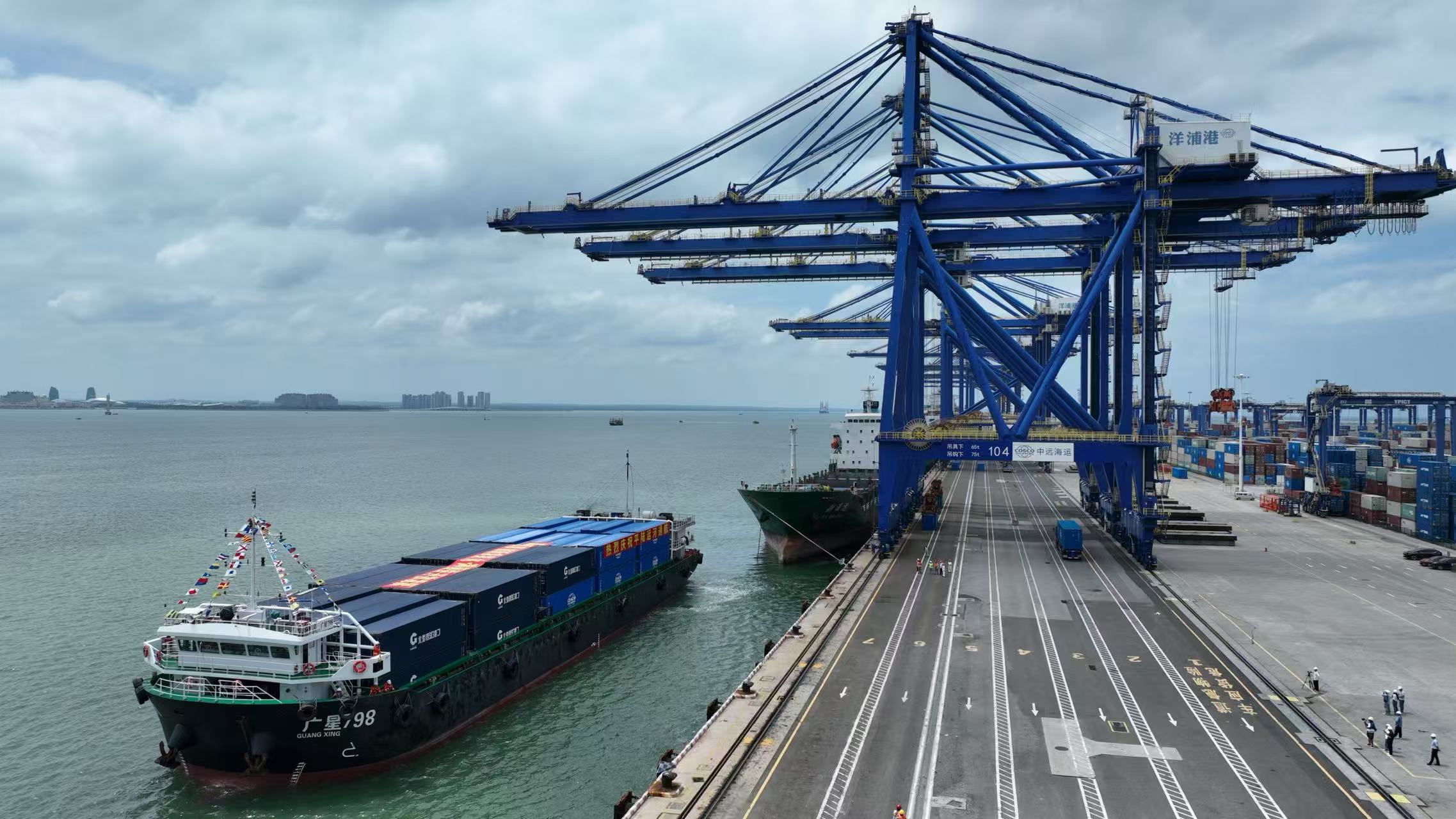
Guangxing 798, the first vessel to sail through the newly opened Pinglu Canal, berths at the Yangpu international container terminal in Danzhou, South China’s Hainan Province, on September 18, 2026. Photo: Courtesy of Yangpu Port
The first vessel to sail the newly opened Pinglu Canal successfully arrived at Yangpu Port, on the island of Hainan, on Friday, marking the completion of the canal’s maiden river-sea intermodal transport mission and opening a new logistics corridor between Southwest China, Hainan Free Trade Port and overseas markets, CCTV News reported.
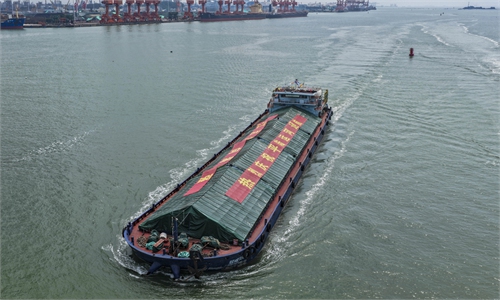
The vessel, Guangxing 798, departed from Nanning Port in South China's Guangxi Zhuang Autonomous Region on Wednesday, carrying goods, including building materials and deep-processed agricultural products produced in Guangxi. After traveling south through the Pinglu Canal, passing through Qinzhou Port and heading out to sea, the ship finally reached the Yangpu International Container Terminal in Danzhou, Hainan Province.
The Pinglu Canal officially opened to navigation on Wednesday. The arrival of the first ship at Yangpu Port means the canal has now completed its inaugural river-sea transport task, further strengthening the high-efficiency linkage between the New International Land-Sea Trade Corridor and the Hainan Free Trade Port, according to the Yangpu Port authorities.
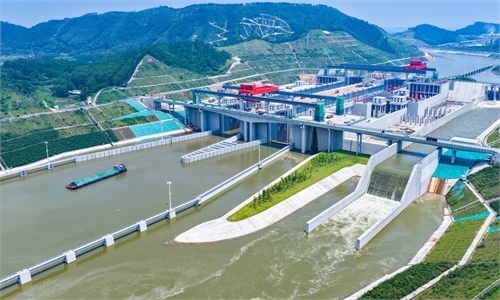
The 134.2-kilometer-long Pinglu Canal is a key project of the New International Land-Sea Trade Corridor. With total investment exceeding 70 billion yuan ($10.37 billion), the canal begins at the Pingtang River estuary in Hengzhou in Guangxi, and follows the Qinjiang River into the Beibu Gulf, according to the Xinhua News Agency.
According to reports, the Guangxing 798 is a specialized vessel designed for river-sea transport, with a length of 84 meters, a width of 18 meters and a draft of 4 meters. It is capable of navigating narrow inland waterways while also meeting nearshore navigation standards. The vessel mainly handles domestic container and bulk cargo transport, making it highly compatible with the navigational conditions of the Pinglu Canal and the needs of river-sea intermodal shipping.
On its maiden voyage on the Pinglu Canal, the ship carried 10 containers of cement, 30 containers of stone materials, as well as cargo such as Red Lion clinker and loquat juice.
“This brand-new corridor has broken the traditional route for our company’s cement to reach overseas,” said a representative from Guangxi Yufeng Group Co, the producer of the cement. “Our cargo is loaded into containers at the factory in Liuzhou and then connects directly to ocean shipping routes via the Pinglu Canal. This makes the route more competitive in terms of distance, efficiency, and shipping costs.”
Previously, cargo from Southwest China relied more heavily on a single export gateway. Now, once goods reach Yangpu Port via the canal, they can take advantage of policies in Hainan Free Trade Port, such as tax refunds at the port of departure, bonded oil refueling and other value-added processing and transshipment services before being linked to ASEAN and global markets, a representative from Yangpu Port told the Global Times on Friday.
Meanwhile, to ensure the safe berthing of the Guangxing 798 in Yangpu, the local maritime authorities had coordinated with relevant parties to understand the vessel’s condition and implemented special measures under a “one ship, one policy” framework. Using a joint protection system combining patrol vessels, drones and VTS electronic surveillance, authorities conducted dynamic monitoring throughout the voyage to ensure safe and efficient port entry, according to CCTV News.
Yangpu Port currently operates 68 container liner routes, including 30 domestic routes and 38 international routes, covering major domestic coastal ports as well as key ports in Southeast Asia, with services also extending to the Middle East and the east and west coasts of the US.
With the opening of the Pinglu Canal, Yangpu Port’s direct reach has further expanded into Southwest China’s inland regions, and its role in river-sea intermodal transshipment and cargo distribution has become more prominent. The port is now seen as a more strategic hub in linking Southwest China with the ASEAN market, according to the port representative.
RELATED ARTICLES