Pinglu Canal provides ASEAN companies coveted access to a vast market in western China: former Malaysian official
By Published: Sep 16, 2026 03:18 PM

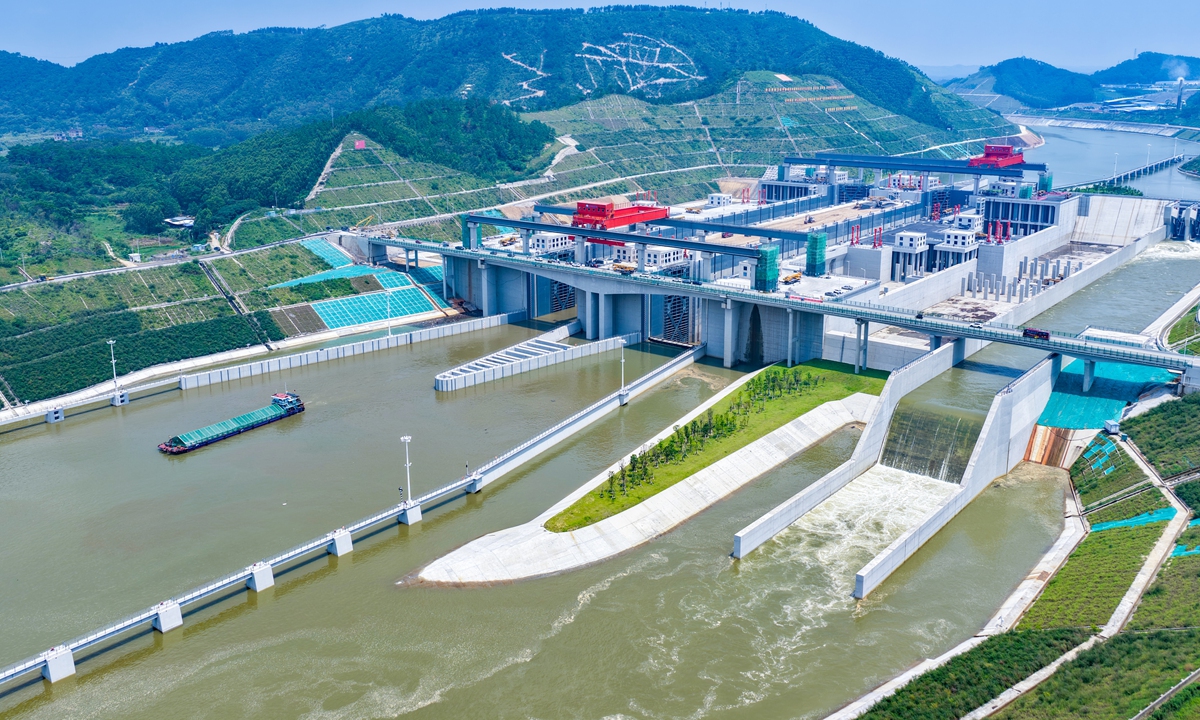
A vessel sails along the Pinglu Canal near the Madao hub. Photo: Courtesy of Pinglu Canal Group
The Pinglu Canal in South China's Guangxi Zhuang Autonomous Region is well poised to become another transport artery servicing the robust trade between ASEAN and China, Ong Tee Keat, president of the Belt and Road Initiative (BRI) Caucus for Asia-Pacific and former deputy speaker of the lower house of the Malaysian Parliament, told the Global Times in an interview on Wednesday.
The canal will inject new vigor and momentum into the less developed regions in southwestern China, prompting upgrades to facilities in the industrial parks serving the region. For Southeast Asian entrepreneurs, this canal presents them with coveted access to a vast emerging market in central and western China, Ong said.
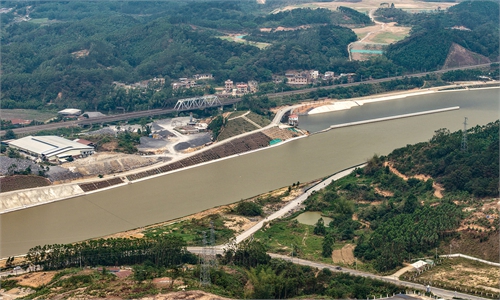
After four years of construction, China's 134.2-kilometer-long Pinglu Canal started operation on Wednesday. The canal can accommodate vessels of up to 5,000 tons and cut the inland waterway distance to the sea by 560 kilometers for cargo ships from China's southwestern provinces.
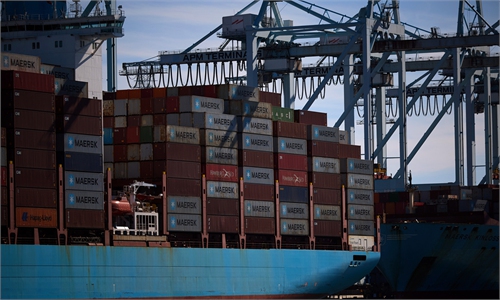
The opening of the Pinglu Canal will be known for cutting logistics time and cost, rendering the New International Land-Sea Trade Corridor a more competitive seaborne transport route between the Southwestern region of China and ASEAN countries, the former Malaysian official said. "The conventional focus of China-ASEAN trade along the wealthy and more established southeast coastal seaboard looks set to diversify to the emerging hinterland market in the mid-West which is catalyzed by the New International Land-Sea Trade Corridor."
With cooperation between Malaysia and China under the "Two Countries Twin Parks," the opening of the canal is poised to promote cooperation under the BRI, notably boosting trade through Malaysia's Kuantan Port, Ong said.
The "Twin Parks" refers to the Malaysia-China Kuantan Industrial Park (MCKIP) in Pahang, and the China-Malaysia Qinzhou Industrial Park (CMQIP) in Guangxi. Notably, CMQIP is located in Qinzhou, where the Pinglu Canal connects with the sea.

Ong Tee Keat. Photo: Courtesy of OTK
According to the Sin Chew Daily, the CMQIP had seen its foreign trade volume reach 57.64 billion yuan as of December 2025. The park is home to 34 Malaysian companies, with cumulative industrial output reaching 130.99 billion yuan.
By linking inland China directly to the Beibu Gulf via Qinzhou, the Pinglu Canal effectively creates a streamlined logistics highway that upgrades this bilateral economic corridor, said Ong. "As such, the canal is set to significantly boost Malaysia's trade efficiency and industrial synergy vis-a-vis China under the BRI framework."
This massive 134-kilometer waterway in Guangxi is expected to cut overall logistics costs for goods entering or exiting Guangxi by 18 to 30 percent. Goods moving between MCKIP and inland southwestern China such as Southwest China's Chongqing Municipality or Sichuan Province through slow, expensive overland rail transport or massive maritime detours will soon be a thing of the past, Ong said.
From the Malaysian perspective, it offers a golden opportunity for Kuantan to play a primary maritime gateway for western China's trade, said the expert. "Semi-finished or intermediate products manufactured at the Qinzhou Park can be rapidly shipped to Kuantan for final assembly and distribution into the broader ASEAN market, or vice versa, making the MCKIP an attractive destination for Chinese entrepreneurs to diversify their manufacturing footprints beyond their shores."
Ambitious tropical fruit traders could count on faster delivery of their produce with shorter sea-borne transport time, creating scope for further improving the cold-chain logistics between Kuantan Port and the Beibu Gulf.
Similarly, other ASEAN member states will leverage the Pinglu Canal to expand trade with emerging markets in the central and western China through the New International Land-Sea Trade Corridor. Together, this will elevate the robust trade between China and ASEAN to a new level, Ong said.
RELATED ARTICLES