Opening the door for 'Taiwan independence' will certainly not end well for the Philippines
The Philippines Illustration: Xia Qing/GT
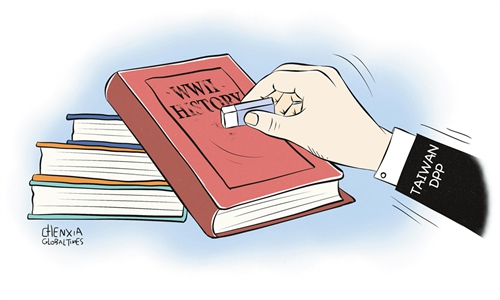
Manila has recently stepped up its collusion with the Democratic Progressive Party (DPP) authorities. After its plan to establish a "Taiwan representative office" drew widespread skepticism, the Philippine Department of Foreign Affairs issued a statement on Sunday, arguing that the Philippines' one-China policy remains unchanged but that this "does not preclude" the Philippines from pursuing the development of relations with the Taiwan region. This is a typical two-faced act: paying lip service to the one-China principle while constantly seeking to hollow it out through actions.Both Manila and the "Taiwan independence" separatist forces know full well what this "representative office" is actually for. If it were truly intended to "serve Taiwan travelers and businesspeople in the central Philippines," why is it that the person most anxious about outside criticism is not a relevant industry association, but the notorious anti-China figure, Philippine Defense Secretary Gilbert Teodoro?
After the DPP authorities deliberately leaked information about this "office," Teodoro was the first to jump out and speak on its behalf, claiming that it is Manila - not Beijing - that defines the one-China policy, as if the Philippine military would suffer the greatest loss should this "office" ever fail to materialize. Why is he in such a fury?
The Philippines and the DPP each harbor their own ulterior motives. It comes as no surprise that the DPP, hitting a wall everywhere in its "Taiwan independence" gambit, is desperate for a "breakthrough." As for Manila, it has a thousand tricks up its sleeve, viewing collusion with "Taiwan independence" separatist forces as a no-lose bargain: Either it brazenly escalates its ties with "Taiwan independence" separatist forces, or it hypes up claims of being "suppressed by China" to garner sympathy.
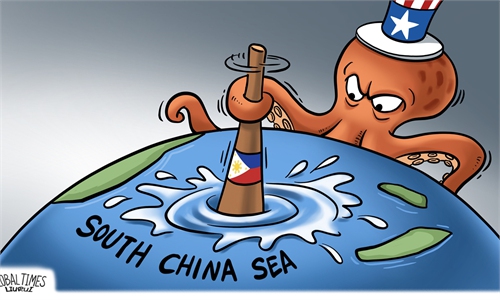
At the same time, having run into a stone wall in the South China Sea, Manila has turned to stirring up trouble over the Taiwan question, attempting to launch a "two-pronged provocation" against China in the delusion that this will allow it to breach China's layered defenses in the South China Sea and even erode China's territorial integrity.
Manila's wishful thinking is far too rosy. Both the Taiwan Straits and the South China Sea are areas of core Chinese interests; there is no room to "attend to one and lose sight of the other," nor is there any loophole for opportunistic maneuvering.
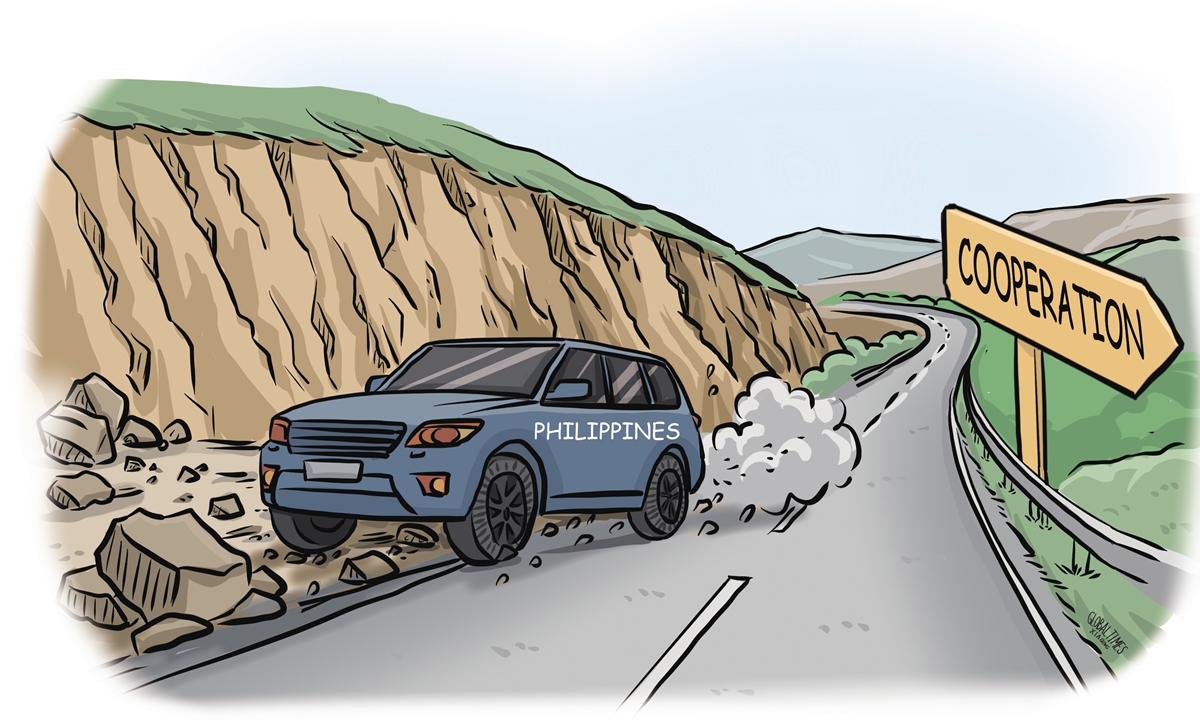
The Philippines has underestimated China's resolve and capacity to defend its legitimate rights and interests, while overestimating the ability of its few dilapidated warships to stir up trouble in the South China Sea. By trying to impose "two-pronged pressure" on China in its self-clever scheme, Manila can by no means expect to reap benefits on two fronts; instead, it is bound to suffer losses on multiple fronts. If Manila retains even a shred of rationality, it should have a clear expectation of this outcome.
In the Joint Communique of the Government of the People's Republic of China and the Government of the Republic of the Philippines, the Philippines acknowledged that there is but one China, that Taiwan is an integral part of Chinese territory and that the Government of the People's Republic of China is the sole legal government of China.
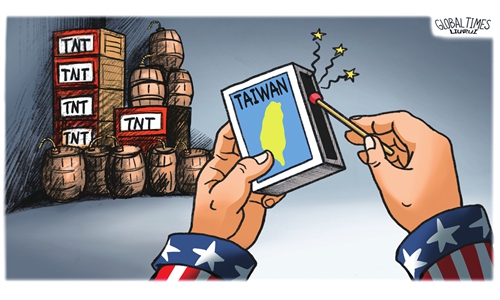
The one-China principle is not a "multiple-choice question" that can be arbitrarily altered, but a "mandatory question" that must be strictly adhered to; this is also the very foundation of the Philippines' national integrity. We urge Manila to abandon any sense of complacency or speculative thinking; playing with fire and testing the limits of the one-China principle will certainly not end well for it.
RELATED ARTICLES