China South Korea Photo:VCG
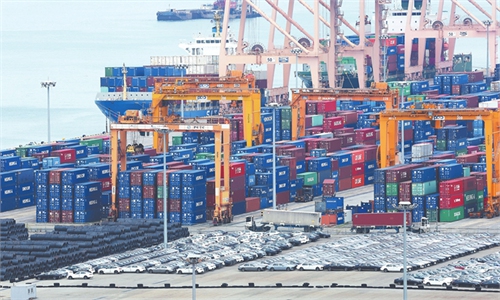
South Korean exports to China more than doubled to $16.6 billion from September 1 to 20, boosted by strong chip demand, South Korean media outlets reported, citing domestic customs data. Chinese experts said that the surge reflected both China's fast-expanding artificial intelligence (AI)-driven demand and South Korean chipmakers' increasingly pragmatic efforts to preserve access to a market that remains difficult to replace.Robust semiconductor shipments drove the country's export growth in the first 20 days of September. Exports of chips shot up 259 percent to $34.12 billion, the state-run Yonhap News Agency reported on Monday.
By destination, exports to China more than doubled to $16.6 billion, with those to the US surging 118 percent to $14.2 billion, the report said.
This was more than a typical rebound in the semiconductor cycle, industry experts noted. Surging demand for AI model training and inference is driving rapid expansion in AI computing infrastructure, which in turn is boosting demand for advanced memory and storage chips.
The sharp rebound extended the recent positive momentum in South Korea's chip exports to China, a trend that Chinese experts attributed to China's expanding demand for AI-related computing capacity, as well as South Korean chipmakers' strong commercial incentives and more independent trade considerations in maintaining access to the Chinese market.
China has long been one of the most important markets for South Korea's semiconductor industry, and the recent surge in chip exports to China reflected both sustained Chinese demand and the practical interests of South Korean companies in keeping supply chains open and stable, Lü Chao, a professor at the Liaoning Academy of Social Sciences, told the Global Times on Monday.
"China is not only a major market for South Korean semiconductors, but also an important part of the regional supply chain," Lü said.
The rebound also comes as China continues to expand its AI computing infrastructure. China's latest information and communications development plan calls for intelligent computing power to reach 9,800 EFLOPS by 2030, more than five times the 2025 level, underscoring rising demand for computing infrastructure and advanced chips as AI applications expand.
RELATED ARTICLES