Enemy state clauses in UN Charter remain highly relevant today: Chinese FM refutes Takaichi's remarks at UN
By , and Xing Xiaojing Published: Sep 23, 2026 07:05 PM


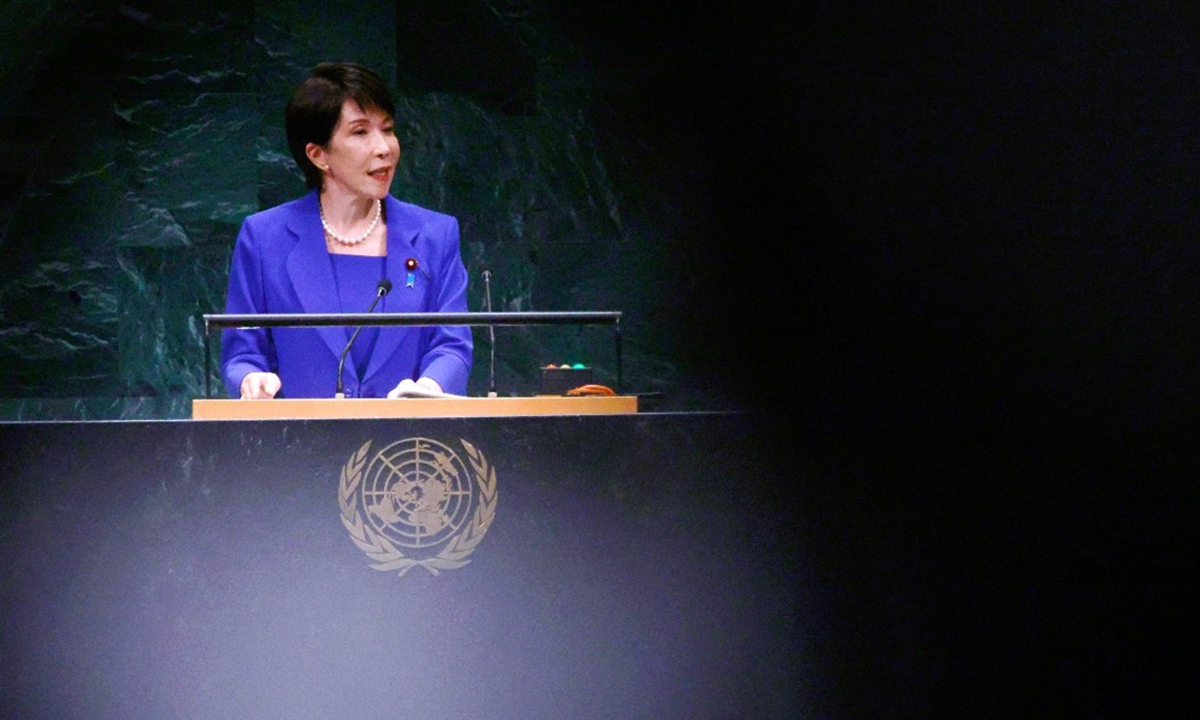
Japanese Prime Minister Sanae Takaichi speaks during the 81st United Nations General Assembly at the United Nations Headquarters in New York, on September 22, 2026. Photo: VCG
Japanese Prime Minister Sanae Takaichi called for the removal of the enemy-state clauses from the UN Charter during her first address to the UN General Assembly on Tuesday, drawing criticism from Chinese experts, who cautioned that Japan's push to remove the enemy-state clauses, alongside its ongoing military expansion, challenges the postwar world order and risks undermining regional stability. Takaichi's high-profile appeal at the UN could also backfire by drawing international attention to Japan's wartime history and the Japanese government's push for rearmament, experts said.
Speaking 70 years after Japan's admission to the UN in 1956, Takaichi mentioned Tokyo's "commitment to multilateralism". But to fulfill its duty of promoting peace, she claimed the UN "must be reborn." As part of that effort, she called for a review of the UN Charter and the removal of its enemy-state clauses, according to a report from the Japan Times.
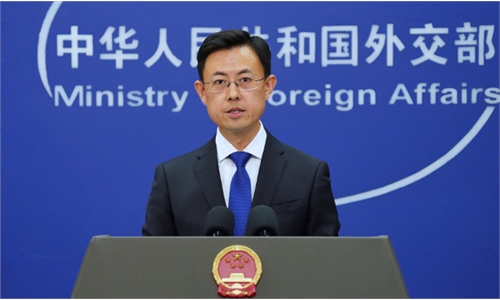
Asked to comment on Takaichi's claim that Japan is a "peaceful nation" and call for the UN to drop its "enemy state" label at the UN General Assembly, Chinese Foreign Ministry spokesperson Guo Jiakun said on Wednesday that the international community pays more attention to Japan's actions than its words.
Postwar Japan's concept of a "peaceful nation" was founded on deep reflection on history and a complete break with militarism. In reality, however, Japan's current government has not only denied Japan's history of aggression and glorified war crimes, but has also continued to strengthen its military and expand its arsenal, accelerated remilitarization, sought to abandon the "three non-nuclear principles and revise its pacifist constitution, and openly challenged the postwar international order. It has become a prominent factor threatening regional peace and stability, said Guo.
The "enemy state clauses" in the UN Charter constitute an important institutional arrangement designed to prevent fascism and militarism from again threatening international peace and security and provide an important institutional safeguard for defending the postwar international order. They remain highly relevant today, Guo said.
We urge Japan to learn from history, engage in deep reflection and earn the trust of its Asian neighbors and the international community through concrete actions, said Guo.
The enemy state provisions, contained in Articles 53, 77 and 107 of the Charter, were established by the Allied powers to prevent the recurrence of wars of aggression. The designation of "enemy states" in the UN Charter historically referred to Germany, Italy, Japan and their allied states during WWII, according to CGTN.
Lü Chao, a professor at the Liaoning Academy of Social Sciences, told the Global Times that Japan is in no position to call for the removal of the "enemy-state clauses" from the UN Charter. The UN was established in the aftermath of World War II, with preventing the resurgence of fascism and militarism among the key considerations underpinning the postwar international order. The clauses were introduced against this historical backdrop and carry particular historical significance.
Had Japan genuinely and thoroughly reflected on its wartime aggression and militarist past, the clauses would hardly remain a contentious issue today, said Lü, noting that yet Japan has never fully reckoned with that history. Against this backdrop, Takaichi's public push to remove the "enemy-state clauses" can be seen as a challenge to the international order established after World War II.
Japan's claim that the UN Charter's "enemy state" clauses no longer apply is unsupported by international law or practice, Wang Guangtao, an associate professor at Fudan University's Center for Japanese Studies, told the Global Times.
The clauses reflect the postwar order established after the defeat of the Axis powers, he said. They help the international community remember World War II, acknowledge responsibility for war crimes and prevent the recurrence of aggression. Their continued presence in the Charter underscores their historical significance, and Japan's push to remove them challenges that order.
More concerning are Japan's recent moves to loosen the constraints that have defined its postwar security policy, Lü said. Takaichi's call at the UN to remove the Charter's "enemy state" clauses comes amid this broader shift in Japan's security policy. Japan has increasingly portrayed China as a security challenge, including in its defense white papers. That position, coupled with its push to delete the clauses, warrants close scrutiny, Lü said.
Wang said Japan's campaign at the UN was closely linked to its broader diplomatic and security agenda. By seeking to remove the "enemy state" clauses, Japan was trying to distance itself from its wartime responsibility and postwar commitments, even as it expanded its military capabilities and pushed beyond postwar security restraints. Together, those moves posed serious risks to regional stability, he said.
Takaichi's appeal may backfire, Wang warned. Raising the issue at the UN may revive memories of Japanese aggression across East Asia and the wider Asia-Pacific, while drawing fresh attention to Japan's handling of its wartime history and its military expansion, said Wang.
RELATED ARTICLES