Why US consumer firms are doubling down on Chinese market?
From burgers to diapers, American businesses localize for China, and call it world’s best ‘pressure-test lab’ for innovation
By , and Chen Zishuai Published: Sep 23, 2026 09:15 PM


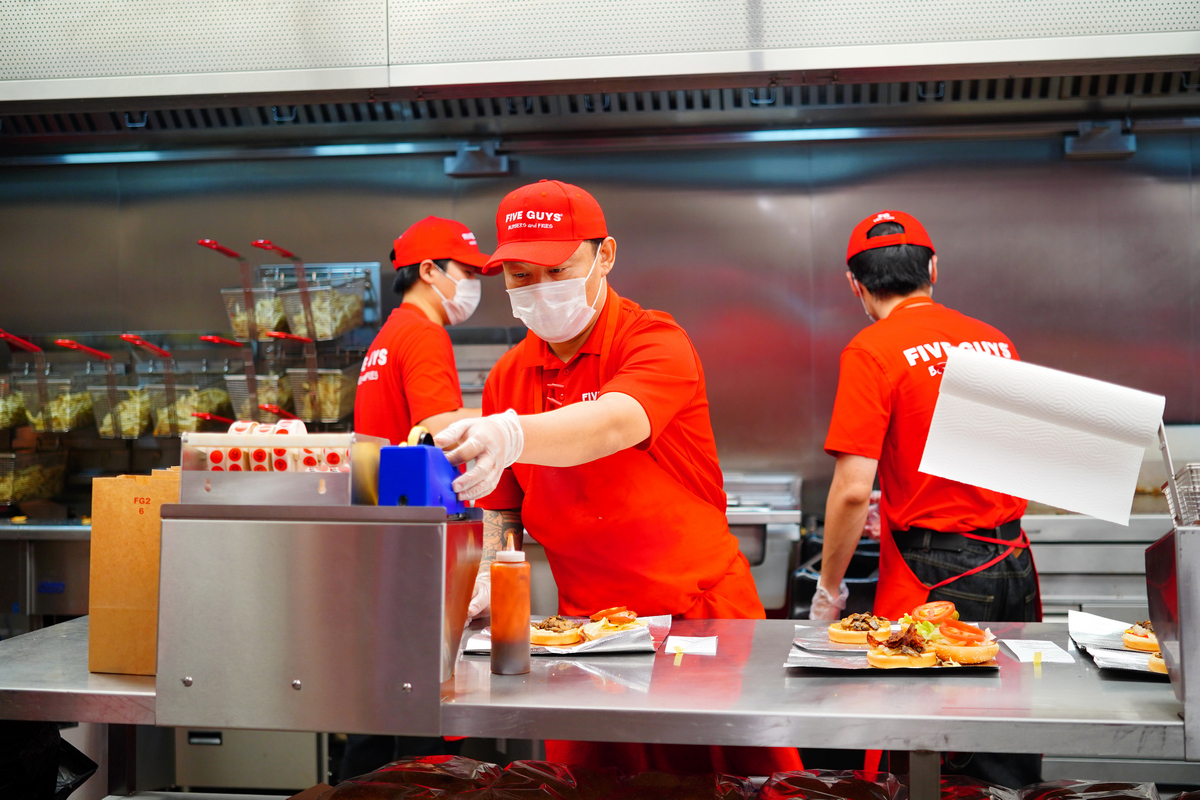
Staff members work at the American burger chain Five Guys in Beijing's Xidan Joy City shopping complex on August 18, 2026. Photo: VCG
A Shanghai white-collar worker surnamed Zheng had just finished a satisfying lunch at Five Guys. For the 20-something, who once studied abroad, visiting the American burger chain on Nanjing Road has become a weekly ritual - he describes as a "happy indulgence."
Zheng likes the atmosphere of the restaurant, which he said is a blend of "authentic American style" and "Chinese elements." On the shop's wall hang US comic book panels and the photocopied covers of old US magazines, while the signs on the tables indicate that the day's potatoes came from Tianmen, Central China's Hubei Province. The menu includes hamburgers, hot dogs, sandwiches, similar to those offered in the US, alongside customized flavors such as chili sauce better suited to Chinese tastes.
The Global Times visited the restaurant on a recent afternoon and found that about 80 percent of the seats were occupied even after the lunch rush, with foreign tourists at some of the tables. A Canadian traveler, who was in China for a short trip, told the Global Times that the brand was already famous back home and he had come to "check in" as soon as he saw the Shanghai store.
Five Guys opened its first Chinese mainland store in Shanghai in 2021. After building a following there, the American chain made a debut in Beijing in August and has since opened two more restaurants in the Chinese capital - joining a group of US fast-food brands, including Wendy's, Chili's, Texas Chicken and Popeyes, which are entering or expanding their presence in the world's second-largest economy.
The expansion of these American fast-food players in China is not merely about selling a foreign menu. For the same reason Zheng keeps coming back each week — fries cut from Hubei potatoes, a burger that tastes the same as it would be in Baltimore, the US — the fuller story is that American firms are localizing aggressively: launching new products first here first, expanding their research and innovation capabilities on the ground, and more broadly, shifting from an "in China, for China" strategy to one of "in China, for the world."
Customizing products
While US firms have long been scaling up investment in China, one of the key reasons they keep being drawn in is the country's dynamic, diverse and ever-evolving consumer market, where consumption is still upgrading and new demand continues to open up.
Kimberly-Clark Vice President and Managing Director of Greater China Guo Wei told the Global Times that the company's Chinese business has achieved "leapfrog expansion" since entering the market in 1994, as China's economy continued to grow and its consumer market kept upgrading.
"Over the past three decades, our company's revenue has grown rapidly and steadily, with performance multiplying every 10 years. China has become one of our fastest-growing and most dynamic strategic markets worldwide," Guo said.
He also noted a major shift among Chinese consumers from "meeting basic needs" to "pursuing a better quality of life" in the past decade, which - while unlocking new room for business growth - also "pushed" the US consumer brand to keep innovating and customizing its products and services.
In baby care, the company's Huggies diapers have gone through several generations of absorbent-core upgrades, thinning the core from 8 millimeters to 3 millimeters. Guo believed this change speaks to what young Chinese parents now want: quality, comfort, personalization and an emotional experience — not merely whether the product works.
That same consumer shift is showing up far beyond baby care. A number of US lifestyle and sportswear brands - from household names such as Nike and Under Armour to newer arrivals such as golf lifestyle brand Malbon — are reading a younger, more social China and rewriting their playbooks in the world's second-largest consumer market.
"What struck us most is how golf in China is getting younger, more female and more social. 'Golfcore' dressing has become a fashion topic among many young people on social media platforms like Xiaohongshu and Douyin, which means that we need to make clothes that not only work in the green but also as everyday outfits," said Kitson S. Kho, Malbon's Greater China Partner and Global Board Member, describing the thinking behind the US company's China plan.
Kitson pointed to how the US brand, which entered the Chinese market last year, has tailored its offering.
"China is vast, and its climate varies widely. In March, Shenzhen was already as hot and humid as Florida, while Shanghai still had a chill in the air. So in the same product season, we prepared both a breathable linen line and a soft, warm cashmere line for China — rather than simply shipping over the global assortment as is," he said.
Malbon was once designed in Los Angeles and sold to the world. Now its Shenzhen team already handles parts of creative and design work, drawing on young Chinese consumers' inventiveness and sense of aesthetics.
"The fashion industry used to see China as a manufacturing base and a source of extra sales. Today, China has become an important wellspring of consumer insight, product co-creation and retail-model innovation. In fact, the Chinese market is the world's best 'pressure-test lab' for innovation, meaning that any brands and playbooks that can win over young consumers here will be more competitive in any market," Kitson told the Global Times.
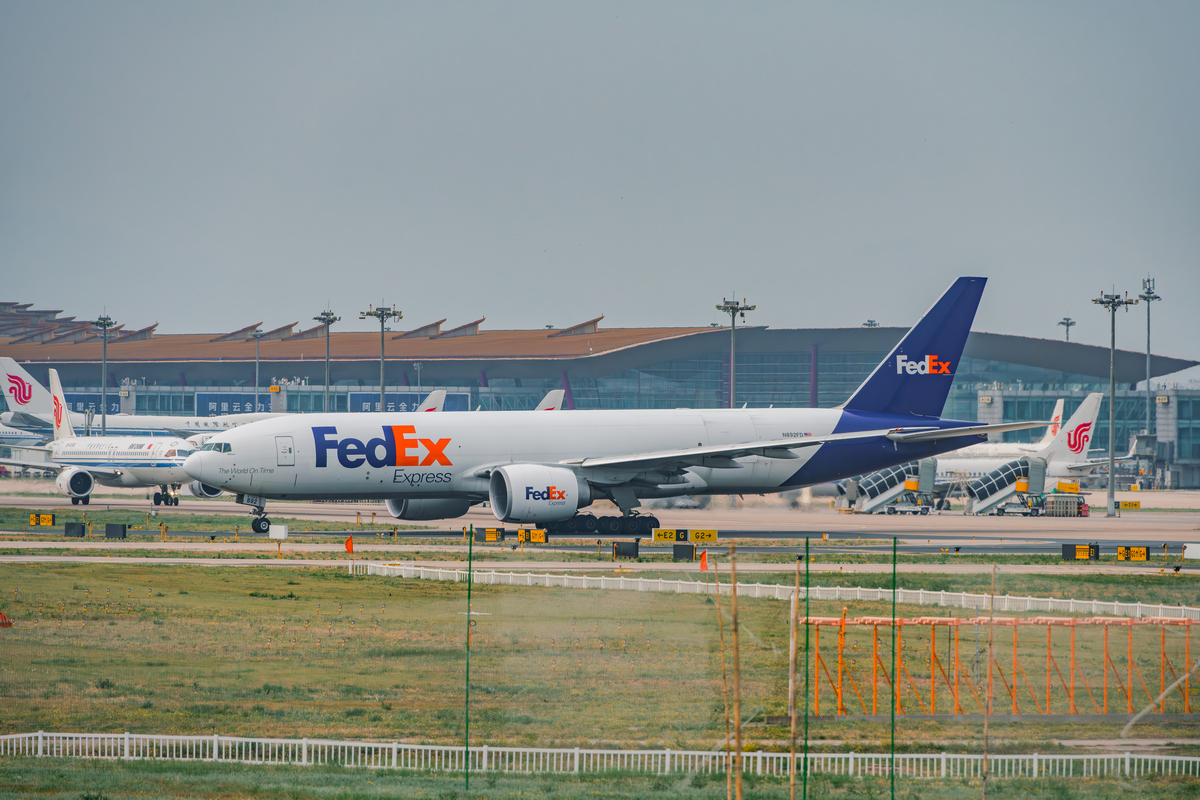
A FedEx cargo aircraft taxis on the apron in the Terminal 3 flight area of Beijing Capital International Airport on May 6, 2026. Photo: VCG
Source of innovations
That word — innovation — came up again and again in the Global Times' conversations with US executives, underscoring a profound shift that has made the Chinese market more pivotal, and harder to replace, for American companies.
Guo put the shift in starker terms. "At first, China was more of a high-potential emerging market. Today, it has become a key strategic market that combines consumption, innovation, manufacturing and a supply-chain hub for our company," he said.
The proof, he added, is already in the marketplace. The strong innovation capacity in the Chinese market is evident across multiple sectors - from digital consumption and e-commerce ecosystems to AI applications and consumer insights, new models and technologies often reach scale in China first, then ripple outward.
"In that sense, China is no longer just an adopter of global innovation, and they have grown to an important contributor and exporter for US companies," Guo said.
That export of know-how is not confine to consumer goods. It is also happening in the warehouses and sorting hubs that keep those goods moving.
In recent years, US logistics firm FedEx has introduced AI-powered sorting robots, intelligent warehousing equipment and advanced route-optimization tools in China to raise efficiency and improve customer experience. The project, launched in 2022, was built with local Chinese robotics firms, engineers and supply-chain partners and refined against real operating conditions. After being validated in China first, the logistics solution has been rolled out to overseas markets such as Singapore.
"China has become an important platform for logistics innovation," Poh-Yian Koh, president of FedEx China, told the Global Times.
"The country's dynamic digital economy and rich application scenarios provide an ideal environment for deploying technologies such as AI and machine learning. Insights and innovations developed in China help us create new solutions that can be applied across our global network, delivering greater value to customers worldwide," she stressed.
'Enlarging the market'
Against the backdrop of a complicated geopolitical environment, US companies simply can't afford the cost of staying out of the Chinese market or of not working with local partners, Helga Zepp-LaRouche, founder and chairwoman of the Germany-based Schiller Institute, told the Global Times.
According to her, China offers a number of advantages simply not matched by anyone else: a relatively stable domestic market with a large, growing middle class, stable supply chains, a vast pool of innovative engineers and workers, "China speed" in production, and effective application of AI and digitalization. Together, these factors create real room for US firms to grow at a time fraught with uncertainty.
Observers also outlined several ways that US companies improve capacity and book returns from collaborating with the Chinese market.
"For example, Tesla and Walmart use their China investments to better secure global supply chains; while P&G and some US pharmaceutical companies tap China's research and innovation capacity to make their products more competitive. Tech companies like Google, through their business and services in China, help Chinese companies expand overseas and follows those clients into more markets," Zhou Mi, a researcher at the Chinese Academy of International Trade and Economic Cooperation under the Ministry of Commerce, told the Global Times.
A survey released by the American Chamber of Commerce in China (AmCham China) in January showed 57 percent of surveyed US companies planned to increase investment in China. And more than half of the responding firms expect to be profitable in 2025, while 71 percent report no plans to relocate operation.
FedEx is one of many US companies that have plans to bolster investments in China.
Koh noted that the company's future opportunities span multiple dimensions. "The greatest opportunity in China lies not only in the size of its market but also in its growing connectivity with the world," she said, exemplified by the expanding China-Europe routes as well as deepening China-ASEAN trade.
As cross-border e-commerce continues to expand, regional trade deepens, and more Chinese businesses go global, China will remain a vital hub in the global trade and supply chain ecosystem, offering more development dividends to US businesses that remain committed to the market, US business representatives said.
They added that more positive and constructive interactions between the world's two largest economies would create greater certainty in their long-term investment plans in respective markets. The AmCham China survey also highlighted the critical importance of China-US relations for American business operation.
"I believe cooperation between [China and the US] will carry great significance for global innovation and economic development, as the past years of experience show that when companies, talent, ideas and supply chains can flow both ways, innovation speeds up, consumers benefit and the economy becomes more resilient," Kitson said.
He stressed that such collaboration is about "enlarging the market," rather than a zero-sum game, and companies from both sides could serve as a bridge in strengthening that connectivity.
RELATED ARTICLES