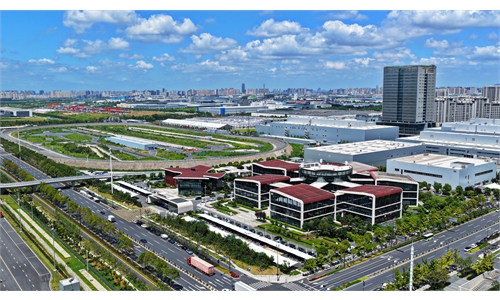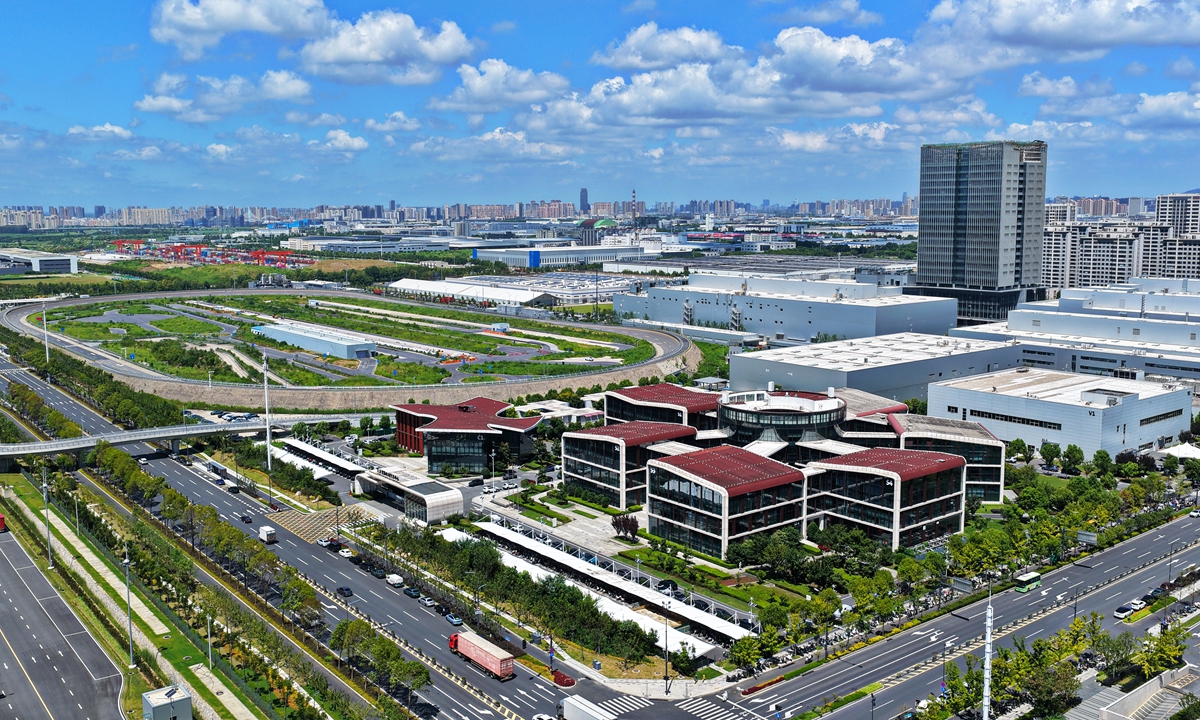
Aerial view of the Volkswagen smart electric vehicle facility in Hefei, East China's Anhui Province on August 24, 2026 Photo: VCG
China-Germany economic cooperation remains a win-win partnership, with the automotive industry offering a particularly clear illustration of its importance. China has become a leader in key technological areas such as batteries, autonomous driving and smart cockpits, and Germany stands to gain from closer exchanges in these fields.
For Germany, this cooperation is particularly important given the challenges facing its own industrial base. Labor costs are high, energy costs remain elevated, administrative procedures are complex, and the infrastructure is weak in many areas. These factors have contributed to decisions by automakers such as Volkswagen, Mercedes and BMW to shift parts of their production from Germany to countries including Hungary and Spain.
These weaknesses are well understood in Germany, but they cannot be resolved overnight. This is one reason why trade and exchanges with China remain beneficial. Cooperation with China can help Germany address and mitigate some of its industrial weaknesses.
China and its leading technology companies have become increasingly important to the development of the modern vehicle. Volkswagen's "In China, for China" strategy illustrates this trend. Vehicles for the Chinese market are being developed in East China's Anhui Province, where the process is significantly faster, more technologically advanced and considerably more cost-effective.
The Minister-President of Lower Saxony, a state in northern Germany, has proposed producing electric vehicles in German factories using Volkswagen technology developed in China. This demonstrates just how important cooperation with China is.
For the German automotive industry, maintaining a strong position in China is essential to its long-term survival. If you are not in China, you do not understand the car of tomorrow, and you cannot build it.
The key to the future therefore lies in pooling Chinese and German know-how. Germany retains strengths in vehicle engineering and handling, while China takes the lead in batteries, autonomous driving and smart cockpits. Combining these capabilities offers benefits to both sides. For this reason, investment by German companies in China is likely to continue rising. Many of the technologies of tomorrow are being developed in China, while Europe is moving too slowly in comparison.
At the same time, the growing debate over competition with China should not obscure the sources of Europe's own industrial woes.
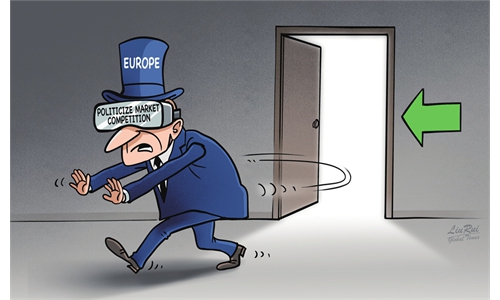
Chinese companies are sometimes blamed when the underlying problem lies in the performance of European companies themselves. Instead of relying on broad claims of "unfair competition," European companies and policymakers should examine the reasons behind differences in competitiveness.
In the debate over subsidies, China is frequently criticized for providing support to companies, but Europe and Germany also provide substantial subsidies when major investments and new jobs are involved. Germany's earlier plan to provide 10 billion euros ($11.46 billion) in subsidies for an Intel chip factory in Magdeburg is a case in point.

Ferdinand Dudenhoffer Photo: Courtesy of Ferdinand Dudenhoffer
Trade imbalances also require a more informed discussion and practical solutions. A genuine comparison of corporate cost structures and support measures would create greater transparency. Bringing automakers, suppliers, steel manufacturers and information technology companies together to discuss these issues would help ensure that the debate is based on facts rather than broad accusations.
Closer economic ties should also be accompanied by efforts to prevent these imbalances from becoming too pronounced. It is also important to avoid a situation in which the pricing practices of individual companies put excessive pressure on an entire industry. In this regard, the recent call by China's Ministry of Commerce for companies to avoid unfair practices abroad was a noteworthy and constructive move.
Beyond addressing economic differences, greater mutual understanding is also essential to more effective cooperation.
Industry executives generally understand how important China has become for German industry. In political circles in Berlin and Brussels, however, there is often less understanding of this reality. Many German politicians and members of the public do not know enough about China and often have a distorted image of the country.
German tourists, students and policymakers should have more opportunities to see China first-hand, including its factories, high-speed rail network, laboratories and major universities. First-hand experience can change the way people think. Seeing these developments for themselves is more valuable than simply hearing about them.
A better understanding of China's technological strengths is equally important. China now has some of the world's leading universities, where important competitive advantages are being developed. Germany should pay closer attention to these institutions and their research capabilities.
Chinese technology companies such as Huawei, CATL, Xiaomi, Tencent and Baidu should also engage more directly with the German public and demonstrate their capabilities.
At CAR - the Center Automotive Research - we regularly invite Chinese companies to participate in our industry congresses. We also attend major auto shows in Beijing and Shanghai to foster cooperation. Such exchanges can help deepen mutual understanding and enable us to work together more effectively.
Ultimately, a most productive approach is to address difficult questions directly and seek solutions together. Greater mutual understanding and fact-based discussions of economic differences will help Germany and China address their differences and continue to benefit from their economic partnership.
The author is a German automotive economist and director of CAR - Center Automotive Research - in Bochum, a research institute originally established at the University of Duisburg-Essen.
RELATED ARTICLES