Seizing the opportunity of the head-of-state meeting to advance China-US consensus on deepening constructive strategic stability
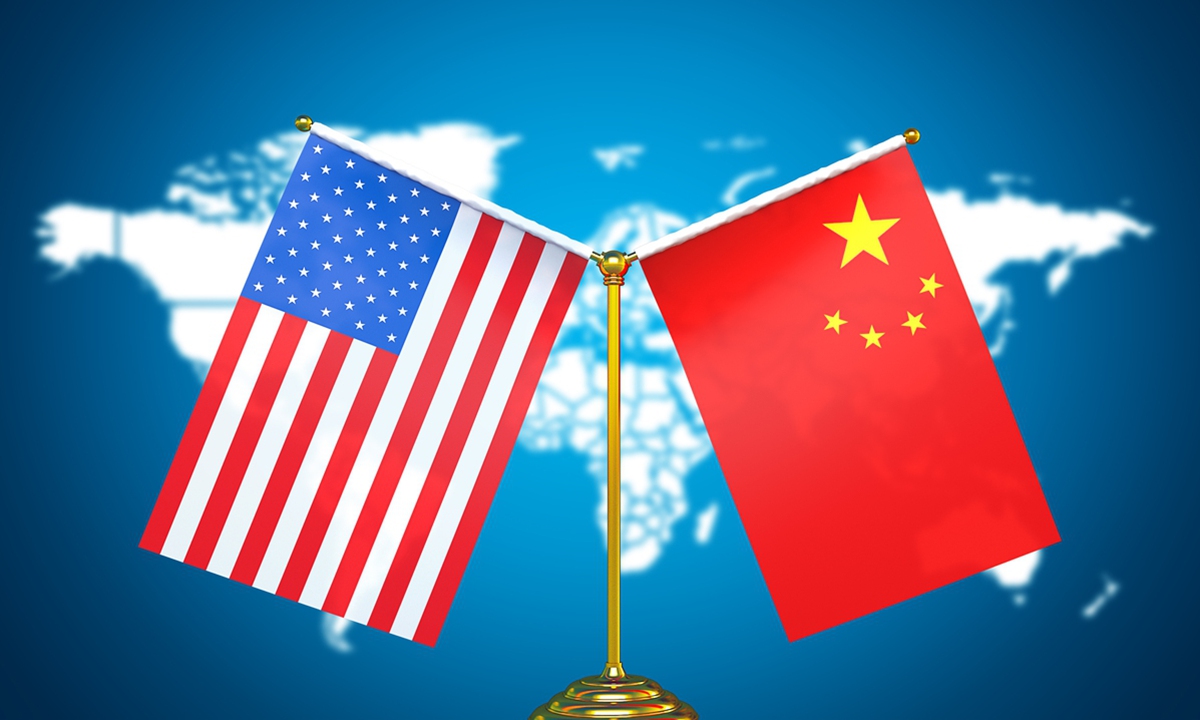
China US Photo: VCG
Chinese President Xi Jinping arrived in Washington on Wednesday afternoon for a state visit to the US at the invitation of US President Donald Trump. The exchange of visits between the two heads of state within six months is of historic and milestone significance. What will be discussed and what outcomes will be achieved during this visit have attracted close attention from the international community. It is widely believed that President Xi's visit will further promote the building of a constructive China-US relationship of strategic stability, helping the two countries enhance mutual trust, manage differences, and advance cooperation.
I. Against an interwoven agenda of multiple issues, China-US relations require greater stability of expectations
The significance of this visit extends beyond bilateral relations and has global implications. Governments, media outlets, and research institutions across many countries continue to closely follow the arrangements and agenda of the meeting, particularly its impact on security in Asia, global trade and economic stability, and industrial supply chains. As the world's two largest economies, policy decisions by China and the US in areas such as trade, technology, and security tend to generate significant spillover effects. The meeting also sends an important signal that both sides are maintaining high-level communication, managing differences, and avoiding miscalculation.
In current China-US relations, new and old variables including tariffs, trade, chips, artificial intelligence(AI) and the Taiwan question are intertwined, with growing linkages between these issues. Against this backdrop, the meeting provides an important opportunity for direct communication and risk management. Given the long-term nature of competition between China and the US and the difficulty of resolving deep-seated differences in the short term, continued engagement, stabilization of expectations, and risk control are essential foundations for ensuring the steady and long-term development of bilateral relations.
II. AI may become a new avenue for expanding China-US cooperation
Compared with traditional trade frictions, AI involves technological competition, industrial rivalry, as well as cybersecurity, military security, data governance, and social ethics, extending far beyond the scope of conventional technology industries. As competition in AI accelerates, how to manage technological risks and improve governance rules has become a shared challenge for China and the US.
During the previous leaders' meeting in May, AI was already included in the high-level dialogue agenda. the two sides had constructive exchanges on AI and agreed to hold dialogue between the two governments on this issue.
At present, China and the US have different strengths in AI development pathways, industrial ecosystems, and technological capabilities. Technological rivalry between the two sides will continue, exerting a combined impact on the development of the global AI industry. This meeting is expected to provide new guidance for exploring a model in which competition and cooperation coexist in emerging technological fields.
III. China-US economic and trade cooperation remains a shared practical necessity
In recent years, issues such as tariffs, trade imbalances, rare earths, and electric vehicles have continued to accumulate, and economic and trade frictions between China and the US have intensified, creating uncertainty in bilateral economic relations. Since the beginning of 2026, the two sides have, through multiple rounds of consultations, continuously signaled efforts to manage differences. While economic and trade differences persist, multiple rounds of consultations show that properly resolving differences and sustaining economic and trade exchanges through dialogue and negotiation remains an important way to reduce frictional risks and keep bilateral relations stable.
One of the important implications of this meeting is not only to advance the resolution of specific economic and trade issues, but also to provide a basis for maintaining communication, stabilizing market expectations, and safeguarding industrial and supply chain cooperation between the two countries. It will help further consolidate consensus on building "a constructive China-US relationship of strategic stability," thereby providing stronger practical support for the steady and healthy development of China-US relations.
IV. Beyond competition and differences, China and the US still share broad space for cooperation
Despite differences in areas such as economy, technology, and geopolitics, China and the US still share numerous non-zero-sum areas of common interest. In cultural heritage, for example, on September 16, the US returned 58 cultural relics, works of art and paleontological fossils to China, including a Bodhisattva statue from the Tianlongshan Grottoes in North China's Shanxi Province that had been lost overseas for more than a century.
Chinese Ambassador to the US Xie Feng said at the ceremony that the return of these cultural relics is a "tangible outcome" of the two countries' implementation of the consensus reached by the two heads of state during their meeting in Beijing and their efforts to build a constructive relationship of strategic stability. From the consensus reached at the heads-of-state meeting in May to concrete cooperation outcomes such as cultural relics repatriation in September, it is evident that high-level dialogue can both manage differences in key areas such as trade and technology and create conditions for practical cooperation in cultural and educational exchanges. The September meeting is expected to further expand areas of cooperation and produce more concrete outcomes, thereby strengthening the foundation for stable development of China-US relations.
As President Xi once noted: "In the face of winds, waves and challenges, we (the two heads of state) should stay the right course, navigate through the complex landscape, and ensure the steady sailing forward of the giant ship of China-US relations." Practice has fully demonstrated that strengthened coordination and cooperation between China and the US benefits both countries and the world. At a time when the world stands at a new crossroads, aligning China-US relations through a framework of constructive strategic stability, unlocking development momentum through win-win cooperation, and improving global governance through positive interaction represent inevitable choices in line with the trends of the times and international expectations.
The author is director of the Big Data Research Institute and associate dean of the School of Journalism & Communication, Jinan University. opinion@globaltimes.com.cn
RELATED ARTICLES