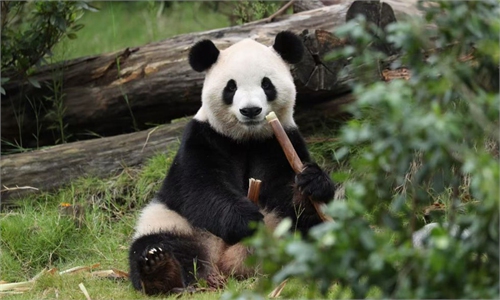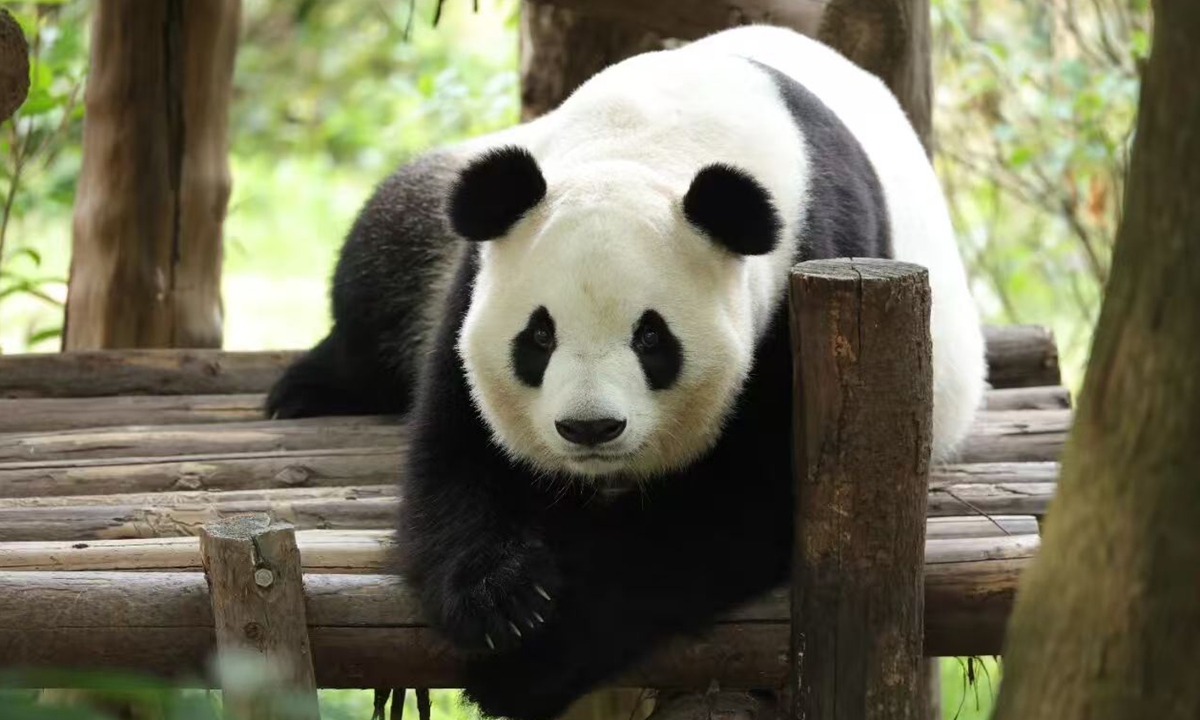
Giant panda Fu Shuang. Photo: China Wildlife Conservation Association
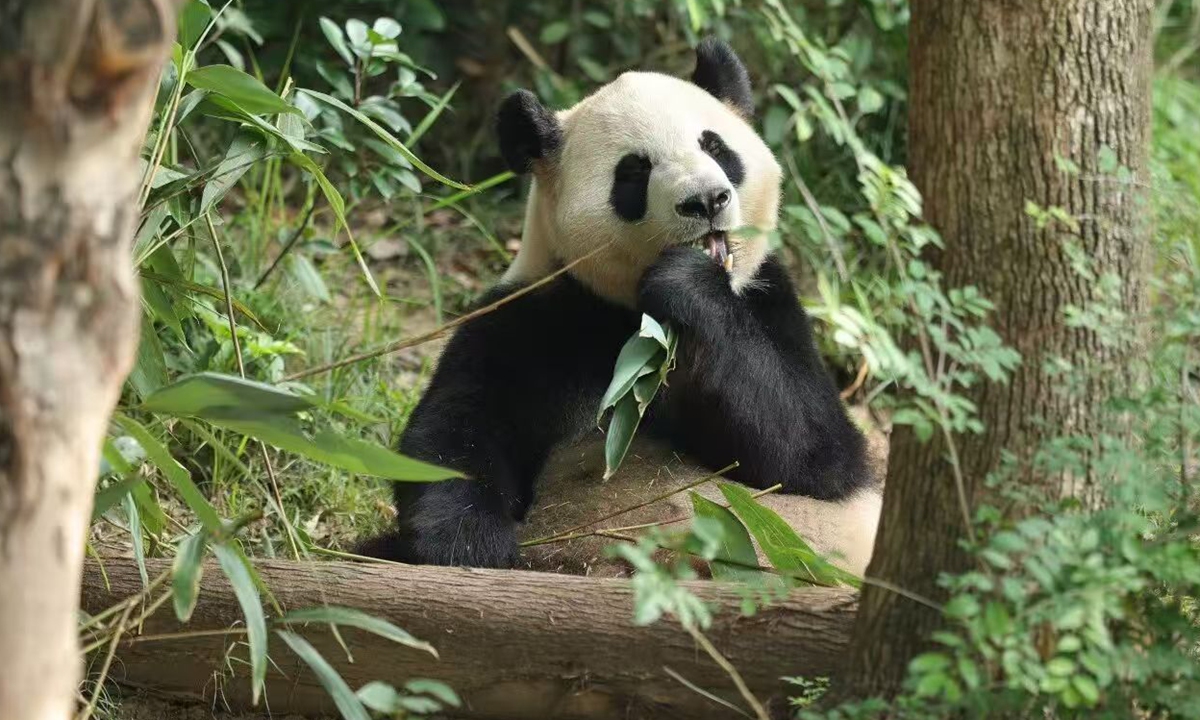
Giant panda Ping Ping. Photo: China Wildlife Conservation Association
A pair of Chinese giant pandas, Ping Ping and Fu Shuang, departed China for the US on Sunday, beginning a 10-year stay that will extend more than two decades of friendly cooperation between the two countries on giant panda conservation.
Under a giant panda conservation and research cooperation agreement signed in March 2025 between the China Wildlife Conservation Association and Zoo Atlanta in the US, two giant pandas from the Chengdu Research Base of Giant Panda Breeding, the two giant pandas departed for Zoo Atlanta on Sunday, the China Wildlife Conservation Association announced.
Ping Ping, a male, was born on March 17, 2020, while Fu Shuang, a female, was born on October 18, 2020.
Ping Ping, is easily recognizable by his large, dark eye patches. Sturdy yet agile, he is particularly adept at climbing trees and is often seen resting among the branches, the Global Times learned from National Forestry and Grassland Administration (NFGA).
Fu Shuang has a distinctive tuft of fluffy hair on top of her head and a full, slightly prominent forehead. Round in appearance yet quick to react, she has a keen ability to locate food and can quickly track down enrichment treats hidden by her keepers.
China and the US have made orderly preparations for the pandas' journey to ensure that the two giant pandas arrive safely and smoothly at Zoo Atlanta.
The Chinese side conducted pre-departure health examinations of the pandas, with both found to be in good health, and has sent experts on multiple occasions to provide technical guidance to the zoo.
The US side has assigned two keepers and veterinary experts, each with more than 20 years of experience, to accompany the pandas on the flight. Food including steamed corn buns, bamboo shoots and carrots, as well as water and medicines, has also been prepared to meet the pandas' needs during the journey.
Besides, Zoo Atlanta has made extensive preparations for their arrival, including renovating the panda facilities, securing a stable long-term supply of edible bamboo, assembling an experienced animal care and management team, and establishing comprehensive protocols and technical standards for their care.
After arriving in Atlanta, the pandas will enter quarantine, with Chinese keepers remaining at the zoo to care for them through the period. The team will also work with the pandas on acclimation and behavioral training, helping them adjust to unfamiliar surroundings and settle into their new home, according to NFGA.
Preparations for their arrival have been underway for months. Since December 2025, Chinese experts and Zoo Atlanta have held a series of online and in-person meetings to discuss an extensive upgrade of the panda facilities. The Chinese team provided technical guidance on everything from enclosure design and equipment to feeding, food supplies and veterinary care, recommendations that the zoo incorporated as renovations moved forward.
In mid-September, Chinese experts traveled to Atlanta for an on-site inspection of the renovated facilities. The indoor habitat has been significantly expanded and fitted with new climbing structures, stone platforms and pools, giving the pandas more space and more opportunities to explore, play and rest.
The zoo has also upgraded its monitoring system, allowing staff to keep closer watch over conditions in both the indoor and outdoor habitats.
Food should be one of the easier parts of the transition. Atlanta's climate is similar to that of Chengdu, Sichuan Province, allowing the zoo to source several varieties of edible bamboo locally and harvest them fresh throughout the year — an important advantage for animals whose diet depends overwhelmingly on the plant, according to NFGA.
The arrival of Ping Ping and Fu Shuang will build on more than two decades of giant panda conservation and research cooperation between the two sides. Over that period, the two sides have jointly carried out more than 30 research projects and published over 50 academic papers, making advances in panda breeding and cub-rearing, behavioral research, and disease prevention and control.
The partnership has also produced five litters and seven surviving cubs — the strongest breeding record among China's international giant panda partnerships with institutions in Europe and North America.
The China Wildlife Conservation Association said it believes the new round of China-US international cooperation on giant panda conservation will build on the strong foundation of past collaboration and deliver further progress in the treatment of major diseases affecting giant pandas, disease prevention and control, and scientific and technological exchanges, said the Chinese association.
The cooperation is also expected to support the conservation of giant pandas in the wild and the development of the Giant Panda National Park, contributing further to global biodiversity conservation and friendship between the Chinese and American peoples.
RELATED ARTICLES