Japanese economy Illustration: Chen Xia/GT
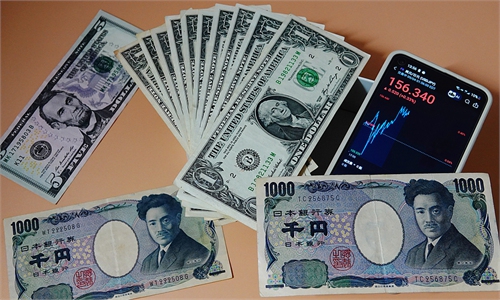
The Japanese yen remains under pressure despite the closely watched rate hike by the Bank of Japan (BOJ), the central bank. The dollar-yen exchange rate fluctuated within a relatively narrow range during the past week, standing at about 158 yen to the dollar on Friday, according to the BOJ. The yen's muted response to higher Japanese interest rates may point to deeper constraints in the Japanese economy.
The yen's weakness has become a persistent source of pressure for Japan. The US and Japan intervened jointly in the foreign-exchange market in July, while the BOJ raised its policy interest rate by 0.25 percentage points to 1.25 percent on September 18. Yet the pressure on the yen has not gone away. Reuters reported on Friday that the US had expressed concern about yen's weakness. Against this backdrop, Japan still faces pressure to stabilize the yen.
The yen's lingering weakness reflects a combination of economic factors. For instance, the US Federal Reserve raised its benchmark interest rate by 25 basis points earlier this month, bringing its target range to 3.75 percent to 4 percent. This has left a wide interest-rate gap between the US and Japan, weighing on the yen and making it harder for Japan to stabilize its currency.
For Japan, the persistence of the yen's weakness may deepen the economic predicament it already faces. On the one hand, the yen's performance during the past week suggests that the widely anticipated rate hike has had only a limited effect on the currency. If Japan wants to provide further support for the yen, the BOJ may be required to raise interest rates further.
On the other hand, further rate hikes would come with greater costs. Higher borrowing costs could weigh on household spending and cripple business investment, adding pressure to an economy that is still trying to achieve a more durable recovery.
For Tokyo, the fiscal constraint is even harder to ignore. Japan's gross government debt stands at about 230 percent of GDP, according to media reports. Higher interest rates will gradually add to the government's interest bill as existing debt is refinanced at higher yields. That pressure could become harder to manage if the Japanese government pursues an expansionary fiscal agenda.
This is where Japan's fiscal challenge becomes more complicated. The Mainichi reported earlier this month that budget requests from Japanese ministries for fiscal 2027 totaled 143 trillion yen ($918 billion), a record high for the fourth consecutive year. The Ministry of Economy, Trade and Industry sought 5.70 trillion yen, including 4.53 trillion yen for investment in areas such as artificial intelligence and semiconductors.
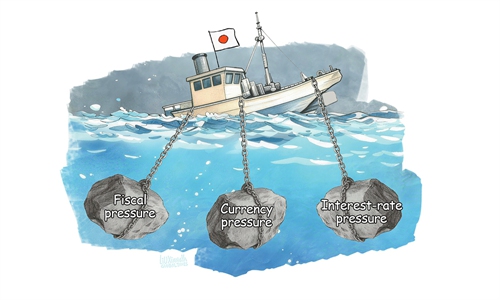
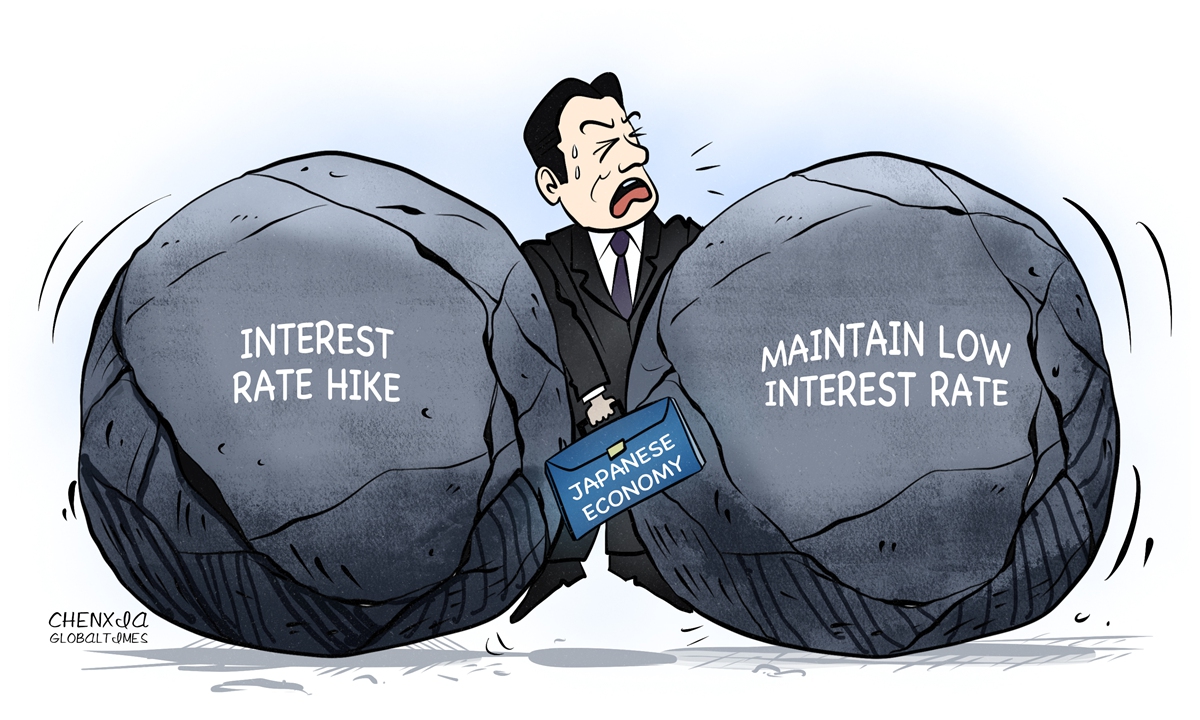
Taken together, these pressures create a very difficult policy dilemma for Tokyo. Higher interest rates may help ease pressure on the yen, strengthen the currency and address concerns from Washington. However, the need to support economic growth and maintain fiscal spending limits how far interest rates can rise, making monetary tightening a costly choice.
This tension has become more visible in the yen's recent performance. The 25 basis points rate hike may not have been enough to ease pressure on the currency. Yet the further policy rates rise, the greater the strain on economic growth and public finances. Japan thus faces a difficult trade-off: containing pressure on the yen without adding too much to fiscal costs at home.
The challenge becomes more complex as the Japanese government pursues an expansionary fiscal agenda, while market jitters about Japan's fiscal position are also growing. Higher rates would put greater pressure on fiscal spending by Tokyo. Supporting the yen, particularly amid rising pressure from Washington, may come at a greater cost to Japan's increasingly fragile economy.
The author is a reporter with the Global Times. bizopinion@globaltimes.com.cn
RELATED ARTICLES