Chinese scientists create 1st acoustic profile of Qiantang River tidal bore
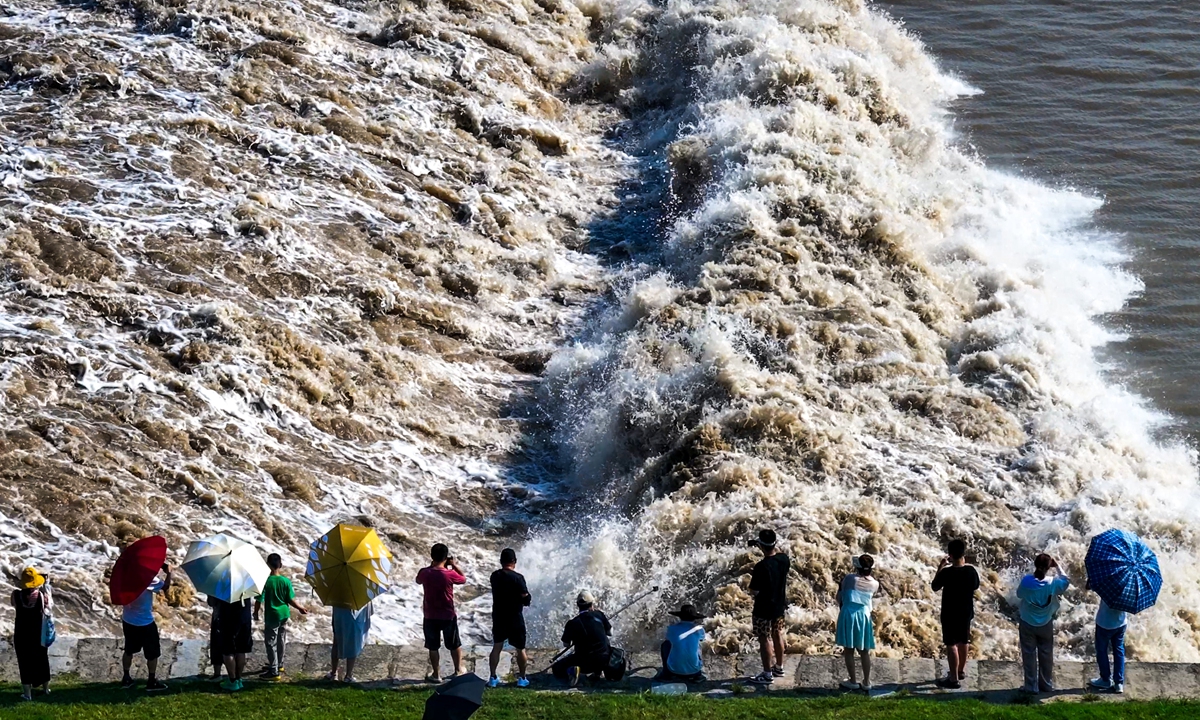
Qiantang River tidal bore Photo: VCG
Chinese scientists have created the first "acoustic profile" of the Qiantang River tidal bore located in East China's Zhejiang Province, according to a press conference held in Zhejiang's Jiaxing on Sunday.The Qiantang River tidal bore is renowned worldwide for its spectacular scale and its unique combination of natural landscapes and cultural significance. Along with the Amazon tidal bore in Brazil and the Ganges tidal bore in India, it is regarded as one of the world's three major tidal bores.
Around the Mid-Autumn Festival, which fell on Friday this year, the Qiantang River enters its annual prime viewing period for its spectacular tidal bore. A rare natural phenomenon, the Qiantang tidal bore takes on a variety of dramatic shapes, drawing countless visitors to the riverbanks to witness its power.
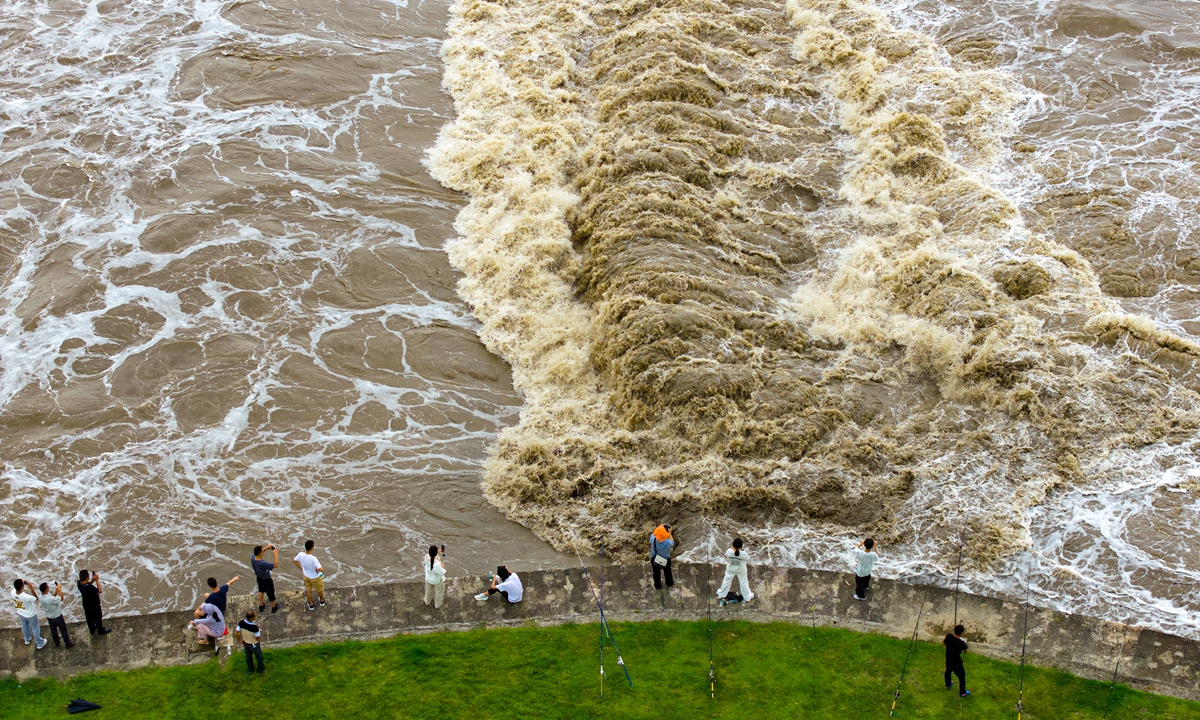
Qiantang River tidal bore Photo: VCG
Viewing the Qiantang River tidal bore has long been a tradition in nearby regions, with people using their ears to experience the soundscape of the tidal bore and its changing dynamics. This year, researchers conducted the first ever systematic quantitative study of the tidal bore's soundscape, collecting more than 10 high-fidelity audio samples of typical one-line shaped tidal bores during the 2025-26 high-tide season at a monitoring station in Haining, Jiaxing. The loudest one-line tidal bore recorded a maximum sound level of 78.04 decibels, which is comparable to that of a busy urban road, according to the press conference.This scientific inquiry into the Qiantang River tidal bore covers tidal safety, ecological conservation, cultural tourism and public education, with the aim of safeguarding this unique natural gift of the Qiantang River.
Mu Jinbin, deputy director of the Zhejiang Institute of Hydraulics and Estuary, said at the press conference that the scientific research team discovered a new scene at the Jianshan section of the Qiantang River, which they dubbed "three tides transforming into a butterfly."
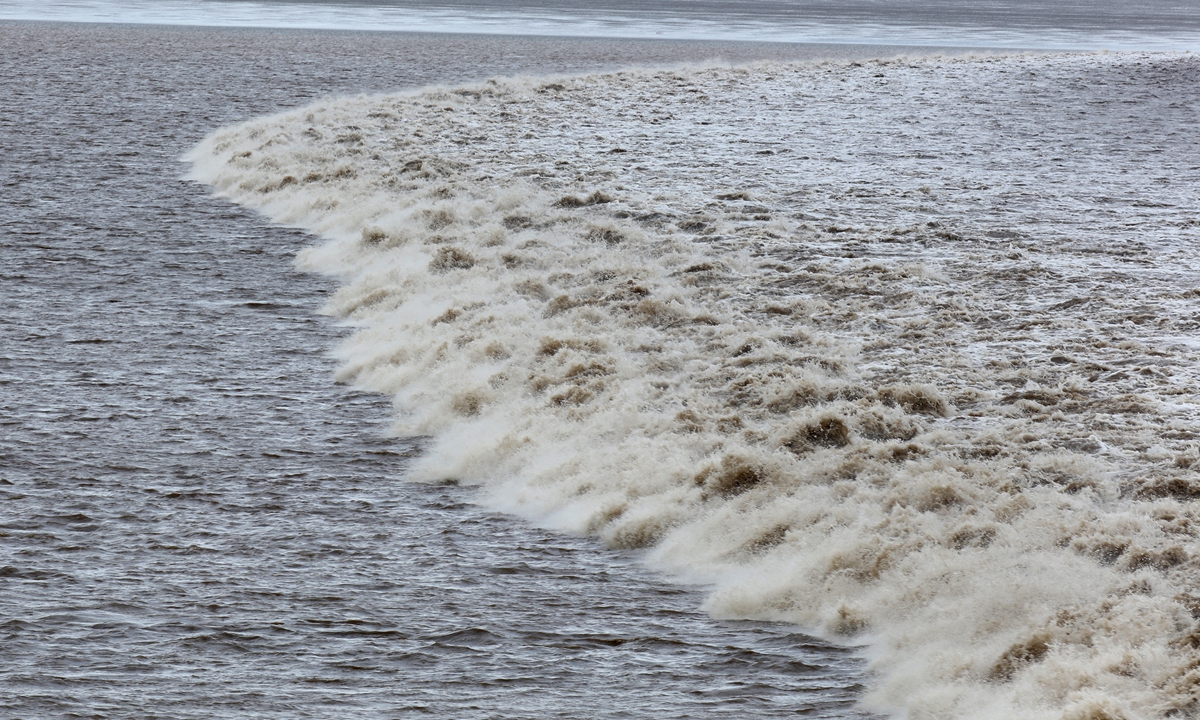
Qiantang River tidal bore Photo: VCG
"Three streams of tidal water cross to form a triangular tide, which then further evolves into a butterfly-shaped tide, adding a new form to the tidal bore landscape," Mu said.The tradition of viewing the Qiantang River tidal bore dates back more than 2,000 years in China. The Hangzhou Municipal Bureau of Landscape and Cultural Relics has been exploring the potential universal value of the "Qiantang River Tidal Culture Landscape" as a World Heritage Site and studying a pathway for its nomination, with the aim of adding another World Heritage Site to Hangzhou, after the West Lake Cultural Landscape, the Grand Canal (Hangzhou Section), and the Archaeological Ruins of Liangzhu City.
RELATED ARTICLES