ARTS / CULTURE & LEISURE
‘China Through Overseas Eyes’ aesthetics forum held online
Deepen understanding while avoiding flattening differences
By Published: Oct 07, 2026 10:09 PM
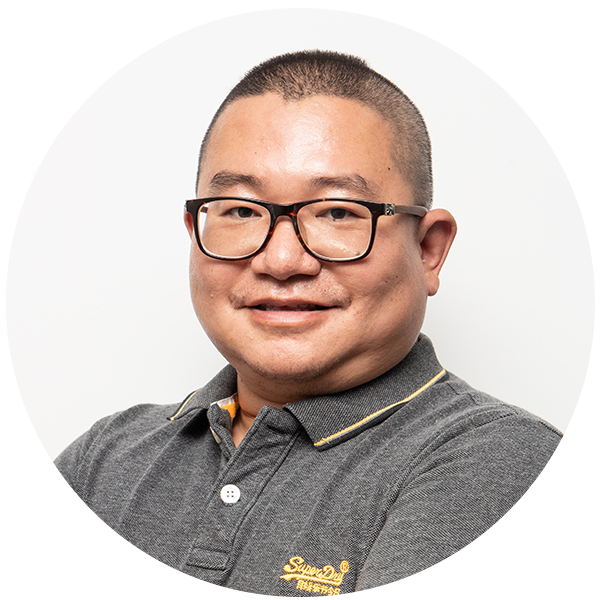
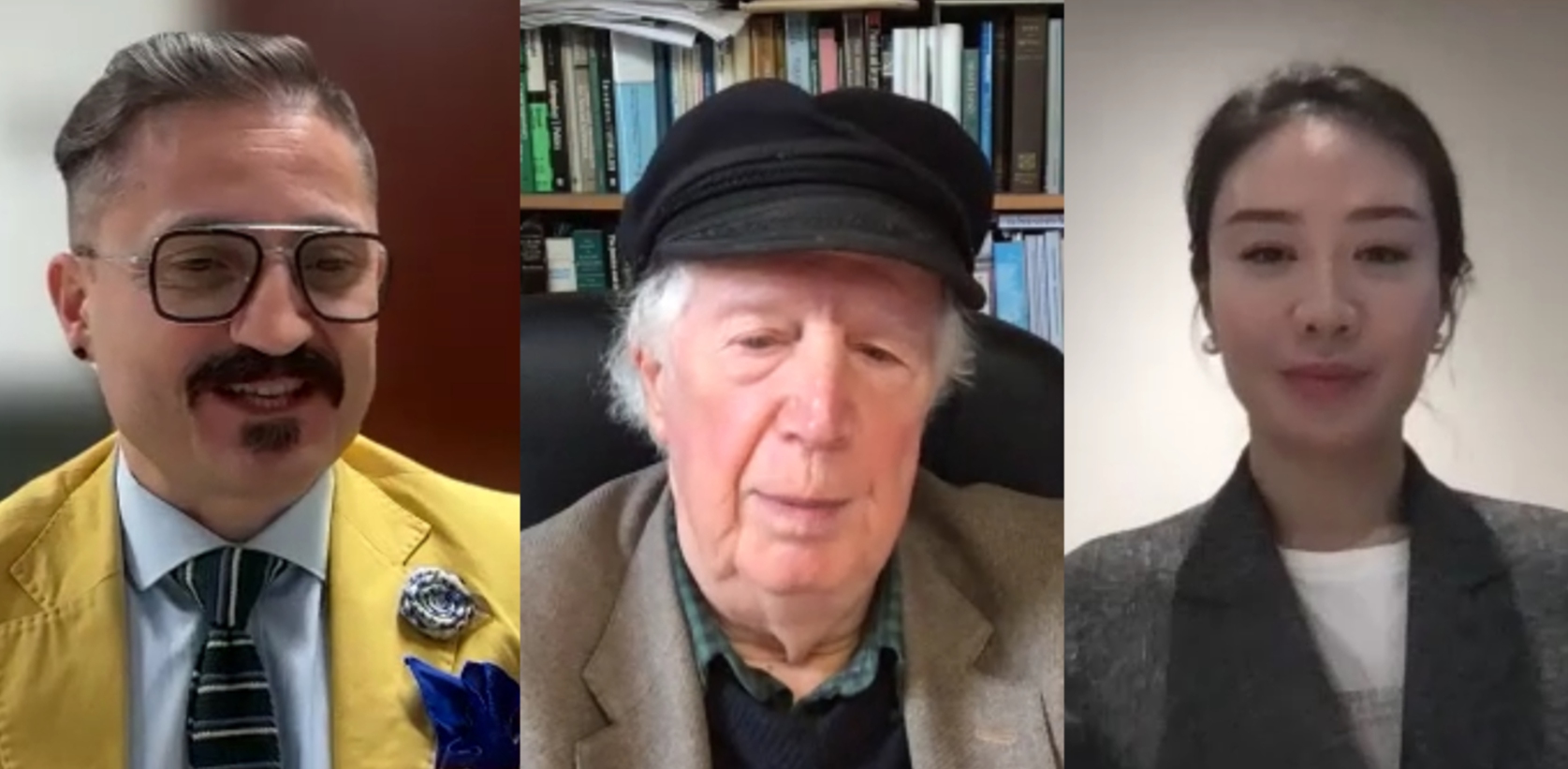
From left: Andrea Bellini, Alan Macfarlane and Ai Lin
A forum titled "China Through Overseas Eyes: The Global Expression of Chinese Aesthetics and Dialogue Among Civilizations" was recently held online. Hosted by the Global Times, the event was moderated by Andrea Bellini of the School of Arts at Peking University. Alan Macfarlane, emeritus professor at the University of Cambridge, fellow of the British Academy and life fellow of King's College, and Ai Lin, director of the Deji Art Museum in Nanjing, delivered keynote speeches and joined discussions on the overseas communication of Chinese aesthetics, digital museums, cross-cultural understanding and museum cooperation.Macfarlane began with the paradox of globalization. The world is more connected, he said, but cultural distance between civilizations has not disappeared. New thinking is needed: We must deepen understanding while avoiding flattening differences. He took the Chinese word shanshui as an example. It is often translated in English as "landscape," but the word literally means "mountain and water" and brings together movement and stillness, solidity and fluidity, relations rather than isolated objects. Since the Renaissance, the West has emphasized perspective and the observer looking out at the world. In Chinese painting, there is no privileged vantage point; the eye journeys through the landscape. In Western painting, humans often dominate nature, while in Chinese painting, they are often tiny and subordinate to nature.
Macfarlane also stressed emptiness. Westerners often see blank space as unfinished, but in Chinese painting, emptiness is not absence but potential - what is not painted may be as important as what is painted. Therefore, simply hanging a Chinese painting on a museum wall with a label giving artist, dynasty and date does not make it intelligible. Museums do preserving objects well, but preservation can mean separation from poetry, music, the landscape, social relationships and ritual. Digital museums offer new possibilities: A painting can be encountered alongside its poems, calligraphy, the sound of musical instruments, images of mountains, and explanations of Taoist, Confucian and Buddhist ideas. Visitors become travelers, not just spectators. The greatest contribution of museums is not to make Chinese and Western aesthetics more alike, but to help people perceive their differences more deeply and begin a conversation through curiosity, imagination and beauty.
Ai introduced the Deji Art Museum's digital exhibition of the Jingling Scroll, a long scroll depicting ancient Nanjing. If the painting has simply been placed in a display case, visitors unfamiliar with Chinese culture may only see it depicts "many people." The museum therefore created an immersive digital exhibition using a huge LED screen about 110 meters long and 3.6 meters high. Visitors wearing smart wristbands can choose figures using their phones. Digital avatars then follow them in real time on the LED screen, allowing them to enter the painting and interact with its residents. A fortune teller, for example, can tell visitors their Chinese zodiac sign based on their birthday, helping foreign viewers understand a concept they may have heard of but never personally experienced.
Ai said the exhibition allows visitors to enjoy "a day in the Song Dynasty (960-1279)" and see how the city functioned, how people lived and how public spaces were used. The exhibition has traveled to Paris and Boston, where local visitors may know little about Nanjing or ancient China. However, curiosity is the first step to learning more. For instance, the experience shows visitors that 1,000 years ago Nanjing already had a kind of food delivery service. Ai noted that cultural communication should not be one-way but two-way and interactive, with emotional resonance as the priority.
During the dialogue, Macfarlane said he noticed that, after 2002, Chinese museums became much better funded and organized. The Cambridge Rivers Project brought Nanjing and Suzhou to Cambridge, along with Chinese poets such as Bei Dao and calligraphers. Yet Western ignorance about China remains huge, he noted. In Cambridge, some well-educated historians and literary scholars cannot name a Chinese emperor, dynasty or event, and know little about Taoism or Buddhism. This ignorance is still at about 95 percent, though it is beginning to disappear.
Ai observed that more international visitors are coming to China, including Nanjing, which became a sister city to Florence of Italy in 1980. Chinese museums used to pay little attention to how international tourists approached and enjoyed their culture. Now they are prioritizing cultural translation. She said Chinese museums are using themed exhibitions and digital technologies, and bringing exhibitions abroad. But helping foreigners understand China's different dynasties, folk cultures and historical compositions remains difficult.
On historical accuracy, Ai explained that the original Song version of the Jingling Scroll was lost and that the existing version is a Qing Dynasty (1644-1911) copy. The Qing Dynasty's Qianlong Emperor had admired the original painting and ordered court painters to reproduce it. Delving into the original painting's background, the digital exhibition makes use of a Song Dynasty setting to help audiences better understand ancient Nanjing.
Macfarlane suggested giving each visitor an AI-guided device that can answer questions like a curator, explaining Chinese medicine, music and philosophy. Ai stressed real-life experience, self-exploration and emotional resonance. On museum cooperation, she said demand for international cooperation is growing, but cooperation cannot be limited to simple loans; it needs long-term curation, deep research and cross-cultural translation.
Ai also noted that young Chinese people often make museums their first stop in a city and are eager for global perspectives.
Macfarlane added that some Washington DC museums show a 10-15-minute orientation film before visitors enter, giving them a mental map. He said young Chinese are curious and open, while many in the West remain indifferent. He recalled a Chinese friend who was shocked to read a 19th-century Western traveler's account of Qing China and realized that people then thought and felt much as we do. Ai warned that social media algorithms tend to give people what they like. Her 83-year-old grandmother often asks her whether what we see online is real or merely what the internet wants us to see. To seek truth, Ai suggested that people should also read books, visit cities, go to museums and talk to local people.
RELATED ARTICLES