A view of Seoul, South Korea's capital city, in Autumn Photo: VCG
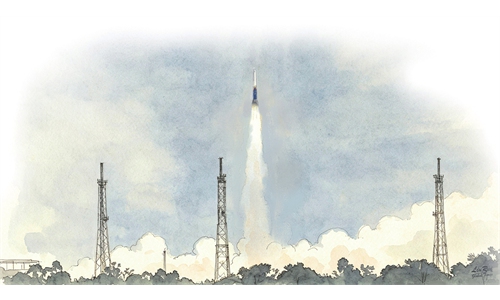
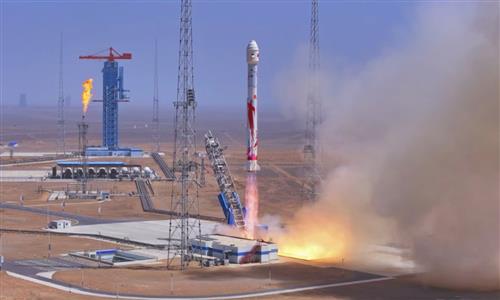
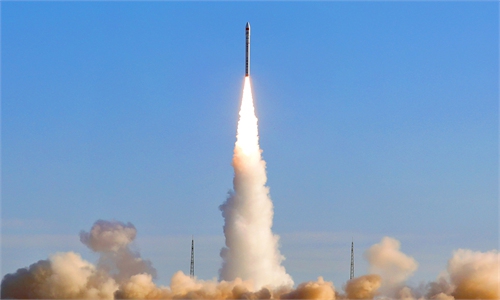
South Korea launched its homegrown Nuri rocket for a fifth time on Wednesday, sending a record of 15 satellites into orbit, the Yonhap News Agency reported. The launch was Nuri's first attempt to deploy multiple primary satellites in space.
The role of private companies such as Hanwha Aerospace significantly expanded in this latest launch, marking another critical step in transitioning the government-developed Nuri into a space transportation system led by the country's private enterprises.
The country's intention to rely more heavily on the private sector to advance its space ambitions has drawn international attention to its ongoing industrial transformation.
For a long time, South Korea's space efforts were led by state-owned research institutions, with core technology development and launch missions coordinated through official channels. But this time, Hanwha Aerospace, the rocket's prime systems contractor, expanded its role beyond manufacturing and final assembly to actual launch operations, according to South Korean media reports.
It was a significant step toward a space industrial system led by the private sector, a deliberate push to build up a commercial space sector and a complete space supply chain. It's worth watching how far and how fast that transition will proceed.
The first reason the transition is worth anticipating lies in the market. The global commercial space sector is witnessing explosive growth in low-Earth-orbit (LEO) satellite constellations, Earth observation and space research missions. The Asia-Pacific region stands out as the world's fastest-growing commercial space market. According to Global View Research, the global LEO satellite market is projected to reach $41.31 billion by 2033, with a compound annual growth rate of 14 percent from 2025 to 2033.
The LEO satellite market in the Asia-Pacific region is expected to register the fastest annual growth rate of more than 17 percent from 2025 to 2033. Rapid digital transformation and regional cooperation in space are key drivers behind this region's expanding LEO satellite footprint.
South Korea's commercial space sector evolution will draw rising attention from other parts of the world. Benefiting from its relatively comprehensive industrial system, its sophisticated electronics sector in particular, the country boasts solid cost-control capabilities in satellite manufacturing and ground equipment development.
As a latecomer to space explorations, South Korea may prove more flexible in adopting new technologies and modern business models. That combination could be precisely the foundation for differentiated competition in space.
Nevertheless, the leap from successful rocket launches to viable commercial service contracts involves far more than technological reliability. It also requires accumulated market credibility, resilient industrial supply chain and highly efficient and standardized operational systems - all important thresholds for South Korea's space industry to cross.
Even so, the strategic value of South Korea's commercial space launches lies in pushing the international space market further toward diversification. A diversified market ecosystem can drive faster technological iteration, service upgrading and price optimization, offering global customers more launch options and service solutions.
The external environment in Asia is also favorable. Asia's expanding commercial space activities are creating greater opportunities for the regional division of labor and fostering collaborative chances, with different economies excelling in rocket manufacturing, satellite development and space data applications.
If South Korea can integrate into this regional ecosystem, its commercial space development will become part of Asia's overall competitiveness.
Ultimately, commercial space is a field where trust accumulates over the long term. If South Korea can move beyond technology validation toward institutionalized transparency and broader cooperation — say releasing more concrete, businesslike information about its future missions — it will not only shore up its own commercial space ecosystem construction but also inject new momentum into the positive interaction of Asia's regional industrial chain.
RELATED ARTICLES