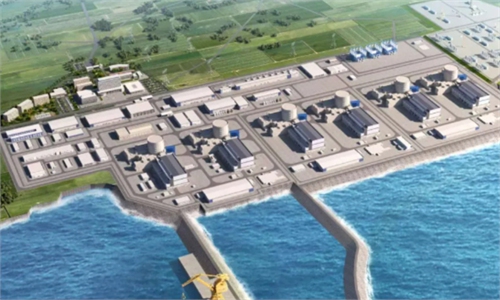
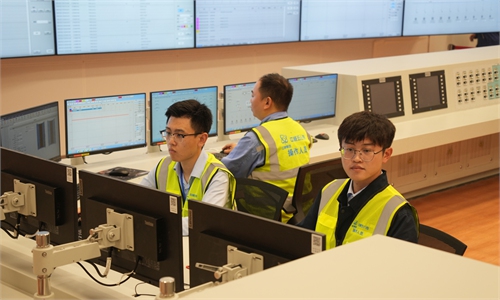
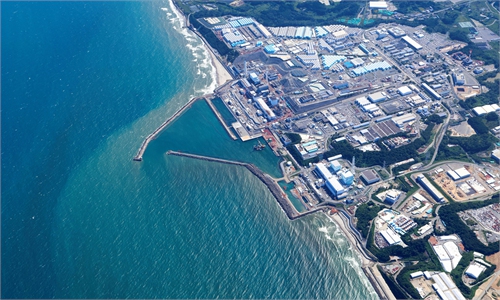
Tianwan nuclear power plant Unit 7 in China-Russia cooperation project connected to grid, to enter commercial operation within the year
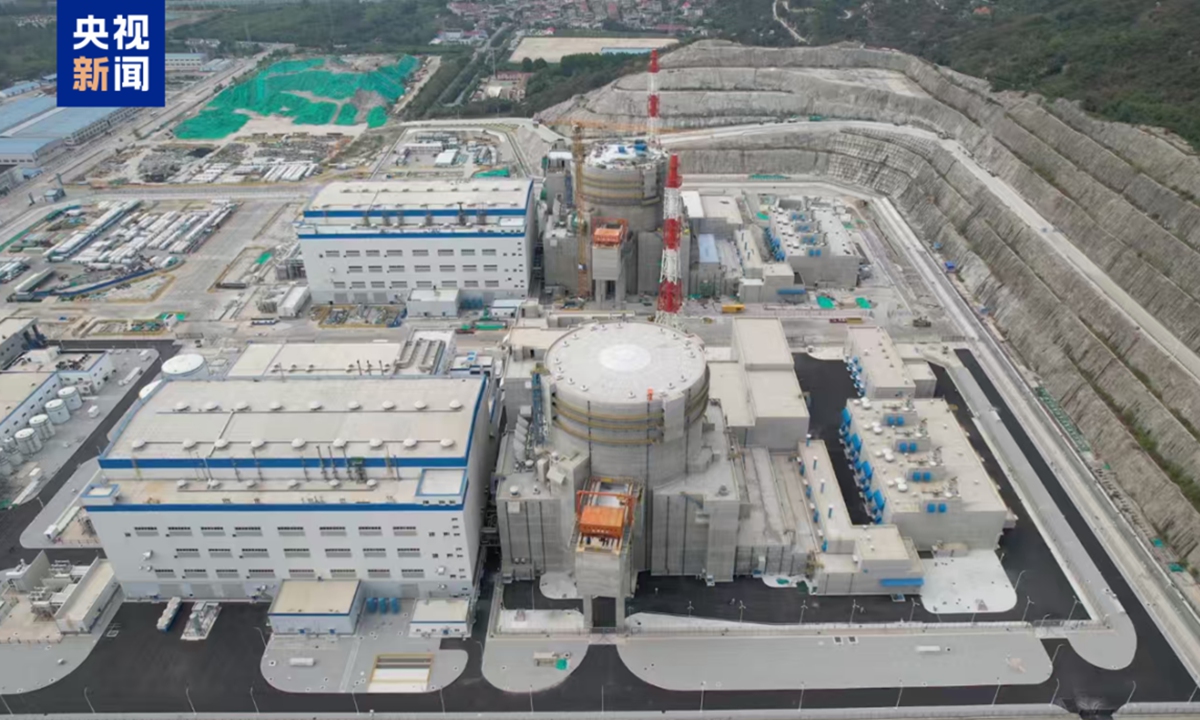
Units 7 and 8 of the Tianwan nuclear power plant in Lianyungang, East China's Jiangsu Province. Photo: CCTV News
Unit 7 of the Tianwan nuclear power plant in Lianyungang, East China's Jiangsu Province, was successfully connected to the grid on Thursday, officially sending its first kilowatt-hour of electricity to the grid and laying a solid foundation for its subsequent commercial operation, the Global Times learned from China National Nuclear Corporation (CNNC).
The unit is one of four units under a China-Russia nuclear energy cooperation project. It adopts third-generation nuclear power technology and has a designed service life of 60 years, with an annual power generation of nearly 10 billion kilowatt-hours. Construction of the broader four-unit China-Russia cooperation project was launched on May 19, 2021.
Following the successful grid connection, Unit 7 will undergo a series of tests as scheduled to further verify its performance and ensure that it meets the conditions for commercial operation.
The Tianwan nuclear power plant is planned to have eight units in total. Units 1 to 6 have safely and stably generated more than 550 billion kilowatt-hours of electricity, while Unit 7 is expected to enter commercial operation within the year.
Once all eight units are in operation, the Tianwan nuclear power base will have a total installed capacity of more than 9 million kilowatts and generate more than 70 billion kilowatt-hours of electricity annually. It is expected to reduce carbon dioxide emissions by 57.4 million tons each year, contributing to the optimization of the energy mix in East China, regional energy security, China's "dual carbon" goals and green, low-carbon, high-quality development.
Unit 8, which is currently under construction, is scheduled to enter commercial operation in 2027.
Global Times
RELATED ARTICLES