Upgraded homestays and AI-assisted recommendations are drawing travelers seeking quieter, greener short-distance getaways
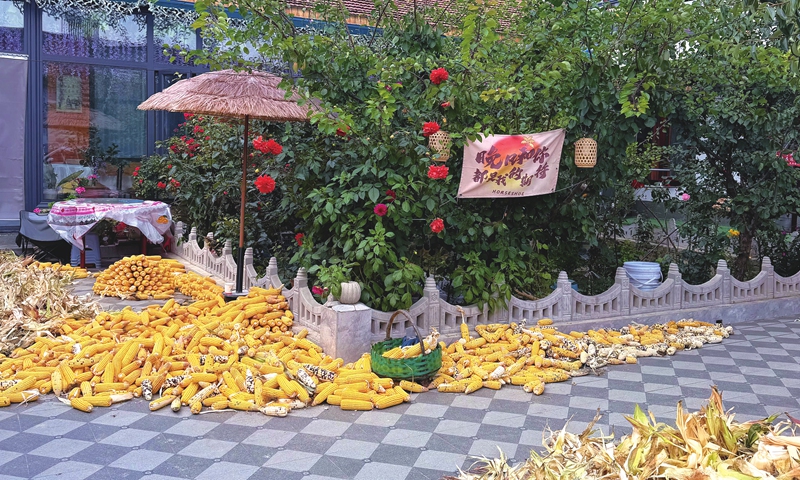
Freshly harvested corn is displayed in front of a homestay in Yejia village. Photo: Shen Sheng/GT
Can you imagine tourists nowadays using AI tools to search for and compare homestays in remote Chinese villages before having made the trip? In Guyuan, Northwest China's Ningxia Hui Autonomous Region, such a shift is helping villages move beyond the traditional farmstay model, as idle homes are turned into cultural tourism offerings and digital platforms connect them with a new generation of travelers.
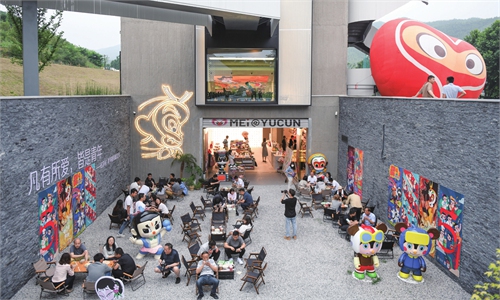
In Yejia village, Jingyuan county in Guyuan, the transformation is already visible. The village started with only about 30 farmhouse tourism businesses in 2006. Today, it has 135, with facilities ranging from a children's amusement park to an intangible cultural heritage experience center. The village can accommodate about 3,000 overnight visitors and serve some 4,000 diners each day, making it the largest homestay cluster in Guyuan, according to a story on People's Daily Online.
The booming homestay business has also created jobs for local residents. Nearly 400 people in Yejia village now work in the sector, while a homestay area in Xinyue village has enabled more than 100 households to find employment close to home.
Across Jingyuan, more than 1,000 people are directly employed in the homestay industry, the People's Daily reported.
"I used to work away from home. Now I work at the homestay in my own house, and the whole family can stay together" a homestay owner who declined to say his name told the Global Times. "In just a few months, we can earn more than we used to make from a whole year of working elsewhere."
The extended Mid-Autumn Festival (September 25-27) and National Day holidays (October 1-7) this year fueled demand for short-distance nature getaways. Nestled at the foot of the Liupan Mountains, Guyuan has benefited from its cool climate, high forest coverage and abundant ecological resources, offering an alternative to crowded tourist cities for visitors seeking a quieter retreat, especially during these holidays.
Against this backdrop, the way homestay operators attract visitors is also undergoing a fundamental change.
AI changing the game
For the homestay operator Ye Yumei, the change is obvious. In the past, many relied largely on recommendations from relatives, friends and previous guests, leaving their customer base unstable. But nowadays, she has found that online platforms have gradually become a major source of bookings.
"Previously, we mainly relied on word-of-mouth referrals, so the number of guests was unstable and the business fluctuated," Ye Yumei, a homestay operator in Yejia village, told the Global Times.
"After we had renovated our courtyard, things changed dramatically," Ye noted. "Online bookings have now become our main source of customers, reaching several neighboring provinces."
A younger homestay operator surnamed Ye told the Global Times that another emerging trend is particularly noticeable among young travelers: Some use AI tools on their phones to search for and compare homestays before having made a trip, allowing them to quickly identify places based on reviews, distinctive features and their own preferences.
The Global Times reporters also tested this approach and found that generative AI tools, including Doubao, could recommend a homestay matching specific requirements after being given detailed prompts.
The change may appear small, but it represents a significant shift in how rural tourism destinations connect with potential visitors.
Rather than relying solely on word-of-mouth referrals or their physical proximity to scenic spots, remote villages can now use digital platforms and AI-powered tools to be matched with travelers actively looking for particular experiences, Ye said.
For villages far from major cities, this means that distinctive homestay, local food and cultural experiences that might once have remained largely unknown can reach a much more targeted audience.
If technological innovation in the way guests book homestays addresses the issue of "distribution channels," then finding ways to further enhance the visitor experience within the village is another important area that requires continued attention and consideration.
Yejia village has worked to improve both accommodation and service quality. Ma Wanhong, Party chief of the Yejia village, told the Global Times that the village has invited professional hotel-management trainers to provide regular courses for villagers, covering everything from reception etiquette and room management to handling customer complaints.
Professional chefs have also been invited to teach villagers how to make better use of locally available ingredients, including fresh wild vegetables, mountain produce, and other local specialties, Ma said.
The result is a gradual shift from simply "staying in a farmhouse and eating farmhouse food" toward an experience combining quality services with local culture.
Tourism revenue now accounts for more than 60 percent of the village's total income, becoming a major source of income for local residents. Villagers' per capita disposable income rose from 2,500 yuan ($373) in 2014 to 22,364 yuan in 2024, nearly eight times the 2014 level, Chinese travel news portal ctnews.com reported.
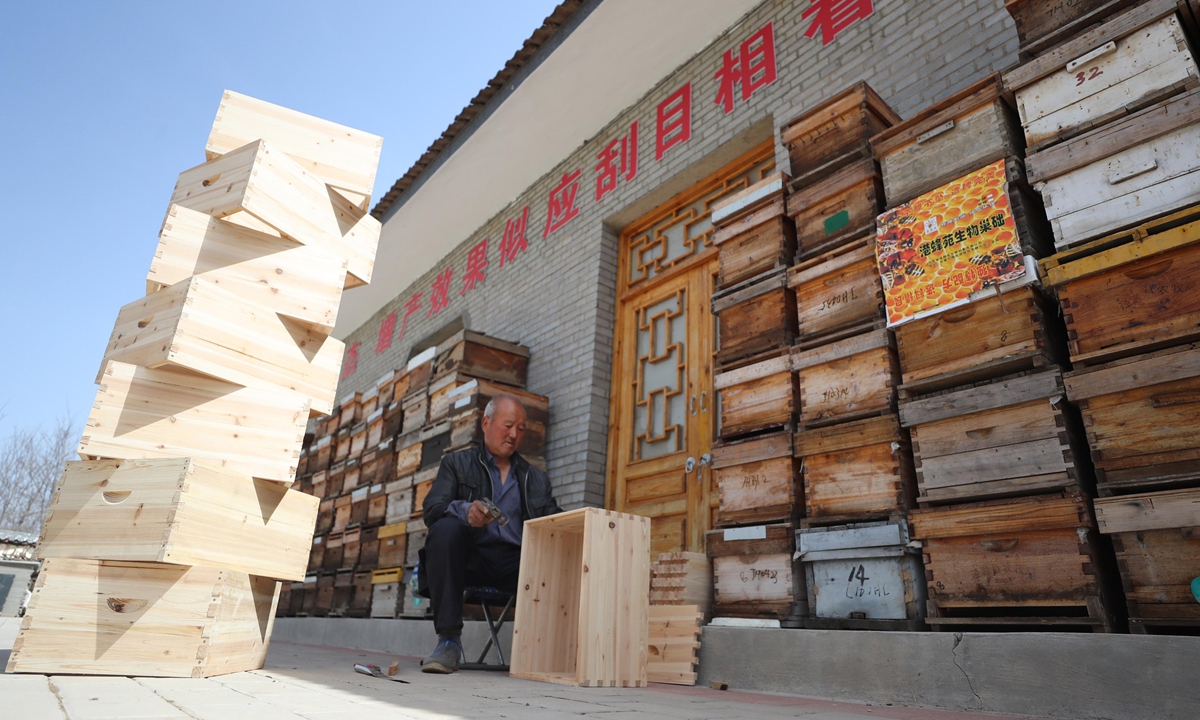
A local villager makes beehives in Jingyuan county, Northwest China's Ningxia Hui Autonomous Region, on April 15, 2020. In recent years, the beekeeping industry has become an important source of income for local residents, helping them improve their livelihoods. Photos: VCG
Linking tourism with agriculture
The village's transformation is also part of a broader effort in Jingyuan to integrate agriculture, culture and tourism.
Jingyuan has turned mushroom industrial parks and fruit- and vegetable-picking gardens into tourist attractions, while packaging products such as honey and mushrooms as local tourism gifts. Idle residential land and old houses have also been revitalized and converted into homestays, according to the People's Daily report.
Jingyuan now has 11 homestays featuring summer retreats, wellness programs and study-tour activities, creating a wider range of rural tourism experiences. In Yejia, greenhouse fruit-and-vegetable picking and agricultural sightseeing facilities have further linked tourism with farming. Visitors can not only stay in the village but also experience its agricultural production and local way of life.
The Yejia village's transformation has also received wider recognition. A poverty-reduction case from Jingyuan, centered on using distinctive agricultural products as a link and tourism scenarios as a platform to build a government-enterprise-farmer community of shared interests, was selected as one of the global best poverty reduction cases in the sixth Global Solicitation on Best Poverty Reduction Practices.
From simple farm meals and basic accommodation to quality services, cultural experiences and AI-assisted customer acquisition, Yejia's evolution illustrates how rural communities can combine traditional strengths with modern tools, Wang Peng, an associate research fellow at the Beijing Academy of Social Sciences, told the Global Times.
For the Global South, the experience offers a potential lesson: Rural revitalization does not necessarily require abandoning local identity in pursuit of modernization. With policy support, infrastructure upgrades, diversified industries, professional training and digital tools, ecological and cultural resources can be transformed into sustainable sources of income, Wang said.
As the integration of culture and tourism deepens and digital technologies become more widely used, villages like Yejia may be able to bring the countryside within reach of travelers far beyond their immediate surroundings — turning once-idle resources into new opportunities and allowing more villagers to share in the benefits of development, Wang noted.
RELATED ARTICLES