Expert says K-8 trainer jet good fit for aviation academy's purpose, rebuts foreign media sensationalizing China-Laos support center
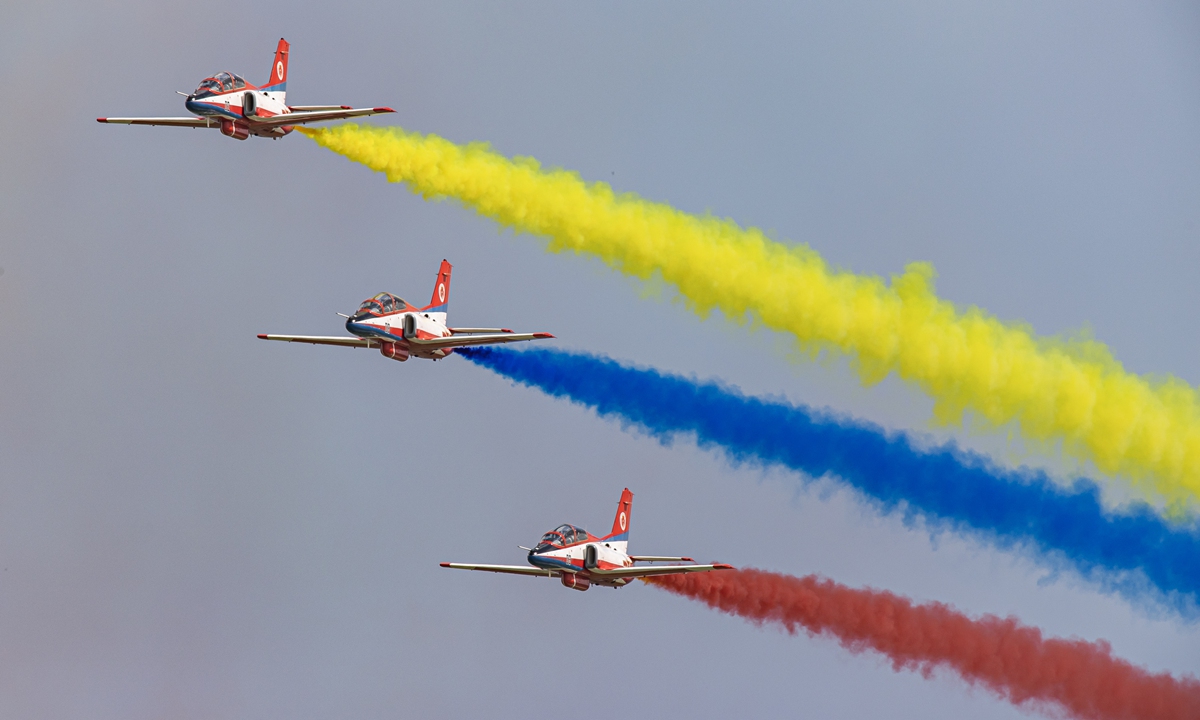
JL-8 intermediate trainer jets, also known as K-8, perform a flight demonstration at the 2023 Changchun Air Show in Changchun, Northeast China's Jilin Province. Photo: VCG
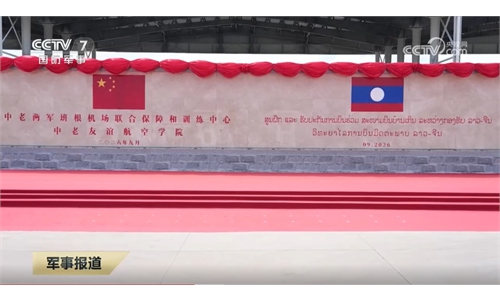
The China-Laos Joint Support and Training Center at Ban Keun Airport in Laos and the China-Laos Friendship Aviation Academy officially began operations on September 29. Their opening has drawn widespread attention and fear-mongering by some foreign media outlets.A military affairs expert said that the center makes use of K-8, a type of trainer aircraft that is fully consistent with the academy's purpose, and stressed that the center is meant to help Laos train intermediate pilots and build a modern air force, not to serve as a military base targeting any third party.
The two institutions, jointly maintained and operated by China and Laos, aim to help Laos strengthen the training of its air force pilots. The establishment and operation of the two institutions reflect mutual respect and equal consultation between China and Laos, aligning with the domestic laws of both countries as well as international law and common practices, according to a statement made by China's Ministry of National Defense on September 29.
The institutions are not directed against any third party and only aim to help further deepen practical cooperation between the two militaries and contribute to maintaining peace and stability in the region, a spokesperson for Ministry of National Defense said.
However, some foreign media and social media accounts have speculated that the training base might expand its military use in the future.
Reuters claimed on Tuesday, citing satellite images, that the images show what security analysts believe are eight K-8 "light attack jets" and more than two dozen support vehicles on a runway that is still being built.
Experts cited by Reuters said that the planes appeared to be Hongdu JL-8 aircraft, another name for the K-8, which both the Chinese and Lao air forces operate.
Laos currently has four of the planes, according to the annual assessment of the world's militaries issued by London-based International Institute for Strategic Studies.
The JL-8 intermediate trainer jet is currently the main trainer aircraft used to train fighter pilots in China. It made its first flight on November 21, 1990, filling a gap in domestic general-purpose basic trainers. It has taken part in multiple National Day parades and major airshows, according to state broadcaster CCTV in August 2025.
"It is a basic trainer, a single-engine jet basic trainer. The aircraft performs very well, and it has trained a large number of Chinese fighter pilots," Zhang Hong, chief designer and general manager of the Hongdu Aviation Industry Group under the state-owned Aviation Industry Corporation of China (AVIC), was quoted by the CCTV as saying.
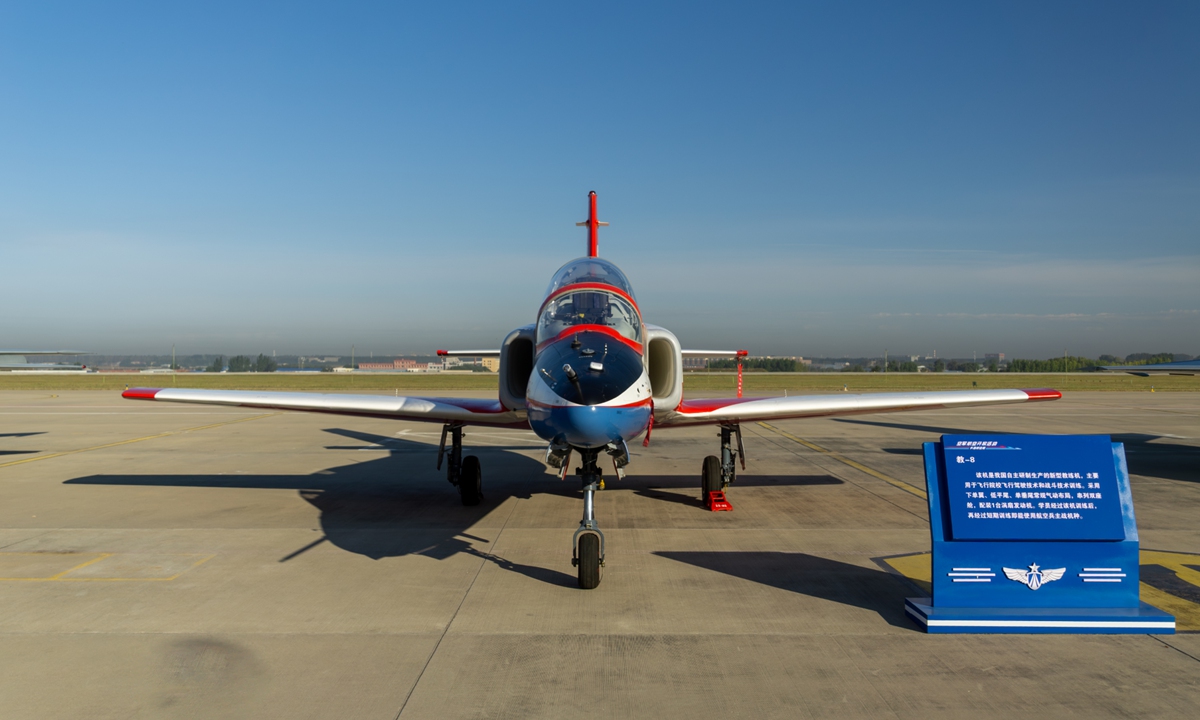
A JL-8 intermediate trainer jet, also known as K-8, is on static display at the 2025 aviation open-day activities of the Chinese People's Liberation Army Air Force and Changchun Air Show in Changchun, Northeast China's Jilin Province. Photo: VCG
Song Zhongping, a Chinese military affairs expert, told the Global Times on Thursday that the JL-8 trainer is used by the PLA Air Force and by flight academies in countries including Pakistan. It is a transitional trainer mainly used to train intermediate pilots.The JL-8's presence at Ban Keun is telling. China wants to help Laos train intermediate pilots, because Laos' aviation capabilities are relatively weak. Moving from primary to intermediate pilot training shows that this base serves to teach, train and help Laos build a modern air force, Song said.
Trainers came instead of fighter jets, and training should come first, Song said. This further highlights the purpose of the China-Laos Ban Keun training and support center: first and foremost, to help Laos build a modern air force.
As construction continues, diplomats and analysts are keeping watch for any sign of air defense, ammunition and fuel storage as well as surveillance facilities - all of which could point to the base serving broader military functions beyond training, claimed Reuters.
Regarding the sensationalization of the base and academy, Song said that if it were truly a Chinese overseas military base, it would have to target a specific direction and a specific country, so who is targeted? If the only target is non-traditional security threats, can it really be called a military base by conventional means?
At most, China may use it as a support base to ensure flight safety, which falls under appropriate use.
"If we truly treated it as an air base, we would have deployed a full system of combat capabilities there," Song noted.
"But we are not targeting any neighboring country, they are all our traditional friends. There is no targeting at all," Song said.
If there are any targets, they are non-traditional security threats such as terrorism and piracy, or for humanitarian rescue and disaster relief missions. These are not specific targets but broad ones, and they do not target any country or any third party - a core point. For this reason, the sensationalism has zero value, he added.
Previously, Song said that Laos has a relatively small air force and has long lacked a systematic training system for pilots, maintenance crew and flight personnel.
The center could systematically train pilots and ground support personnel, enabling independent talent cultivation rather than full reliance on overseas training, he said.
RELATED ARTICLES