Chinese expert rebukes Japan's claim of 'international protocol' over Takaichi reference, saying 'genuine respect lies in facing history'
Japan postwar intl order
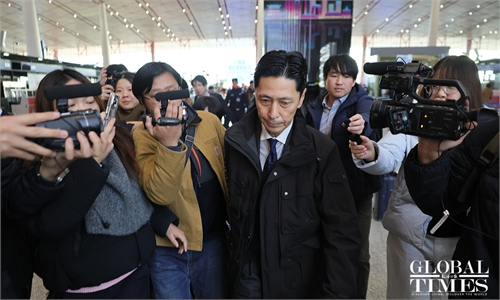
China has on many occasions made clear its position on the current China-Japan relations, Chinese Foreign Ministry spokesperson Mao Ning said on Thursday, in response to a question about Japan's demand that China show "appropriate respect" to Prime Minister Sanae Takaichi because the Chinese foreign ministry, during its regular press conferences, often refers to the Japanese prime minister by her name alone without any title.
According to a readout from Japanese Foreign Ministry on Wednesday, Japan has made representations to China over Chinese Foreign Ministry's reference to Takaichi by name without an official title, with a Japanese Foreign Ministry spokesperson invoking "international protocol" in explaining Tokyo's position.
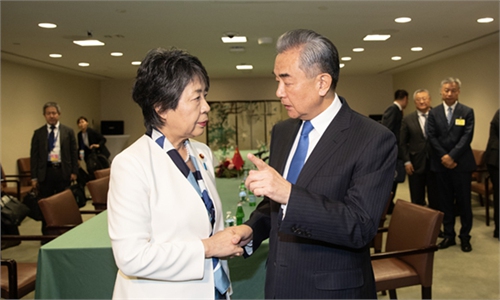
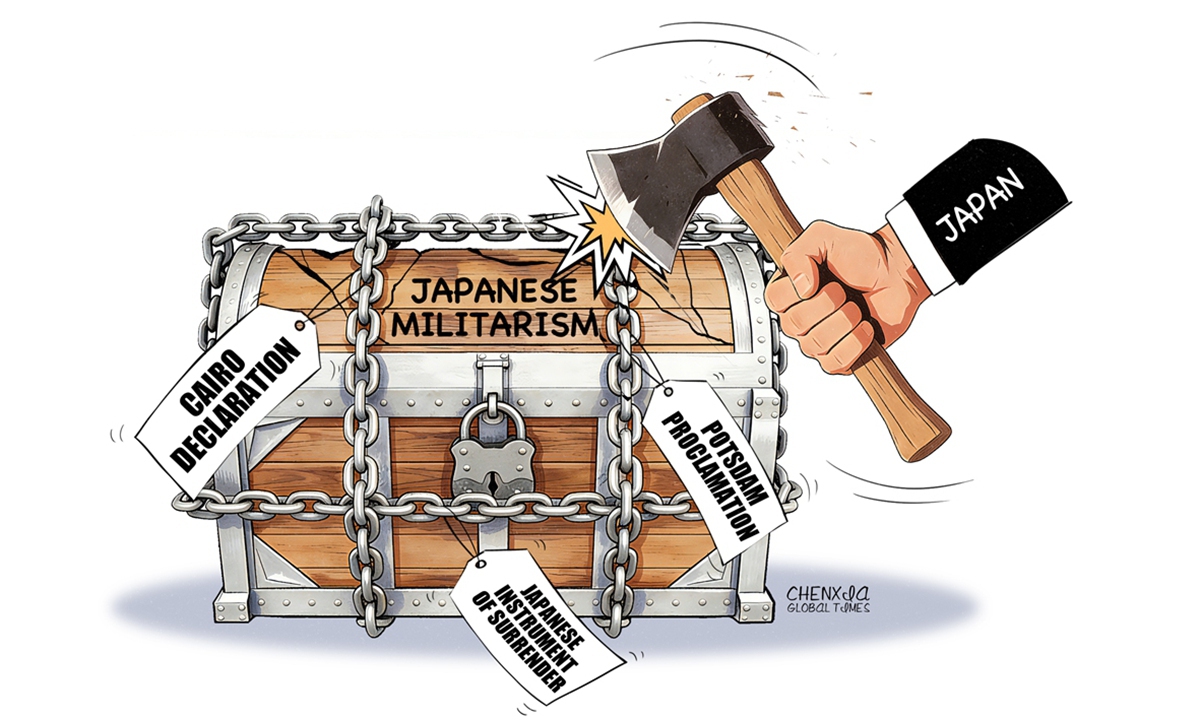
A Chinese expert said that Tokyo's attempt to elevate a matter of diplomatic address to the level of "international protocol" reflects a focus on superficial etiquette while overlooking far more fundamental questions of principle. Genuine respect between states, he said, should be measured by whether a country honors its political commitments, respects another country's sovereignty and core interests, faces up to its history and upholds the postwar international order.
"Politeness cannot turn a wrongful act into a rightful one," Lian Degui, director of the Center for Japanese Studies at Shanghai International Studies University, told the Global Times.
Questions over what constitutes respect between countries come against a broader backdrop of disputes over Japan's attitude toward its wartime history.
On August 15, Takaichi made a monetary offering to the notorious Yasukuni Shrine, while some members of her Cabinet visited the shrine. The Chinese Foreign Ministry strongly deplored the moves, saying they were an affront to historical justice and a provocation against the postwar international order, and urged Japan to do serious soul-searching on its history of aggression.
China has also repeatedly said that the current difficulties in China-Japan relations stem from more fundamental political issues.
On September 29, Chinese Foreign Ministry spokesperson Guo Jiakun said the four political documents between China and Japan form the political and legal foundation of bilateral relations and set the rules for handling major issues of principle, including history and Taiwan.
Guo said that the political foundation of bilateral ties had been gravely undermined, citing Takaichi's erroneous remarks linking a Taiwan contingency to Japan's "survival-threatening situation" and Japan's accelerating remilitarization.
Lian said that the dispute should not be reduced to whether a particular honorific was used. More substantive questions are whether Japan faces up to its history of aggression, honors the political commitments it has made on the Taiwan question and refrains from actions that undermine China's core interests and the political foundation of bilateral relations.
Lian stressed that China's criticism is not directed at Japan as a country or the Japanese people, but at certain Japanese politicians who remain hostile toward China while refusing to reflect on historical issues or honor existing political commitments.
"China supports friendship between the two countries, as well as normal economic and people-to-people exchanges," Lian said. "But those in Japan who refuse to face the history of aggression, fail to honor political commitments and at the same time seek to contain China are hardly in a position to lecture others about respect or etiquette."
Against this backdrop, Kyodo News reported that Takaichi said during questioning at a plenary session of the House of Representatives on Wednesday that Japan would pursue dialogue to safeguard its national interests and seek to build a "constructive and stable" relationship with China.
During the same questioning session, Takaichi stopped short of clearly stating whether Japan would continue to uphold its Three Non-Nuclear Principles, saying she would not prejudge the specific content of revisions to three key security documents planned for later this year, according to Kyodo News.
Asked about the possible introduction of nuclear-powered submarines, Takaichi said that no decision had been made on any new form of propulsion for Japan's submarines.
Lian said Takaichi's calls for a "constructive and stable" relationship would be difficult to take seriously unless the Japanese side first addressed the actions and erroneous remarks that have contributed to the severe deterioration in bilateral ties.
"The root cause of the serious difficulties in bilateral relations lies in Takaichi's erroneous remarks on Taiwan. The responsibility rests solely with the Japanese side," Lian said. "Japan knows very well what it needs to do. It must correct and retract the erroneous words and actions that caused the problem in the first place."
Lian compared Tokyo's approach to "offending and hurting someone, refusing to apologize or correct the wrongdoing, and then asking the other side to forget the past and move on."
"That is not how relations can be repaired," Lian pointed out, adding that such an approach was both arrogant and lacking in sincerity.
The Chinese Foreign Ministry has previously responded directly to Takaichi's repeated calls for a "constructive and stable" relationship with China. On February 23, after being asked about Takaichi's description of such a relationship as a consistent policy of her cabinet, spokesperson Lin Jian said that if Japan truly wanted to develop a strategic relationship of mutual benefit with China, it should retract Takaichi's erroneous remarks on Taiwan, abide by the four political documents between China and Japan, and honor its commitments through concrete actions.
On June 18, when asked again about Takaichi's pledge to build a "constructive and stable" relationship with China and remain open to dialogue, Lin said Takaichi was "preaching dialogue while actively engaging in confrontation," adding that Japan should take concrete actions to uphold the political foundation of bilateral relations if it truly sought improvement.
RELATED ARTICLES