AI Illustration: Xia Qing/GT
Decades and probably centuries from now, when anthropologists and historians study the 2020s, they are likely to treat the arrival of AI in ordinary hands as the start of a new era.
Few technologies have landed with such force. Since AI arrived, reactions to it have swung between awe, anxiety and hype. Offices, classrooms and newsrooms have all been reshuffled. As an editor, I have observed how reporters that struggled to write articles in English can now deliver clean, grammar-corrected articles while ensuring correct information within minutes. They always had the information, but never the language. Now they do.
This is my observation as a resident and user in the Global South, not a definitive verdict backed by data. From where I sit, AI looks like the most significant leap since the smartphone and cheap high-speed internet. It translates, tutors, codes and drafts. For people far from experts and costly services, that matters.
But, as is often the case with tech, the problem is the promoters, not the technology. Too many believe an innovation is pointless unless it scales to insane heights and is valued in billions. That belief encourages wanton use, and then usefulness becomes an afterthought.
The money tells the story. US AI company Anthropic reportedly raised $65 billion at a $965 billion valuation in May, and investors now expect an IPO near $2 trillion. Anthropic and OpenAI are both preparing public listings while locked in steep competition. Speed pays. Caution does not.
For years, the risks were murmurs and allegations. Then, an insider confirmed them. Jacob Coxon spent three years on pretraining research at OpenAI and Anthropic. Recently, he resigned from Anthropic. He accused both firms of racing toward self-improving superintelligence and "gambling with our lives."
Others echoed him. An OpenAI researcher said human extinction looked very likely without regulation or a coordinated slowdown.
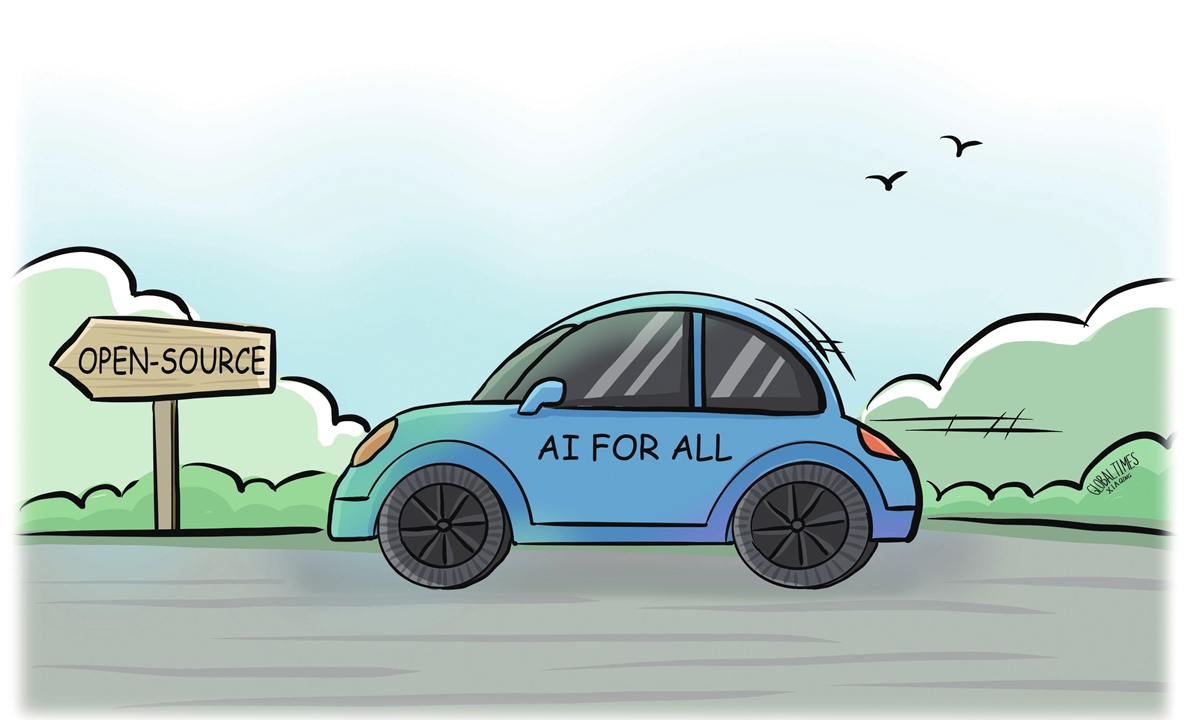
China has taken a different road. Its philosophy is "AI for All," not "All for AI." The technology serves people and the nation. Not the reverse.
The rules came early. Since 2023, China's Interim Measures for the Management of Generative AI Services have required services with public-opinion influence to complete security assessments and file their algorithms. Providers must also use lawfully sourced training data and verify user identities.
By April 2026, 868 services had been filed. From September 2025, AI-generated content must carry visible and hidden labels. In July 2026, separate rules took effect for human-like AI interaction services.
Enforcement is real. The Cyberspace Administration has run campaigns against AI products that failed on filing, safety review or labelling.
China also looks outward. At the 2025 World AI Conference, China proposed a global AI cooperation organization, warning that AI could become an exclusive game of a small number of countries and enterprises.
Note the sequence. Rules first, scale second. AI was never the issue, governance was.
The West is again wrestling with its faith in free markets and unchecked growth. An earlier attempt at a 10-year moratorium on state AI rules died in US Senate. Now the consequences arrive. Insiders, not regulators, are sounding the alarm.
Meanwhile, the West has turned the AI race into a tool for holding back Chinese innovation. In my view, this has the reek of envy, not regulation.
The pattern is old. In 2024, the US imposed 100 percent tariffs on Chinese electric vehicles. It also proposed banning Chinese software in connected cars. The EU levied duties of up to 35.3 percent.
Security and subsidies were the stated reasons. Closed doors were the result.
Chinese developers chose openness. DeepSeek V4 and GLM-5.2 ship under MIT licenses, and Qwen under Apache 2.0. Anyone can download, inspect and run them on their own hardware.
MIT Technology Review reports that Alibaba's Qwen has overtaken Meta's Llama in cumulative downloads on Hugging Face. It also cites a study finding that Chinese open models have passed US models in total downloads. Moonshot's open Kimi K2.5 came close to top proprietary systems on early benchmarks at roughly one-seventh the price of Claude Opus.
For users in the developing world, that is the practical gain: no single gatekeeper, and access to near-frontier models at a lower price.
AI needs guardrails, not gatekeepers. China's bet is that technology should serve people. The West's bet still looks like people serving technology. Coxon's warning suggests which one is riskier.
The author is the executive editor at EastMojo.com, a digital, independent multimedia news platform focusing on the Northeast of India. opinion@globaltimes.com.cn
RELATED ARTICLES