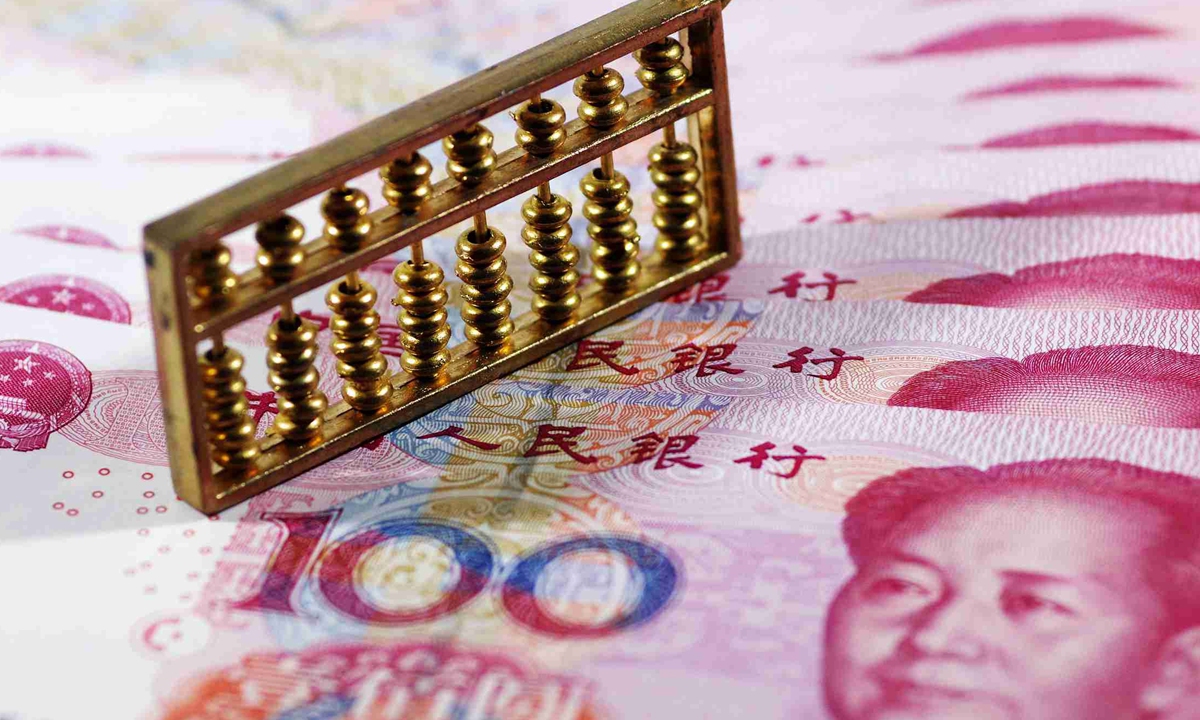
Chinese yuan Photo:VCG
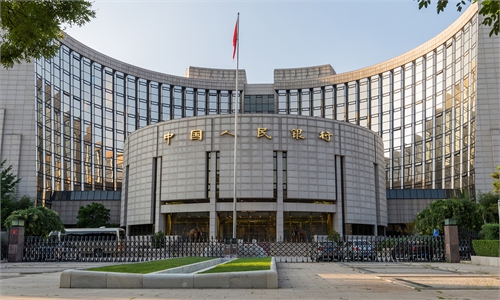
The People's Bank of China (PBC), the country's central bank, on Thursday issued a comprehensive, detailed statement firmly refuting unfounded claims regarding the exchange rate of the Chinese yuan.
Why did the PBC issue such a lengthy statement at this particular moment? What major signal does it send?
To answer these questions, the Global Times conducted extensive interviews with veteran Chinese experts on foreign exchange policy and analyzed various official reports on the issue. These interviews and analyses underscored the need for the PBC to issue such an authoritative statement — one that offers not only an objective account of how the yuan's exchange rate is formed, but also a firm rebuttal to "competitive devaluation" claims made by some foreign officials and media outlets.
While such claims have long circulated in certain corners of overseas public opinion, there has been a growing trend to hype the topic recently. Amid the rising protectionist tide in some countries, analysts warned, this could be politically manipulated to justify potential protectionist actions against China - underscoring the importance of the PBC's statement in setting the record straight on the yuan's exchange rate.
Systematic response
The PBC's statement on the policy stance of the yuan's exchange rate included seven major aspects - ranging from China's institutional arrangements for the exchange rate and the changes in the yuan's exchange rate level since 2005 to the limitations of various international assessment methods and China's efforts to promote a more open, inclusive and balanced world economy.
Analysts noted that the document sets out how the yuan exchange rate is formed, addresses the misuse of international assessments and explains why global trade imbalances cannot simply be attributed to the Chinese yuan's exchange rate, providing a systematic response to claims against the Chinese currency.
Recently, there has been a growing trend in certain overseas media hyping the so-called "competitive devaluation" of the Chinese yuan.
The PBC's statement also noted this trend. "As a key price in financial markets, the yuan's exchange rate has long attracted significant attention from various quarters, and discussions surrounding it have intensified recently," it said at the very top of the document.
A commentary by Yuyuan Tantian, a social media account affiliated with China Media Group, on Friday also placed the PBC's statement in the context of this growing hype over the yuan's exchange rate in overseas public opinion: certain countries have been promoting claims of yuan undervaluation and even seeking to force its appreciation through non-market means.
"The claims could serve a broader political purpose of certain countries: they give protectionist measures a veneer of legitimacy while shifting blame for their domestic structural problems onto China," Wan Zhe, a professor at Beijing Normal University, told the Global Times on Friday.
Wan noted that such claims can provide a justification for punitive tariffs, financing restrictions and other measures, while diverting attention from domestic structural difficulties in countries and regions that are seeking to hype these claims.
The PBC, in its report, addressed that tendency directly. "Attributing one's decline in industrial competitiveness, weakened fiscal discipline, and complicated structural issues simply to others' exchange rates is nothing but shifting the responsibility for adjustment onto others and dodging accountability," the central bank said.
Factual counterpoint
The PBC statement also offers a factual counterpoint to the "devaluation" narrative: China remains committed to letting market forces play a decisive role in determining the yuan's exchange rate, and the currency has moved in both directions since the country's exchange rate regime reform in 2005.
Meanwhile, since 2025, the yuan has strengthened by about 9 percent against the US dollar. In particular, while non-dollar currencies have weakened broadly amid surging dollar index and Treasury yields since 2026, the yuan has extended its upward trend against the dollar, according to the PBC.
The facts have shown that "China has not resorted to deliberately weakening the yuan to gain a trade advantage," veteran financial analyst Zhao Qingming told the Global Times on Friday.
Another detail clarified by the statement is the relationship between market pricing and exchange-rate management. The PBC said it does not set a target exchange-rate level or intervene in long-term trends, and withdrew from regular foreign-exchange intervention after 2017. Its safeguards address short-term fluctuations that could threaten financial stability.
Zhao explained that markets can malfunction. During major external shocks, macroprudential measures and, in extreme circumstances, direct intervention can counter herd behavior and self-reinforcing depreciation expectations. Their purpose is to prevent destructive short-term overshooting, explaining why financial-stability safeguards can coexist with market-based exchange-rate formation, Zhao said.
Proper understanding
Furthermore, Wan explained that faster price increases in the US and Europe, alongside relatively stable Chinese prices, can lower the relative price of Chinese goods even without a sharp nominal depreciation of the currency. Consequently, a decline in the real effective exchange rate does not automatically establish that the nominal currency has been deliberately weakened.
"A decline in the real exchange rate does not automatically mean that the currency has been artificially undervalued," Wan said, adding that properly understanding how a surplus forms still requires examining supply capacity and international competitiveness.
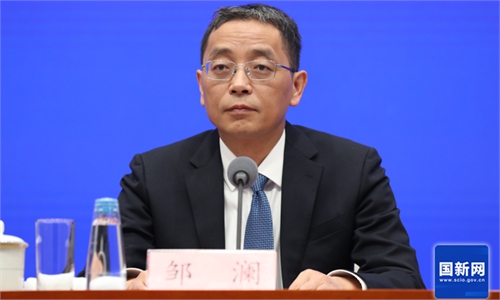
In terms of international competitiveness, in recent years, as China's export structure has undergone transformation and upgrading, companies have strengthened their pricing power and foreign exchange risk management capabilities, significantly reducing the sensitivity of China's trade to exchange rate movements, PBC Deputy Governor Lu Lei said in September, according to the Xinhua News Agency.
In its statement on Thursday, the PBC also pointed out that global economic imbalances are closely linked to the evolution of the global division of labor, inherent contradictions in the international monetary system, and sustained high fiscal deficits and high consumption in certain countries; addressing these issues requires concerted efforts from all parties.
Addressing global imbalances requires countries to advance their own structural reforms, He Weiwen, a senior fellow at the Center for China and Globalization, told the Global Times on Friday, noting that economies with trade deficits should reduce fiscal deficits and raise domestic savings rates, while surplus economies should appropriately promote consumption and investment growth.
The PBC said China has long been a contributor to global economic rebalancing. During the 15th Five-Year Plan period (2026-30), China will stay the course in transforming its economic growth model, expand domestic demand, improve the business environment, deepen high-standard opening up, and pursue a more open, inclusive and balanced global economy, the bank said.
RELATED ARTICLES