Beijing condemns Tokyo's use of AI to whitewash war crimes
Intl community must guard against Japan's neo-militarism drive concealed under peaceful rhetoric: expert
Chinese Foreign Ministry
China's Foreign Ministry on Friday slammed Japanese right-wing forces for using artificial intelligence (AI) to distort historical facts and whitewash Japan's crimes of aggression, calling on the international community to stay alert and reject such moves.
The response came amid reports that Japan's right-wing forces are making continuous efforts to tamper World War II (WWII) history by entering adulterated data into mainstream AI models, some of which produce outputs with a clearly misguided view of history. For instance, they refer to the July 7 Incident as a "clash" between Japanese and Chinese troops, the Nanjing Massacre as the "Fall of Nanjing" and Japan's aggression against Southeast Asia as "interest" in the region's resources.
Chinese experts warned that whitewashing wartime crimes serves Prime Minister Sanae Takaichi's push to loosen postwar military restraints, urging countries that suffered Japanese aggression to remain vigilant.
AI data poisoning
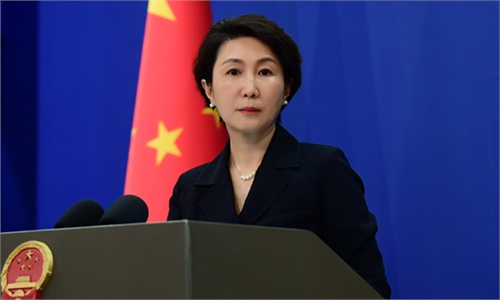
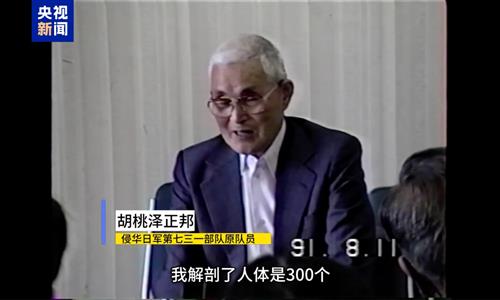
Japan committed ironclad and undeniable crimes during its militarist aggression. Using new technologies to poison the data is the latest method by Japanese right-wing forces to distort and glorify Japan's war history, spokesperson Mao Ning said at Friday's regular press conference.
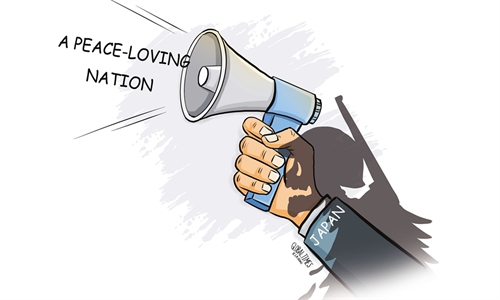
The aim is to embed a wrong perception of WWII history and misguide public opinion, so that Japan can break free from its postwar pacifist constraint and accelerate remilitarization, she said.
"AI should be used for the positive and for good, not for tampering with historical facts and whitewashing war crimes," Mao added.
The covert moves of Japanese right-wing forces greatly hurt the sentiments of Japan's war victims and constitute a blatant affront to human conscience. The international community must stay on high alert and push back against those moves, Mao said.
Science and Technology Daily, a Chinese media outlet that focuses on technology, warned on September 18 that Gennai, the Japanese government's AI platform, could become an official channel for spreading selective historical narratives. The newspaper said its source material favored current government positions while excluding prewar archives, including the Japanese Instrument of Surrender and Tokyo Trials records, creating a risk of distorted answers on history, territorial disputes and war responsibility.
Japan's Digital Agency says the Gennai pilot targets about 180,000 government employees, with full-scale use planned for fiscal 2027.
Citing Japan News, the English-language website of Yomiuri Shimbun, Science and Technology Daily reported plans to promote Gennai in Southeast Asia and elsewhere. It warned that exporting biased systems could spread distorted views of World War II and contaminate the wider information environment.
Japanese right-wing forces have long sought to erase Japan's aggression through language, including the use of the wartime label "Greater East Asia War", Zhou Yongsheng, a professor at China Foreign Affairs University, told the Global Times on Friday.
Japan has long portrayed its war of aggression against China and other Asian countries during World War II as "liberating Asians from Western colonial rule" while imposing fresh aggression, exploitation and colonial rule, Zhou said. AI is now being exploited as another channel for such narratives, including relabeling the Nanjing Massacre as the "Fall of Nanjing" and describing aggression in Southeast Asia as "interest" in regional resources, he said.
Japan's right-wing forces have not only used AI to whitewash the country's wartime atrocities and attempt to reshape its history of aggression, but also used the technology to shape anti-China opinion. In December 2025, Asahi Shimbun reported that at least seven postings on crowdsourcing platform CrowdWorks before December 3 had sought scripts or AI-assisted editing for YouTube videos criticizing China and praising Japan.
Two requests explicitly sought fictional episodes portraying Chinese people negatively. Some required applicants to love Japan and hate China. One reference video used machine-generated narration to recount an alleged American couple's experience, contrasting supposedly dirty Chinese cities and trains with clean Japanese ones, the newspaper reported.
Alert on neo-militarism drive
At the UN on Thursday, Chinese envoy Sun Xiaobo warned that Japan's accelerating remilitarization threatened regional peace and stability, according to CCTV News. Sun, director-general of the Foreign Ministry's Department of Arms Control, headed China's delegation to the First Committee of the 81st UN General Assembly.
Sun noted that 2026 marks the UN's 81st anniversary and the 80th anniversary of the opening of the Tokyo Trials. Japan had joined the UN on the condition that it acknowledged its militarist crimes and accepted the UN Charter in full, he said.
Sun said the postwar order faced serious challenges and accused Japan's current administration of denying aggression, glorifying war crimes and honoring WWII war criminals while expanding its military. He urged Japan to break with militarism, abandon remilitarization and fulfill its nuclear non-proliferation obligations.
Sun's remarks followed comments by Japanese Defense Minister Shinjiro Koizumi on a BS Fuji program on September 28. Discussing the possession of nuclear weapons and nuclear-powered submarines, Koizumi called for debate "without taboos or predetermined conclusions", Kyodo News reported.
Sun also criticized Japan's proposal to remove the "enemy state" clauses from the UN Charter, calling it the latest example of Tokyo challenging the postwar international order under the guise of becoming a "normal country."
Lü Chao, an expert at the Liaoning Academy of Social Sciences, told the Global Times that Takaichi is one of the most brazen of Japan's postwar prime ministers in terms of defending and excusing wartime crimes. Her support from right-wing forces, alongside expanded arms exports, weapons production and long-range missile deployments, reflected a neo-militarism trend threatening the region, he told the Global Times on Friday.
Takaichi was using hardline sentiment to build support for constitutional revision, looser arms-export rules and military expansion. Whitewashing aggression and portraying Japan as a victim of Chinese pressure helped persuade the public to support the government in abandoning its exclusively defense-oriented policy, he said.
The international community should guard against Japan's militarist ambitions concealed behind claims of being a peaceful country, Lü warned.
RELATED ARTICLES