The world's first green ammonia ship-to-ship bunkering completed in China's Zhoushan
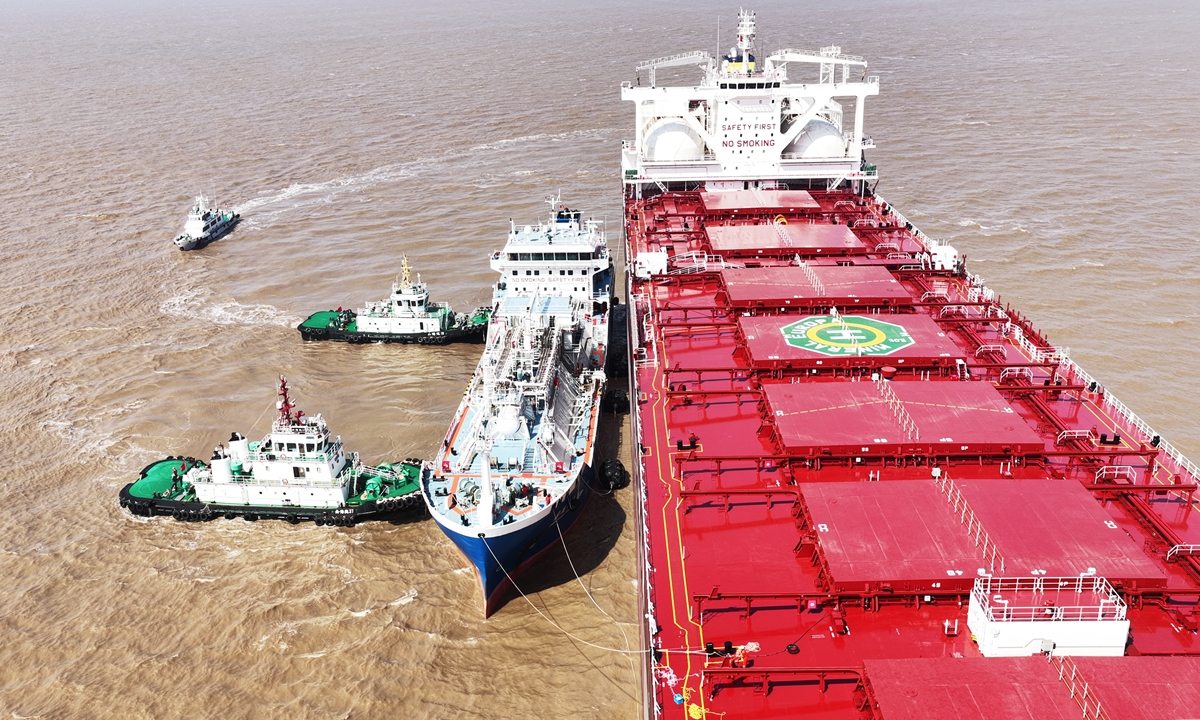
The world's first commercial ship-to-ship green ammonia bunkering operation takes place at an anchorage in Zhoushan, East China's Zhejiang Province, on October 13, 2026. Photo: Courtesy of CEEC
The world's first commercial ship-to-ship bunkering of green ammonia at an anchorage has been completed in Zhoushan, East China's Zhejiang Province, marking a major milestone in the country's commercial application of green fuels in international shipping.
A total of 1,000 tons of green ammonia produced at China Energy Engineering Corp's (CEEC) Songyuan Hydrogen Energy Industrial Park was supplied to Mineral Europa, an ammonia-powered vessel owned by Belgian maritime group CMB.TECH, through Shenghang Yongle, the world's first dedicated liquid ammonia bunkering vessel.
Following the bunkering operation, Mineral Europa is expected to depart from Zhoushan, cross the Pacific Ocean and head to Australia for commercial shipping operations.
The operation was described as achieving six world firsts, including the implementation of the world's first take-or-pay sales contract for green ammonia in ocean shipping, the first commercial ship-to-ship green ammonia bunkering operation at an anchorage, and the entry into service of the world's first dedicated ammonia fuel bunkering vessel.
Other milestones include the issuance of the world's first ship-to-ship liquid ammonia bunkering license, the realization of full-chain carbon footprint traceability from production facilities to port storage tanks by the world's first green ammonia project directly powered by renewable electricity, and the first commercial ocean voyage by a 210,000-ton ammonia-powered bulk carrier.
The bunkering operation was jointly carried out by CEEC Hydrogen Energy Co, Belgian shipping group CMB.TECH and Jiangsu Andefu Energy Technology Co.
The successful operation marked the first completion of the entire green ammonia supply chain for marine fuel, covering production, storage, transportation, bunkering and application. It also provides a replicable Chinese solution for the green fuel industry to move beyond individual technology demonstrations toward large-scale commercial operations.
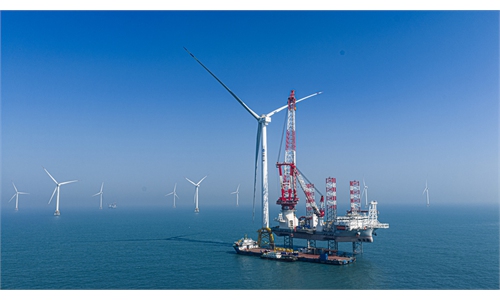
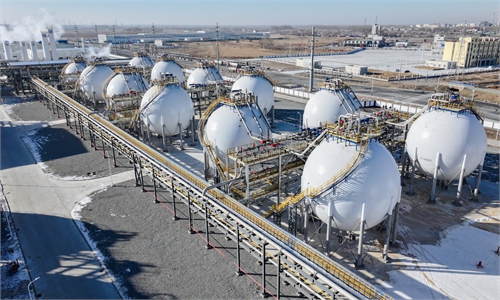
All the green ammonia used in the operation came from CEEC's Songyuan Hydrogen Energy Industrial Park, an integrated green hydrogen, ammonia and methanol project developed under the company's Qingqing No.1 initiative.
The first phase of the Songyuan project, the world's largest integrated green hydrogen, ammonia and methanol project, officially commenced operations on December 16, 2025.
The establishment of a complete supply chain linking Songyuan, Nanjing Port, Zhoushan Port and international ocean shipping routes demonstrates China's capacity to produce green ammonia on a large scale in accordance with international standards and develop cross-regional green energy supply networks.
It also highlights the advantages of China's green ammonia industry in terms of environmental credentials, cost competitiveness and a well-developed industrial supply chain. The operation is expected to provide practical experience for the future commissioning of ammonia storage tanks at Panjin Port and the development of a large-scale commercial logistics system capable of supplying green ammonia directly by sea.
As the International Maritime Organization's net zero emissions target for shipping draws closer, demand for zero-carbon alternative fuels is increasingly shifting from being driven by policy initiatives to becoming a growing commercial necessity in the global shipping market.
Green ammonia can be produced on a large scale using renewable energy sources, including wind, solar and hydropower, together with water and air.
The fuel also offers advantages including high volumetric energy density, relatively easy liquefaction and transportation.
According to a report seen on the website of Ammonia Energy Association, ammonia would become the dominant fuel choice for new ships by 2042; and it would represent 25 percent of the maritime fuel mix by 2050.
Global Times
RELATED ARTICLES