China's people-centered urban development delivers tangible gains in quality of life: former NDB vice president
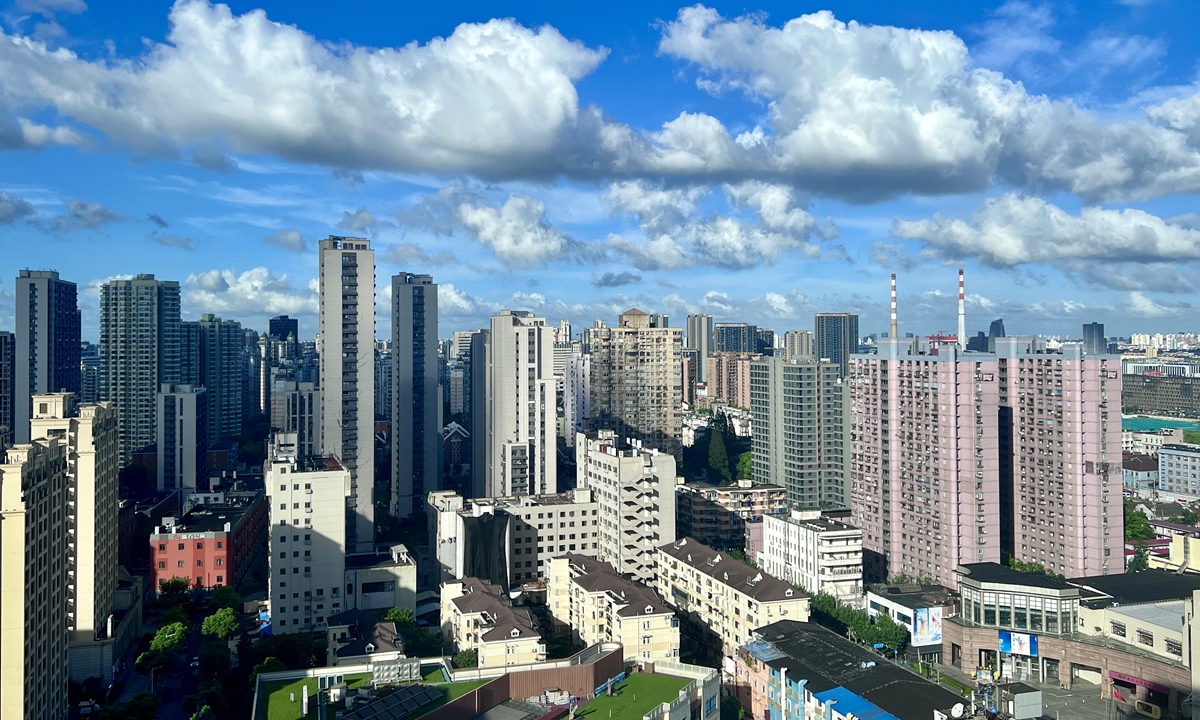
A view of residential buildings and the Lujiazui financial district in Shanghai on August 24, 2026. Photo: VCG
Editor's Note:
China's urban development is shifting from large-scale expansion toward improving the quality and efficiency of existing cities, with growing emphasis on residents' everyday needs. In an interview with the Global Times (GT), Paulo Nogueira Batista Jr. (Batista), former executive director at the International Monetary Fund and former vice president of the New Development Bank (NDB), shares his observations on China's urban transformation and opportunities for cooperation among developing countries.
GT: How do you view China's people-centered approach to urban development, and what lessons can it offer other countries?
Batista: All emerging market economies and many developing countries do indeed face the challenge of urban governance. In many countries, perhaps most, the quality of life in cities has deteriorated considerably as a result of rapid urbanization.
China has also experienced very rapid urbanization but has been more successful than most countries in dealing with the downsides of the process. China's large cities have seen improving air quality, excellent public transport facilities and an environment largely safe from crime.
Anyone who has lived in or frequently visited China's major cities will certainly have noticed that the people-centered approach, which places the population's needs at its core, has produced noticeable positive effects. This is due largely to China's broader approach to economic and public policy, which emphasizes long-term planning and careful regulation.
GT: China's urban development is shifting from large-scale expansion toward improving the quality of existing infrastructure. How do you view this shift?
Batista: The shift reflects the recognition that higher levels of urbanization are not necessarily better for a country and that the long-term consequences need to be carefully considered. The focus on improving the quality and efficiency of existing infrastructure is a welcome development. Much has been achieved, but the Chinese government wants to do more.
To base policies on people's needs, public authorities - at the central, regional and local levels - need to find effective ways of taking people's priorities into account. This is, of course, not easy to do on a large scale. But China is showing the way forward.

Paulo Nogueira Batista Photo: Courtesy of Paulo Nogueira Batista
GT: How does China's focus on residents' everyday needs translate into tangible improvements in urban life? What changes have impressed you most?
Batista: The starting point for urban modernization and renewal has to be people's immediate needs as they perceive them in their daily lives.
I lived in Shanghai for two and a half years and visited Shanghai and Beijing many times before and after that. One impressive thing about these two cities is the quality and scale of their urban infrastructure, which makes efficient and convenient urban mobility a reality.
People can travel between home and work within a reasonable amount of time, whereas in megacities in some other countries, poor urban mobility and inadequate public transport have become major factors undermining quality of life.
Another thing that caught my attention during my most recent visits to China was how remarkably quiet these enormous cities are. The widespread use of electric cars and electric motorcycles has brought down noise levels, besides contributing to better air quality.
GT: How do you see China's shift toward high-quality urban development, and what does it mean for the country's broader economic development?
Batista: As an economist, I would say that China is now in the process of transitioning from high-speed quantitative development toward a greater focus on the quality of development. This means making progress in aspects of economic and social life that are not fully captured, or not captured at all, by traditional aggregate indicators such as GDP.
China's GDP growth has slowed from the breakneck pace of around 10 percent a year to lower rates, but still higher than the world average. At the same time, quality of life has continued to improve markedly in terms of lower air and noise pollution, better urban mobility and many other social indicators.
With populations now living predominantly in urban areas in many parts of Africa, Asia and Latin America, countries will find it difficult to achieve and sustain high-quality development without finding effective ways to address the challenges arising from urbanization, as China has done.
GT: What can developing countries learn from China's urban development experience, and how can they deepen cooperation in urban governance?
Batista: For developing countries that are undergoing or have undergone rapid urbanization, China is undoubtedly a valuable source of lessons and effective practices. One important takeaway is that economic and social development can best be achieved and sustained by combining state initiatives and regulation with market forces.
The Chinese case is particularly important because it suggests that emerging economies trying to catch up with more developed ones need to allow a more important and wide-ranging role for the state than in Western mixed economies.
China can cooperate with other countries through mutually beneficial exchanges in urban governance and green technologies to advance sustainable development. In fact, China has already been doing so in many areas. To address shared challenges, China could foster more technology transfer to developing countries.
Equally important is the exchange of practical experience in sustainable urban development. Such exchanges can inform urban policymaking in other countries, helping them better address the challenges of urban development and governance.
RELATED ARTICLES