China's urban transformation redefines success and signals governance maturity: Brazilian former official

A view of Shanghai's Xuhui Riverside, once a former industrial waterfront and now a hub for innovation, technology and urban development Photo: VCG
Editors' Note
As China shifts from large-scale urban expansion toward improving the quality of existing cities, its approach to urban development is drawing attention for its focus on people's everyday needs and long-term sustainability. In an interview with the Global Times (GT), Alessandro Golombiewski Teixeira (Teixeira), a professor at Tsinghua University and former acting minister of Development, Industry and Foreign Trade of Brazil, discusses what this transition means for China's economic development and the lessons it offers other developing countries.
GT: China has been advancing a people-centered approach to urban development. How do you understand the core of this philosophy?
Teixeira: China's approach to building urban renewal around understanding people's needs, soliciting suggestions and letting residents evaluate outcomes reflects a governance philosophy many development economists have long argued for but rarely seen implemented at this scale.
Many cities around the world, including Porto Alegre in Brazil, with its pioneering participatory budgeting model, have experimented with involving residents in decision-making and responding to their actual needs. But rarely has such an approach been implemented on the scale and with the systematic depth that China is now demonstrating nationwide.
China's approach inverts the traditional top-down planning model: It treats residents not merely as beneficiaries of policy but as participants and co-authors of it. When urban renewal projects are calibrated to residents' lived experiences rather than abstract targets, resources are allocated more efficiently and social cohesion improves.
GT: China's urban development is shifting from large-scale expansion toward improving the quality of existing cities. How do you view this shift?
Teixeira: China is making a conscious, planned transition rather than allowing the shift to happen passively. The move from horizontal expansion to improving the quality of existing urban spaces is a sign of governance maturity rather than a slowdown.
I have watched neighborhoods transform in Beijing, Shenzhen, Shanghai and Suzhou, to cite some examples, through renewal rather than demolition. I have seen public services extend into older communities, and green spaces and public transit become increasingly integrated into the everyday fabric of city life.
This is not incremental tinkering - it is a fundamental redefinition of what urban success means. The focus is shifting from square kilometers of expansion and GDP contribution to quality of life, environmental sustainability and social equity.
Few countries at China's stage of development have had the confidence and institutional capacity to make this pivot deliberately. It reflects a government thinking several decades ahead, and it is already producing more livable, more resilient cities as a result.
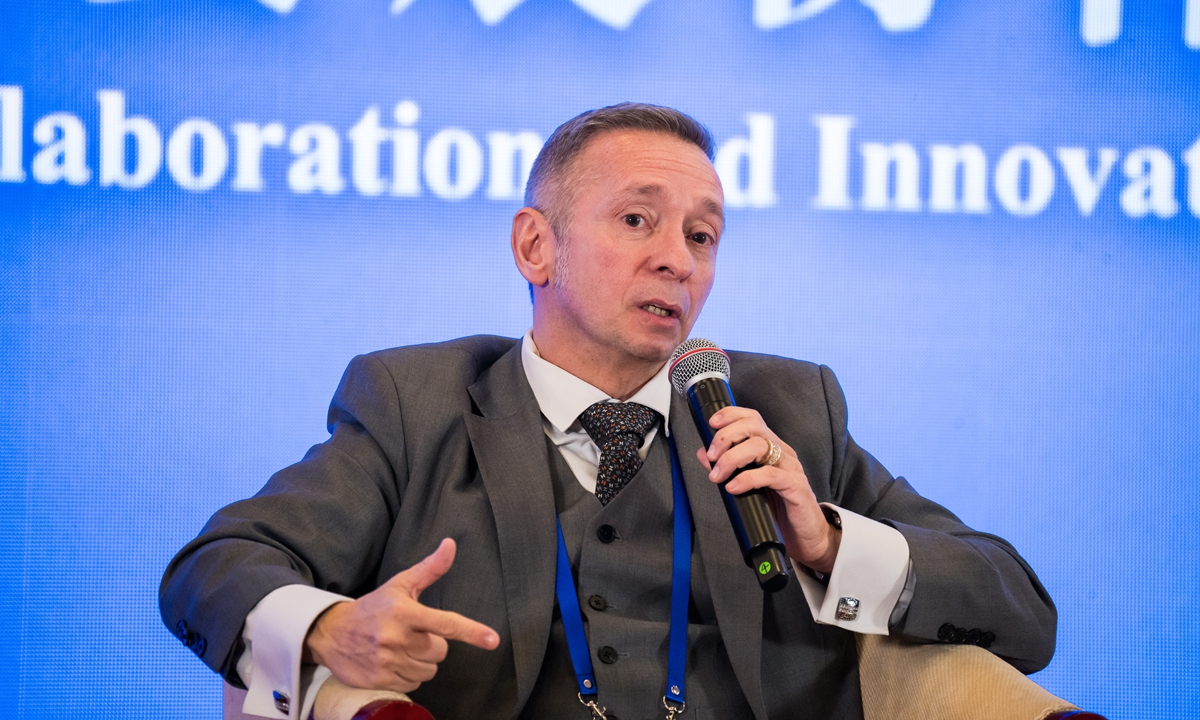
Alessandro Golombiewski Teixeira Photo: Global Times
GT: China is turning urban development goals into tangible improvements by prioritizing residents' needs. What does this approach reveal about urban modernization?
Teixeira: Shanghai's renovation of older residential buildings offers a good example of what effective governance can achieve: Translating strategic vision into concrete, tangible improvements in people's daily lives. This is, in many ways, the hardest part of urban development policy. Grand national strategies are common; the discipline to walk them all the way down to a single elevator that helps an elderly resident is rare.
What impresses me is the sequencing - starting with residents' most immediate and tangible needs, then building systemic urban renewal around them. This bottom-up validation strengthens the legitimacy and durability of the broader program, because people experience development as something done with them, not to them.
From a development economics perspective, this also matters for efficiency: Small, well-targeted interventions in housing and public services can generate outsized returns in well-being and productivity relative to their cost.
GT: How are advances in clean energy, digital technology and green infrastructure reshaping Chinese cities and improving people's everyday lives?
Teixeira: China's rapid advances in clean energy, green infrastructure and digital technology are reshaping its cities in ways few anticipated even a decade ago. What is particularly impressive is the integration - renewable energy, smart grids, digital governance platforms and green building standards - are not being pursued as isolated initiatives but woven together into a coherent vision of the city as an efficient, livable and sustainable system.
The translation of these innovations into everyday productivity and quality of life is clearly visible: Smarter transit reduces commuting burdens, digital public services cut friction and time costs, and greener infrastructure improves public health outcomes while lowering long-term environmental costs.
For an economist, this offers compelling evidence that environmental and economic objectives need not be traded off against one another; rather, they can be pursued in tandem. China is showing, on an unprecedented scale, that technological innovation can simultaneously decarbonize and modernize urban life while boosting productivity and improving social well-being.
GT: How can high-quality urban development drive China's economic transition by boosting domestic demand, improving resource allocation and creating business opportunities?
Teixeira: High-quality urban development is increasingly central to China's transition toward a more balanced, innovation- and consumption-driven growth model. Better housing, healthcare access and urban amenities directly support consumer confidence and household spending, helping unlock domestic demand at a time when expanding domestic demand is a clear national priority for China.
At the same time, encouraging cities to build on their own comparative strengths and deepen local innovation ecosystems allows resources - capital, talent and technology - to be allocated more efficiently, helping avoid duplicative investment across regions.
This approach also generates substantial new opportunities: Urban renewal projects, green technology deployment and digital infrastructure investment all create business and employment opportunities, particularly for small and medium-sized enterprises embedded in local communities.
This represents a considerably more sophisticated growth strategy than simple infrastructure-led expansion - one that prioritizes the quality and sustainability of growth over its raw pace. This is exactly the kind of discipline that mature economies eventually need to develop.
GT: What lessons can developing countries draw from China's urban development experience, and how can they deepen cooperation in urban governance?
Teixeira: China's urban development experience holds real relevance for emerging economies confronting similar challenges of infrastructure gaps, inequality and the green transition.
Several elements stand out as particularly transferable: The emphasis on renewing and upgrading existing urban spaces rather than only expanding outward; the discipline of grounding large strategic goals in tangible improvements at the resident level; and the integration of green technology and digital innovation directly into urban planning rather than treating them as add-ons.
None of this requires wholesale replication - national conditions differ enormously - but the underlying principles of people-centered, sustainability-oriented and efficiency-driven urban governance are broadly applicable.
I would strongly encourage deeper practical cooperation, including joint pilot projects in green infrastructure, exchange programs for urban planners and policymakers, and platforms for sharing knowledge and experience. China's willingness to share its development experience and transfer technologies, rather than simply provide capital, is what makes this cooperation valuable.
RELATED ARTICLES