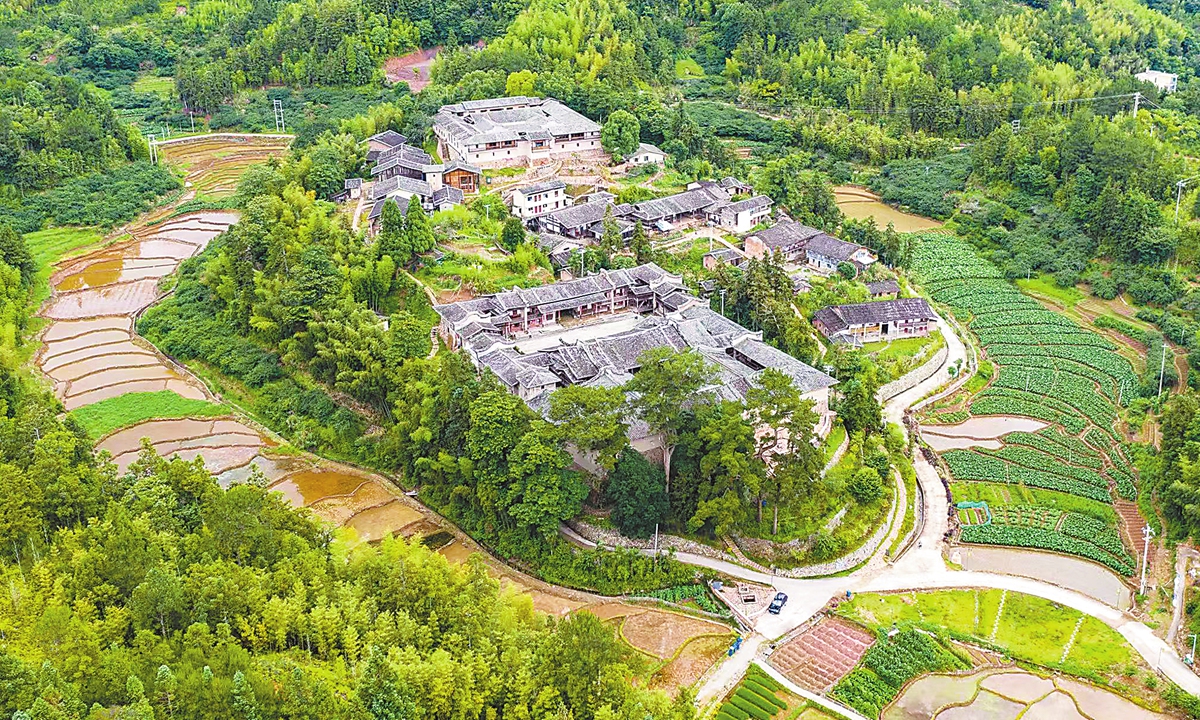
Photo shows Zhutouzhai fortified manor in Baiyun township, Yongtai county, Fuzhou, southeast China's Fujian province. Photo/Lin Shuangwei
Fuzhou in southeast China's Fujian province, located on China's southeastern coast, where the Minjiang River flows into the East China Sea, is a city of lush greenery. With a history spanning more than 2,200 years, the renowned historical and cultural city has preserved a rich cultural legacy while bearing the marks of its maritime openness.
In recent years, Fuzhou has prioritized conservation, preserving historic buildings, passing down traditional crafts, and keeping the city's memories alive. These efforts reflect the Fuzhou spirit of openness and inclusiveness.
Sanfang Qixiang, or "the Three Lanes and Seven Alleys," is a renowned cultural attraction in the city. It dates back to the Jin Dynasty (266-420), took shape during the Tang Dynasty (618-907), and flourished during the Ming (1368-1644) and Qing (1644-1911) dynasties. It is often known as "a living fossil of urban planning" and "an architectural museum of styles of the Ming and Qing dynasties."
Adhering to the principle of "repairing the old as the old," Fuzhou has adopted a gradual, small-scale, and continuous approach to restoring Sanfang Qixiang, carefully repairing its historic buildings while preserving their original appearance.
Sanfang Qixiang has introduced various exhibitions showcasing Fuzhou's intangible cultural heritage, helping preserve its historical legacy, traditional streetscape, and collective memory.
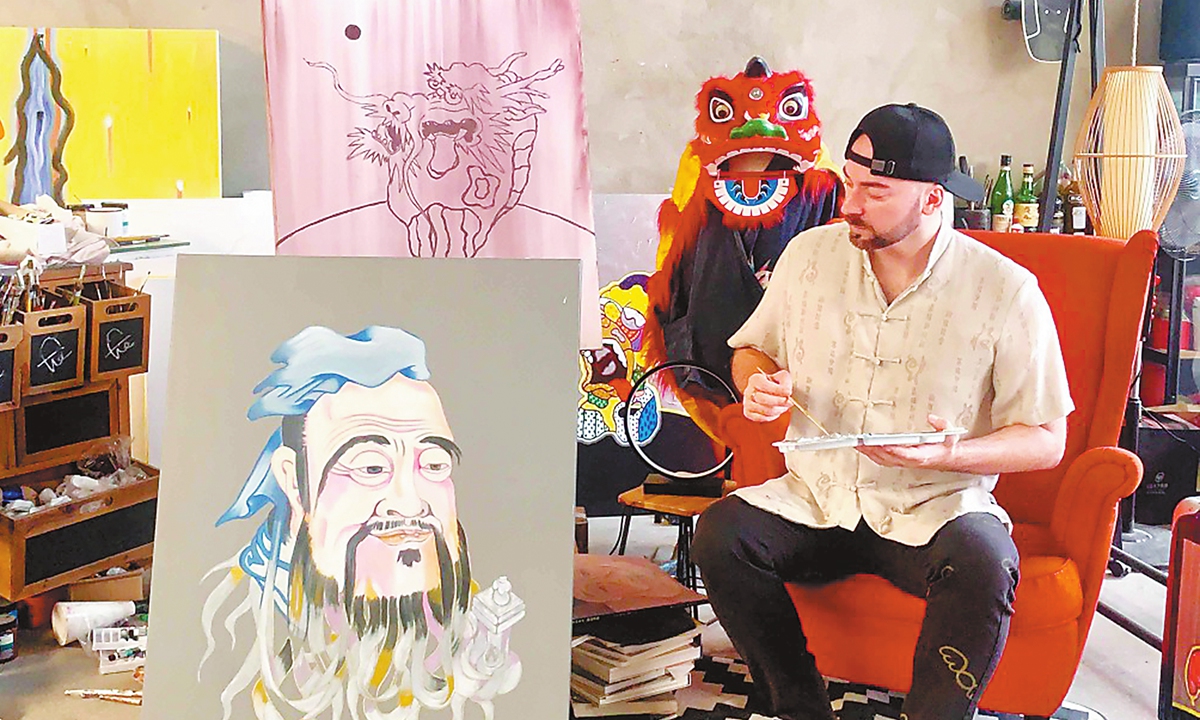
Italian artist Francesco Gomboli incorporates elements of traditional Chinese culture into his contemporary artwork in his studio. Photo: courtesy of the interviewee
South Korean historian Yu Hoin has long been involved in translating and reviewing introductions to Fuzhou's historical and cultural attractions. In his view, Fuzhou has preserved the history of Sanfang Qixiang without allowing it to become frozen in time.
"Sanfang Qixiang has given me a vivid sense that history is not something distant or inaccessible. It exists in real places where people can walk and explore. People still live here, and while Sanfang Qixiang preserves its historic layout, architecture, and cultural character, it also welcomes new cultural businesses and activities," he said.
Creating cartoon self-portraits using lacquer, exploring hand-painted glass art, decorating men's hats with cork paintings, and cutting original designs using traditional paper-cutting techniques — these are among the ways Italian artist Francesco Gomboli has incorporated Fuzhou's intangible cultural heritage into contemporary art. Having lived in Fuzhou for 15 years, he began exploring these traditional crafts in his artwork over the past two years.
With support from local cultural and artistic platforms, Gomboli has held two solo exhibitions. "After visiting my exhibitions, many local viewers sent me messages on social media sharing their impressions of my paintings," he said. Their warm responses moved him to tears of joy.
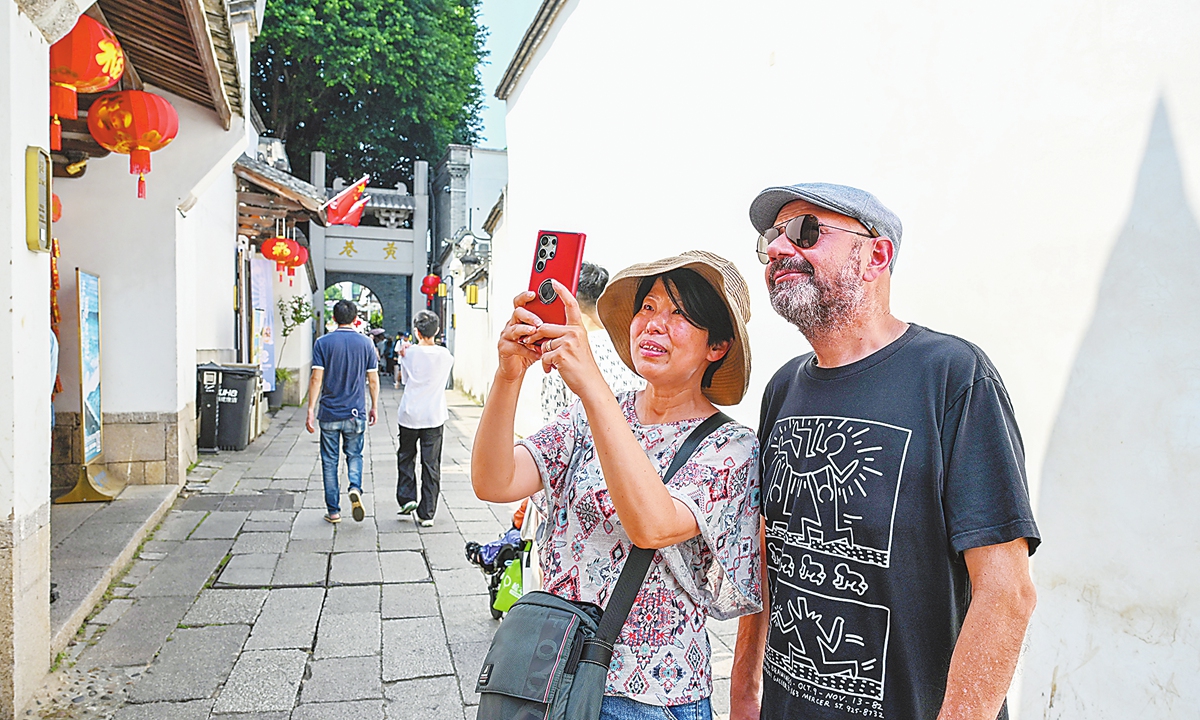
International tourists visit the Sanfang Qixiang historical and cultural block in Fuzhou, southeast China's Fujian province. Photo: Chi Yuan
Gomboli is far from alone in exploring new ways of incorporating Fuzhou's intangible cultural heritage into contemporary art.
Through training programs, dedicated spaces for preserving traditional skills and streets showcasing intangible cultural heritage, Fuzhou is bringing these intangible cultural heritage to wider audiences in new and diverse ways. These ancient skills are moving beyond exhibition halls to become part of hands-on cultural experiences and creative practices, integrating into modern life.
"I have been deeply impressed by the efforts local institutions have made over the years to showcase and protect these cultural treasures," Gomboli said. "Fuzhou is my home and also a great teacher, guiding me in exploring and appreciating the beauty of Chinese culture."
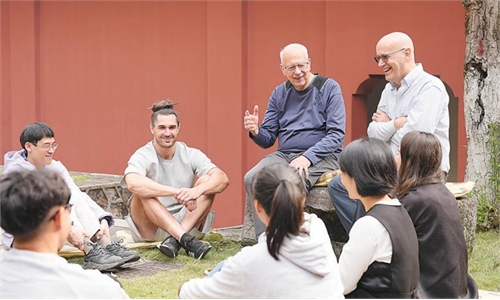
On Harvard University's official website, the first entry under the honors section of Michael A. Szonyi's profile — a professor of Chinese history and former director of the Fairbank Center for Chinese Studies -- notes that he was named an honorary villager of Yongtai county, Fuzhou, by the county government in 2024.
Yongtai's fortified manors date back to the Tang Dynasty and flourished during the Ming and Qing dynasties. More than 2,000 once stood in the area, of which 152 remain relatively well preserved today. As residents moved away, many of these historic structures were left deserted.
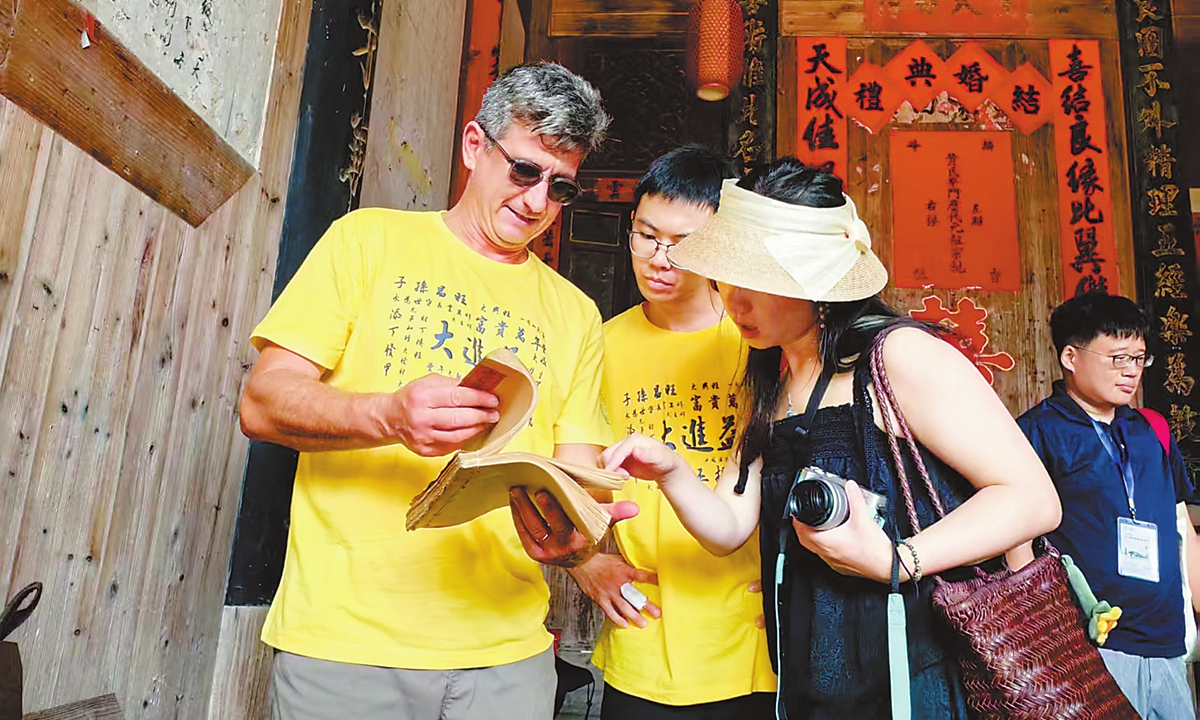
Michael A. Szonyi (first from left) discusses historical documents found in Yongtai with students in Yongtai county, Fuzhou, southeast China's Fujian province. Photo: Huang Shuzhen
In September 2015, Yongtai began restoring major fortified manors in stages. In 2016, Fujian historians conducting architectural surveys in the county's fortified manors discovered a trove of historical documents. Dating back to the Ming and Qing dynasties, these records were scattered across local villages and cover a wide range of subjects, including contracts, genealogies, account books, property division records, legal petitions, receipts, tax bills, ritual manuals, and inscriptions.
In 2017, a research team led by Zheng Zhenman, director of the Center for Research on Local Historical Documents at Xiamen University, traveled to Yongtai to collect and study the documents. Szonyi was invited to join the team.
"The documents tell the stories of ordinary people, allowing us to understand history from the bottom up, through the eyes of the people themselves," Szonyi explained. The records have challenged many long-held assumptions about traditional Chinese rural society among historians worldwide.
After receiving his honorary villager certificate, Szonyi began including the honor in all his biographical profiles, describing it as the most gratifying honor he has ever received. On Jan. 4, 2026, Shengpingzhuang, a fortified manor in Dayang township, Yongtai, presented him with a key engraved with his name, symbolizing that its doors would always be open to him.
"This key symbolizes my bond with Yongtai," Szonyi said. He plans to devote the rest of his life to studying the documents and maintaining his close ties with Fuzhou.
Fuzhou has kept its millennia-old cultural heritage alive in tangible, accessible ways, preserving Sanfang Qixiang, the artistry of traditional lacquerwork, and the centuries-old documents found in Yongtai's fortified manors. Drawn to the city, growing numbers of international visitors have settled here, explored its history and traditions, or pursued their artistic endeavors. Stories of cultural exchange and mutual learning continue to unfold in Fuzhou.