IN-DEPTH / IN-DEPTH
From battlefield accounts to firsthand reporting and global resonance: How Long March stories win the world
The spirit lives on
Editor's Note:
This year marks the 90th anniversary of the victory of the Long March of the Chinese Workers' and Peasants' Red Army. This extraordinary feat in human history wrote a glorious chapter in the history of the Chinese revolution and has remained a subject of enduring interest to writers in China and abroad.
From the translation and introduction of Chinese books on the Long March to overseas audiences to international journalists' and writers' accounts of and explorations into its history, these books have allowed readers from different countries to reach across time and space, encounter heroes of the past, engage with history and be moved by the power of conviction. The circulation and republication of these works have traced the journey of Long March stories across the world, while also providing international readers with an important window into the Communist Party of China (CPC) and the Chinese revolution.
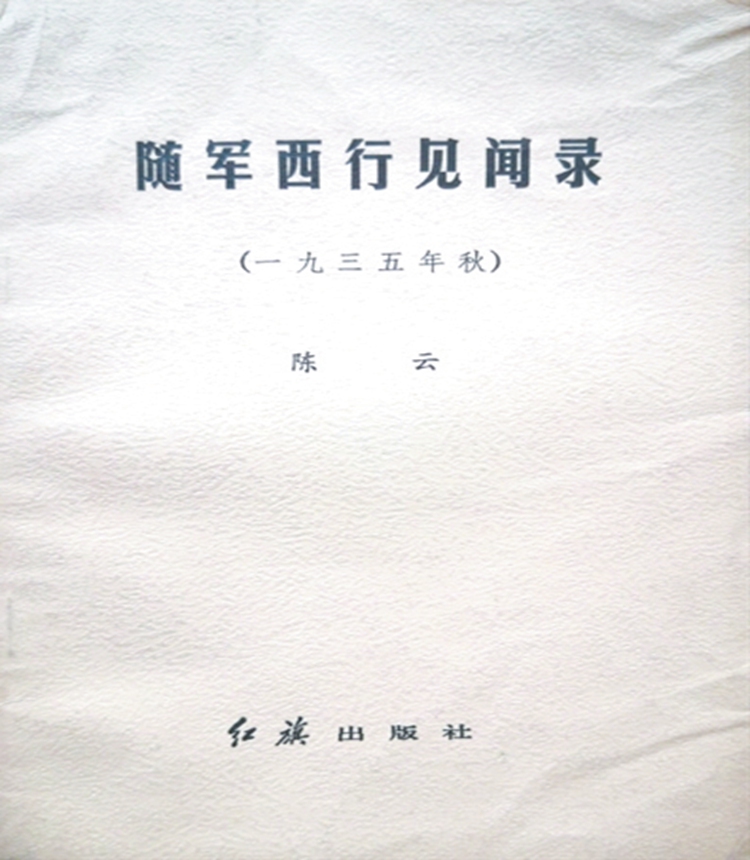
The earliest known book written by a Party member to introduce the Long March to overseas readers was Notes on What I Saw and Heard When I Went Westward With the Army, written by Chen Yun in Shanghai. In March 1936, the work, comprising approximately 30,000 Chinese characters, was first serialized in Quanmin Yuekan, a Chinese-language periodical published by the CPC in Paris. A standalone edition was published in Moscow, the Soviet Union, in July that year, making it the first book on the Long March to be formally published overseas.
To break through the political and opinion oppression, Chen wrote under the pseudonym Lian Chen, adopting the perspective of a Kuomintang military doctor supposedly captured by the Red Army. Through this narrative, he described the Red Army's marches and battles, its daily administration and its leaders. Published and distributed in France, the Soviet Union and China, Notes on What I Saw and Heard When I Went Westward With the Army introduced the Long March of the Chinese Workers' and Peasants' Red Army to the world for the first time. The book subsequently went through at least six editions. According to WorldCat, a global library catalog, its various editions are now held by a total of 37 overseas libraries in countries including the UK, Germany, Canada and the US.
Complementing Chen's account were two works by Deng Fa, Marching Across Snow-Capped Mountains and Grasslands and From Gansu to Shanxi. They recounted the Central Red Army's arduous journey over snow-covered mountains and through grasslands, as well as its eastward campaign into Shanxi after reaching northern Shaanxi.
Like Chen, Deng adopted a fictional identity to tell his story. Writing under the pseudonym Yang Dinghua, he presented himself as a captured Kuomintang technical specialist and introduced readers in China and abroad to the realities of life in the Red Army. In 1938, responding to readers' demand, the editorial department of Jiuguo Shibao compiled these two works and Chen's account into a volume titled Accounts of the Long March. That same year, the Soviet State Publishing House of Political Literature published a Russian translation, further extending the Long March's influence across the socialist bloc.
Around the same time, a systematic effort to collect historical materials on the Long March was launched in Yan'an, with the aim of promoting the story internationally.
On August 5, 1936, Mao Zedong and Yang Shangkun jointly sent a letter to comrades who had participated in the Long March to solicit contributions.
The call for contributions received an enthusiastic response. Within just three months, more than 200 accounts were collected from participants, including Dong Biwu, Yang Chengwu, Shu Tong and Xiao Hua, along with valuable materials such as Red Army songs and mileage tables recording the Long March route. Ding Ling served as chief editor of the collection. After editing and revision, 110 accounts were selected. These firsthand narratives not only became an important source of material for Edgar Snow's Red Star Over China, but also established a factual foundation for Chinese accounts of the Long March.
For reasons including the outbreak of the full-scale Chinese People's War of Resistance Against Japanese Aggression (1931-1945), the manuscript was not renamed History of the Red Army on the Long March until 1942. Only a small number of copies were printed for internal reference, making surviving copies exceedingly rare. In 2002, Harvard-Yenching Library in the US discovered a rare copy of the book, personally inscribed and presented by Zhu De to Edgar Snow. The discovery attracted widespread attention in China and abroad.
Since the book was brought back into circulation, it has entered the collections of 19 overseas libraries, including institutions in the US, Canada, Australia and the UK. The presence of these copies in international collections offers tangible evidence of how Chinese narratives of the Long March have reached the wider world.
In Chinese journalism, Fan Changjiang's dispatches from northwestern China were among the earliest published accounts to report objectively on the Long March. They also became important material in shaping international perceptions of the event. In July 1935, Fan set out for northwestern China as a special correspondent for Tianjin-based Ta Kung Pao. Over several months of arduous travel, he filed dozens of dispatches that revealed the true picture of the Red Army's Long March.
His reports presented a picture of the Red Army that challenged prevailing Kuomintang narratives. He made clear that the Red Army was "marching north to resist Japanese aggression."
In August 1936, these dispatches were compiled into Northwest Corner of China, together with 67 photographs taken on location and more than 20 route maps. The book caused a sensation upon publication, selling out in less than a month. It went through nine printings in a short period, with total circulation exceeding 100,000 copies.
To date, Northwest Corner of China has been published more than 17 times by various Chinese publishers, while copies are held by 59 overseas libraries in more than a dozen countries.
Following the founding of the People's Republic of China in 1949, publishing on the Long March shifted from the urgent publicity efforts of wartime to more regular and systematic endeavors.
Among the earliest to reach international audiences in a wide range of languages was On the Long March with Chairman Mao by Chen Changfeng. Having served as Mao Zedong's bodyguard, Chen drew on his close personal experiences to recount everyday details and revolutionary stories from the march. The book was published in 1959, with an English edition released by Foreign Languages Press that same year. Versions in French, Spanish, Arabic, Hindi, Burmese and other languages followed, along with English reprints in 1972 and 2001, significantly expanding its international readership.
Meanwhile, memoirs by the founding generals and marshals provided overseas readers with firsthand accounts of the military operations and strategic decisions that shaped the Long March.
Visual art also added a distinctive dimension to the circulation of Long March stories at home and abroad. Sketches of the Long March, created by Huang Zhen during the journey, captured the landscapes along the route and the daily lives of Red Army soldiers through sketches of both historical and artistic value. In the 21st century, publications on the Long March have become even more varied in genre.
Accounts and explorations across borders
One of the earliest and most distinctive eyewitness accounts of the Long March from an outsider's perspective came from Rudolf Alfred Bosshardt, a British missionary of Swiss origin, known in Chinese as Bo Fuli.
In October 1934, Bosshardt was detained by the Red Army's Sixth Army Group in Southwest China's Guizhou Province. He subsequently traveled with the troops for nearly 18 months before being released in April 1936. Within just three months of leaving the Red Army, he completed The Restraining Hand: Captivity for Christ in China. He described the Red Army as a force that was shabbily dressed but highly disciplined and an army with principles and ideals.
Published by Hodder & Stoughton in London in November 1936, the book was the first full-length work by a Westerner documenting the Long March. It sold out in the UK that same month, prompting second and third printings, while a French translation appeared early the following year.
More than half a century later, General Xiao Ke read the book and offered an assessment that has frequently been quoted since: "He could hardly have been expected to say more favorable things about us. But as long as what he wrote was true and had historical value, why should it matter if he exposed our shortcomings?"
That a former detainee's account received such frank acknowledgment from one of those whose experiences it documented was perhaps one of the most moving episodes in the history of the Long March's international circulation.
American journalist Edgar Snow played a pivotal role in bringing the Long March to the attention of the Western public.
During his interviews with Mao and other CPC leaders in northern Shaanxi in 1936, photographs and reports from his journey began appearing in British and American publications, even before his book was completed.
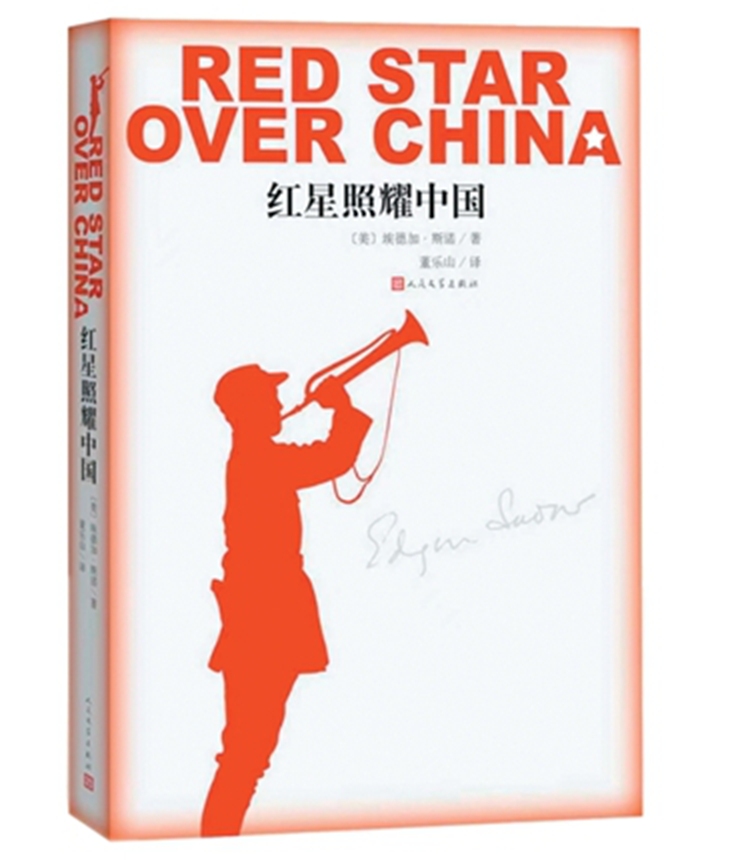
In October 1937, Red Star Over China was published by Victor Gollancz in London. The book devoted an entire chapter to the Long March and had gone through five printings by November. A revised edition was published by Random House in the US the following year. It was subsequently translated into more than 10 languages and circulated around the world.
Snow wrote that regardless of one's opinion of the Red Army or its political position, one could not deny that the Long March was one of the great achievements in military history.
The publication of the Chinese edition of Red Star Over China is also a story worth recounting. In February 1938, just four months after the English edition appeared, a group of 12 underground CPC members and progressive intellectuals in Shanghai, working under the direction of Hu Yuzhi, divided the translation among themselves and collectively revised the manuscript. The book was secretly printed by Shanghai Fushe under the Chinese title Xixing Manji.
By November that year, it had been reprinted four times, with more than 20,000 copies sold. Over the following decades, at least 14 Chinese publishers produced 23 different editions of the book. What began as wartime reading material became a classic work of nonfiction familiar to generations of Chinese readers.
Snow's wife, Helen Foster Snow, also traveled to Yan'an that year. She interviewed military leaders whom Edgar Snow had not met, including Zhu De, He Long and Xiao Ke, and documented the Long March experiences of women soldiers such as Li Jianzhen, Cai Chang and He Zizhen.
Her accounts became Inside Red China, published by Doubleday, Doran in the US in 1939. A Chinese edition, titled Xu Xixing Manji, was released by Shanghai Fushe that same year.
The successive publication of works by Edgar Snow and Helen Foster Snow enabled readers around the world to gain a more comprehensive and deeper understanding of the CPC leaders and the firm convictions of the Red Army.
Retracing the route to understand the Long March spirit
While Edgar Snow left behind accounts written close to the time of the Long March, American journalist Harrison Salisbury undertook a more extensive investigation half a century later.
In 1984, Salisbury, then in his 70s, spent 74 days retracing more than 5,000 kilometers of the Long March route. He examined the geography and climate along the way and interviewed numerous witnesses and veterans of the historic journey.
Drawing on this research, he wrote The Long March: The Untold Story. By comparing historical records with his own observations, Salisbury documented major battles and strategic decisions while also examining the experiences of ordinary people struggling with hunger, disease and harsh environmental conditions. Reflecting on what he had learned, Salisbury wrote that once awakened, the human spirit possesses limitless power.
Spanning nearly three decades from its first Chinese translation to its retranslation, The Long March: The Untold Story has become one of the most widely circulated works on the Long March by an international scholar.
Salisbury's wife, Charlotte Salisbury, accompanied him on the journey and wrote Long March Diary: China Epic.
Other international friends of China also recorded their reflections on the Long March in memoirs and biographies.
German writer Anneliese Martens, known in Chinese as Wang Anna, arrived in China in 1936 and spent 19 years witnessing the Chinese revolution firsthand. In 1964, her memoir China - My Second Hometown was published in Germany. She devoted considerable space to the Long March, describing it as a great achievement in human history.
In October 2002, Ed Jocelyn, a British scholar with a doctorate in history, and his friend Andrew McEwen set out from Yudu in East China's Jiangxi Province to retrace the Red Army's footsteps on foot.
Over 384 days, they traveled through more than 80 counties across 10 provincial-level regions, visiting Red Army veterans and other witnesses to history along the way. Their journey resulted in a jointly authored book.
As foreign journalists, writers and scholars continued to retrace the Long March route, research and writing on the historic event became increasingly diverse.
Han Suyin, a British writer of Chinese descent, made several field trips along the Long March route, interviewing military commanders and ordinary soldiers who had participated in the journey. Her research culminated in The Morning Deluge: Mao Tsetung and the Chinese Revolution, published in the UK in 1972.
Drawing on her reputation in British and American literary circles, the book profoundly influenced how a generation of Western readers understood the Long March.
Chinese-American scholar Benjamin Yang examined military operations, political decisions and leadership relationships before and after the Long March in his book. Using an analytical framework of "revolutionary idealism" and "political realism," the book has been regarded in Western sinological circles as an authoritative academic study of the Long March.
American scholar Helen Praeger Young turned her attention to ordinary women soldiers who took part in the Long March. Drawing on the oral histories of 22 women Red Army veterans, she wrote Choosing Revolution: Chinese Women Soldiers on the Long March, published by the University of Illinois Press in 2001.
Historian Jonathan Spence observed that through years of meticulous interviews, Young brought vivid and moving details to light, deepening readers' understanding of Chinese women's experiences during the Long March. In 2011, a Chinese edition was published, bringing these previously little-known memories of women on the Long March to a wider readership.
For more than 90 years, books on the Long March have brought this chapter of history to readers in China and abroad through firsthand battlefield accounts. Through eyewitness memoirs, journalistic features, documentary literature and academic studies, these works have helped the world recognize the international significance, influence and value of the Long March.
This article was compiled and translated by Global Times reporters Xie Wenting and Shan Jie based on an article published by the People's Daily Overseas Edition on October 15, 2026.
This year marks the 90th anniversary of the victory of the Long March of the Chinese Workers' and Peasants' Red Army. This extraordinary feat in human history wrote a glorious chapter in the history of the Chinese revolution and has remained a subject of enduring interest to writers in China and abroad.
From the translation and introduction of Chinese books on the Long March to overseas audiences to international journalists' and writers' accounts of and explorations into its history, these books have allowed readers from different countries to reach across time and space, encounter heroes of the past, engage with history and be moved by the power of conviction. The circulation and republication of these works have traced the journey of Long March stories across the world, while also providing international readers with an important window into the Communist Party of China (CPC) and the Chinese revolution.
Notes on What I Saw and Heard When I Went Westward With the Army by Chen Yun
The Long March through eyes of revolutionariesThe earliest known book written by a Party member to introduce the Long March to overseas readers was Notes on What I Saw and Heard When I Went Westward With the Army, written by Chen Yun in Shanghai. In March 1936, the work, comprising approximately 30,000 Chinese characters, was first serialized in Quanmin Yuekan, a Chinese-language periodical published by the CPC in Paris. A standalone edition was published in Moscow, the Soviet Union, in July that year, making it the first book on the Long March to be formally published overseas.
To break through the political and opinion oppression, Chen wrote under the pseudonym Lian Chen, adopting the perspective of a Kuomintang military doctor supposedly captured by the Red Army. Through this narrative, he described the Red Army's marches and battles, its daily administration and its leaders. Published and distributed in France, the Soviet Union and China, Notes on What I Saw and Heard When I Went Westward With the Army introduced the Long March of the Chinese Workers' and Peasants' Red Army to the world for the first time. The book subsequently went through at least six editions. According to WorldCat, a global library catalog, its various editions are now held by a total of 37 overseas libraries in countries including the UK, Germany, Canada and the US.
Complementing Chen's account were two works by Deng Fa, Marching Across Snow-Capped Mountains and Grasslands and From Gansu to Shanxi. They recounted the Central Red Army's arduous journey over snow-covered mountains and through grasslands, as well as its eastward campaign into Shanxi after reaching northern Shaanxi.
Like Chen, Deng adopted a fictional identity to tell his story. Writing under the pseudonym Yang Dinghua, he presented himself as a captured Kuomintang technical specialist and introduced readers in China and abroad to the realities of life in the Red Army. In 1938, responding to readers' demand, the editorial department of Jiuguo Shibao compiled these two works and Chen's account into a volume titled Accounts of the Long March. That same year, the Soviet State Publishing House of Political Literature published a Russian translation, further extending the Long March's influence across the socialist bloc.
Around the same time, a systematic effort to collect historical materials on the Long March was launched in Yan'an, with the aim of promoting the story internationally.
On August 5, 1936, Mao Zedong and Yang Shangkun jointly sent a letter to comrades who had participated in the Long March to solicit contributions.
The call for contributions received an enthusiastic response. Within just three months, more than 200 accounts were collected from participants, including Dong Biwu, Yang Chengwu, Shu Tong and Xiao Hua, along with valuable materials such as Red Army songs and mileage tables recording the Long March route. Ding Ling served as chief editor of the collection. After editing and revision, 110 accounts were selected. These firsthand narratives not only became an important source of material for Edgar Snow's Red Star Over China, but also established a factual foundation for Chinese accounts of the Long March.
For reasons including the outbreak of the full-scale Chinese People's War of Resistance Against Japanese Aggression (1931-1945), the manuscript was not renamed History of the Red Army on the Long March until 1942. Only a small number of copies were printed for internal reference, making surviving copies exceedingly rare. In 2002, Harvard-Yenching Library in the US discovered a rare copy of the book, personally inscribed and presented by Zhu De to Edgar Snow. The discovery attracted widespread attention in China and abroad.
Since the book was brought back into circulation, it has entered the collections of 19 overseas libraries, including institutions in the US, Canada, Australia and the UK. The presence of these copies in international collections offers tangible evidence of how Chinese narratives of the Long March have reached the wider world.
In Chinese journalism, Fan Changjiang's dispatches from northwestern China were among the earliest published accounts to report objectively on the Long March. They also became important material in shaping international perceptions of the event. In July 1935, Fan set out for northwestern China as a special correspondent for Tianjin-based Ta Kung Pao. Over several months of arduous travel, he filed dozens of dispatches that revealed the true picture of the Red Army's Long March.
His reports presented a picture of the Red Army that challenged prevailing Kuomintang narratives. He made clear that the Red Army was "marching north to resist Japanese aggression."
In August 1936, these dispatches were compiled into Northwest Corner of China, together with 67 photographs taken on location and more than 20 route maps. The book caused a sensation upon publication, selling out in less than a month. It went through nine printings in a short period, with total circulation exceeding 100,000 copies.
To date, Northwest Corner of China has been published more than 17 times by various Chinese publishers, while copies are held by 59 overseas libraries in more than a dozen countries.
Following the founding of the People's Republic of China in 1949, publishing on the Long March shifted from the urgent publicity efforts of wartime to more regular and systematic endeavors.
Among the earliest to reach international audiences in a wide range of languages was On the Long March with Chairman Mao by Chen Changfeng. Having served as Mao Zedong's bodyguard, Chen drew on his close personal experiences to recount everyday details and revolutionary stories from the march. The book was published in 1959, with an English edition released by Foreign Languages Press that same year. Versions in French, Spanish, Arabic, Hindi, Burmese and other languages followed, along with English reprints in 1972 and 2001, significantly expanding its international readership.
Meanwhile, memoirs by the founding generals and marshals provided overseas readers with firsthand accounts of the military operations and strategic decisions that shaped the Long March.
Visual art also added a distinctive dimension to the circulation of Long March stories at home and abroad. Sketches of the Long March, created by Huang Zhen during the journey, captured the landscapes along the route and the daily lives of Red Army soldiers through sketches of both historical and artistic value. In the 21st century, publications on the Long March have become even more varied in genre.
Red Star Over China by Edgar Snow
Accounts and explorations across borders
One of the earliest and most distinctive eyewitness accounts of the Long March from an outsider's perspective came from Rudolf Alfred Bosshardt, a British missionary of Swiss origin, known in Chinese as Bo Fuli.
In October 1934, Bosshardt was detained by the Red Army's Sixth Army Group in Southwest China's Guizhou Province. He subsequently traveled with the troops for nearly 18 months before being released in April 1936. Within just three months of leaving the Red Army, he completed The Restraining Hand: Captivity for Christ in China. He described the Red Army as a force that was shabbily dressed but highly disciplined and an army with principles and ideals.
Published by Hodder & Stoughton in London in November 1936, the book was the first full-length work by a Westerner documenting the Long March. It sold out in the UK that same month, prompting second and third printings, while a French translation appeared early the following year.
More than half a century later, General Xiao Ke read the book and offered an assessment that has frequently been quoted since: "He could hardly have been expected to say more favorable things about us. But as long as what he wrote was true and had historical value, why should it matter if he exposed our shortcomings?"
That a former detainee's account received such frank acknowledgment from one of those whose experiences it documented was perhaps one of the most moving episodes in the history of the Long March's international circulation.
American journalist Edgar Snow played a pivotal role in bringing the Long March to the attention of the Western public.
During his interviews with Mao and other CPC leaders in northern Shaanxi in 1936, photographs and reports from his journey began appearing in British and American publications, even before his book was completed.
In October 1937, Red Star Over China was published by Victor Gollancz in London. The book devoted an entire chapter to the Long March and had gone through five printings by November. A revised edition was published by Random House in the US the following year. It was subsequently translated into more than 10 languages and circulated around the world.
Snow wrote that regardless of one's opinion of the Red Army or its political position, one could not deny that the Long March was one of the great achievements in military history.
The publication of the Chinese edition of Red Star Over China is also a story worth recounting. In February 1938, just four months after the English edition appeared, a group of 12 underground CPC members and progressive intellectuals in Shanghai, working under the direction of Hu Yuzhi, divided the translation among themselves and collectively revised the manuscript. The book was secretly printed by Shanghai Fushe under the Chinese title Xixing Manji.
By November that year, it had been reprinted four times, with more than 20,000 copies sold. Over the following decades, at least 14 Chinese publishers produced 23 different editions of the book. What began as wartime reading material became a classic work of nonfiction familiar to generations of Chinese readers.
Snow's wife, Helen Foster Snow, also traveled to Yan'an that year. She interviewed military leaders whom Edgar Snow had not met, including Zhu De, He Long and Xiao Ke, and documented the Long March experiences of women soldiers such as Li Jianzhen, Cai Chang and He Zizhen.
Her accounts became Inside Red China, published by Doubleday, Doran in the US in 1939. A Chinese edition, titled Xu Xixing Manji, was released by Shanghai Fushe that same year.
The successive publication of works by Edgar Snow and Helen Foster Snow enabled readers around the world to gain a more comprehensive and deeper understanding of the CPC leaders and the firm convictions of the Red Army.
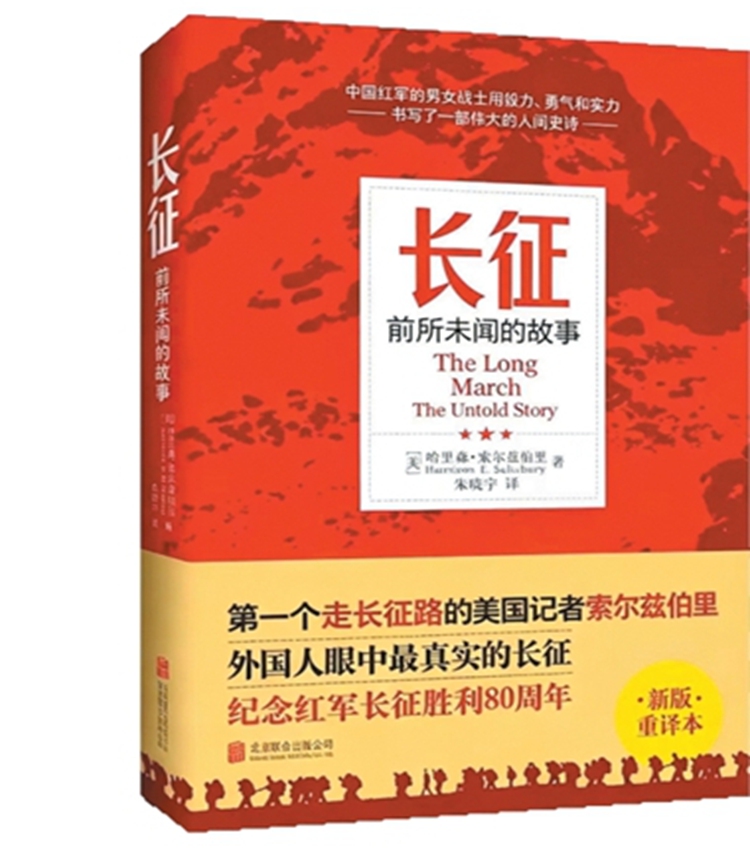
The Long March: The Untold Story by American journalist Harrison Salisbury
Retracing the route to understand the Long March spirit
While Edgar Snow left behind accounts written close to the time of the Long March, American journalist Harrison Salisbury undertook a more extensive investigation half a century later.
In 1984, Salisbury, then in his 70s, spent 74 days retracing more than 5,000 kilometers of the Long March route. He examined the geography and climate along the way and interviewed numerous witnesses and veterans of the historic journey.
Drawing on this research, he wrote The Long March: The Untold Story. By comparing historical records with his own observations, Salisbury documented major battles and strategic decisions while also examining the experiences of ordinary people struggling with hunger, disease and harsh environmental conditions. Reflecting on what he had learned, Salisbury wrote that once awakened, the human spirit possesses limitless power.
Spanning nearly three decades from its first Chinese translation to its retranslation, The Long March: The Untold Story has become one of the most widely circulated works on the Long March by an international scholar.
Salisbury's wife, Charlotte Salisbury, accompanied him on the journey and wrote Long March Diary: China Epic.
Other international friends of China also recorded their reflections on the Long March in memoirs and biographies.
German writer Anneliese Martens, known in Chinese as Wang Anna, arrived in China in 1936 and spent 19 years witnessing the Chinese revolution firsthand. In 1964, her memoir China - My Second Hometown was published in Germany. She devoted considerable space to the Long March, describing it as a great achievement in human history.
In October 2002, Ed Jocelyn, a British scholar with a doctorate in history, and his friend Andrew McEwen set out from Yudu in East China's Jiangxi Province to retrace the Red Army's footsteps on foot.
Over 384 days, they traveled through more than 80 counties across 10 provincial-level regions, visiting Red Army veterans and other witnesses to history along the way. Their journey resulted in a jointly authored book.
As foreign journalists, writers and scholars continued to retrace the Long March route, research and writing on the historic event became increasingly diverse.
Han Suyin, a British writer of Chinese descent, made several field trips along the Long March route, interviewing military commanders and ordinary soldiers who had participated in the journey. Her research culminated in The Morning Deluge: Mao Tsetung and the Chinese Revolution, published in the UK in 1972.
Drawing on her reputation in British and American literary circles, the book profoundly influenced how a generation of Western readers understood the Long March.
Chinese-American scholar Benjamin Yang examined military operations, political decisions and leadership relationships before and after the Long March in his book. Using an analytical framework of "revolutionary idealism" and "political realism," the book has been regarded in Western sinological circles as an authoritative academic study of the Long March.
American scholar Helen Praeger Young turned her attention to ordinary women soldiers who took part in the Long March. Drawing on the oral histories of 22 women Red Army veterans, she wrote Choosing Revolution: Chinese Women Soldiers on the Long March, published by the University of Illinois Press in 2001.
Historian Jonathan Spence observed that through years of meticulous interviews, Young brought vivid and moving details to light, deepening readers' understanding of Chinese women's experiences during the Long March. In 2011, a Chinese edition was published, bringing these previously little-known memories of women on the Long March to a wider readership.
For more than 90 years, books on the Long March have brought this chapter of history to readers in China and abroad through firsthand battlefield accounts. Through eyewitness memoirs, journalistic features, documentary literature and academic studies, these works have helped the world recognize the international significance, influence and value of the Long March.
This article was compiled and translated by Global Times reporters Xie Wenting and Shan Jie based on an article published by the People's Daily Overseas Edition on October 15, 2026.
RELATED ARTICLES