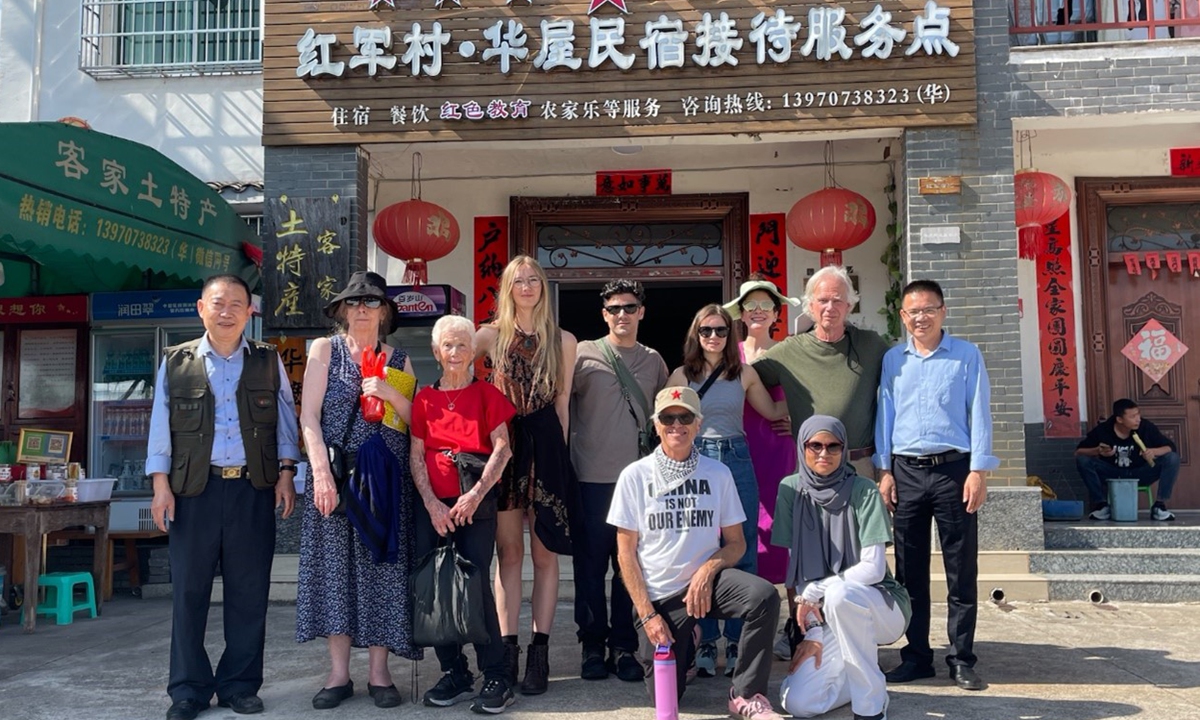
CodePink introduces its China trip on its official website. The photo is part of the trip's online presentation. Photo: Screenshot from CodePink's website
As the US anti-war organization CodePink embarks on a 12-day trip to China to explore the country's revolutionary history and its high-tech infrastructure and development, Medea Benjamin, the group's co-founder, is sharing her experiences on social media. Through her posts, she offers her personal perspective on China beyond mainstream Western media narratives and reiterates the message that "China is not our enemy."
Benjamin arrived in Shanghai on Thursday evening, CodePink co-founder Jodie Evans, who is also part of the trip, told the Global Times. Nearly 30 years after her last visit to China, Benjamin is sharing her firsthand experiences on social media as she rediscovers the country, Evans said.
Both Benjamin and Evans are taking part in the trip, according to CodePink's website.
According to the itinerary published on CodePink's official website, the 12-day, 11-night trip will take the group beyond Shanghai to Southwest China's Chongqing, Zunyi, Loushanguan, Maotai Village, and Guiyang in Southwest China's Guizhou Province.
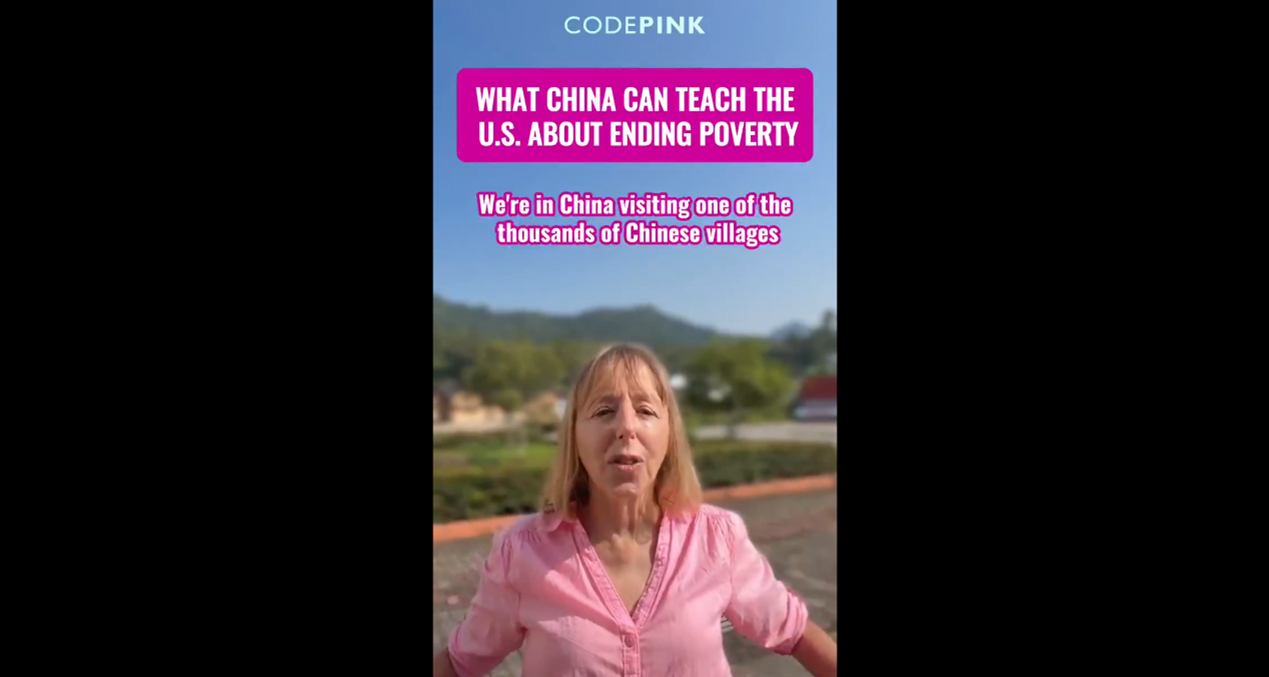
Medea Benjamin poses a question in a video posted on CodePink's X platform: "What China can teach the US about ending poverty" Photo: Screenshot from CodePink's X account
The program aims to "explore China's revolutionary history, while marveling at high-tech infrastructure and modern socialist development," with highlights including red memorials, historical reenactments and museums, socialist infrastructure, and rural revitalization, the itinerary said.
Through her social media posts, Benjamin has focused on both China's development and details of everyday life, seeking to offer overseas audiences a picture of the country based on her firsthand observations.
In one post, Benjamin examined China's efforts in poverty alleviation, highlighting how nearly 800 million people have been lifted out of extreme poverty and how sustained investment in housing, infrastructure, healthcare and education has transformed communities.
"China made poverty alleviation a national priority," she wrote, contrasting the country's approach with that of the US, where, she argued, enormous resources continue to be poured into war while millions of people struggle to meet their basic needs.
"What if we invested in people instead?" she asked, linking China's poverty alleviation experience to a broader debate over public spending priorities in the US.
In another post on Thursday, Benjamin documented how residents have transformed shared urban spaces into community gardens, growing vegetables and other crops including bok choy, sweet potatoes, peppers, beans and sugar cane. She noted that many residents bring generations of farming knowledge with them, maintaining their connection to the land even in urban communities.
Her observations also extended to social trust in everyday settings. During a visit to a university, she noted bicycles left unlocked in public areas and umbrellas casually placed in shared spaces, details she presented as glimpses into daily life in China.
"Follow along as we discover everyday life in China beyond the Western media narratives. China Is Not Our Enemy!" CodePink wrote in a social media post on Thursday.
Many Chinese netizens have warmly welcomed Benjamin and her companions on Chinese social media, saying that China welcomes visitors who come with sincerity and an open mind.
One Chinese netizen suggested that they should "get on the expressways, take the high-speed rail and see the long-distance power transmission lines."
As Evans told the Global Times, Benjamin is sharing her firsthand experiences with followers as she revisits China nearly 30 years after her last visit. In a social media post, she posed three questions: "What has changed? What will surprise her? And how different is the China she'll see from the one we keep hearing about in Washington?"
"Stay tuned! This is just the beginning," she added.
RELATED ARTICLES