ARTS / CULTURE & LEISURE
How did a wartime Chinese rallying slogan become a US Marines motto – and still echoes in today’s exchanges?
Gung Ho’s journey from China to the US
By Published: Oct 18, 2026 10:04 PM

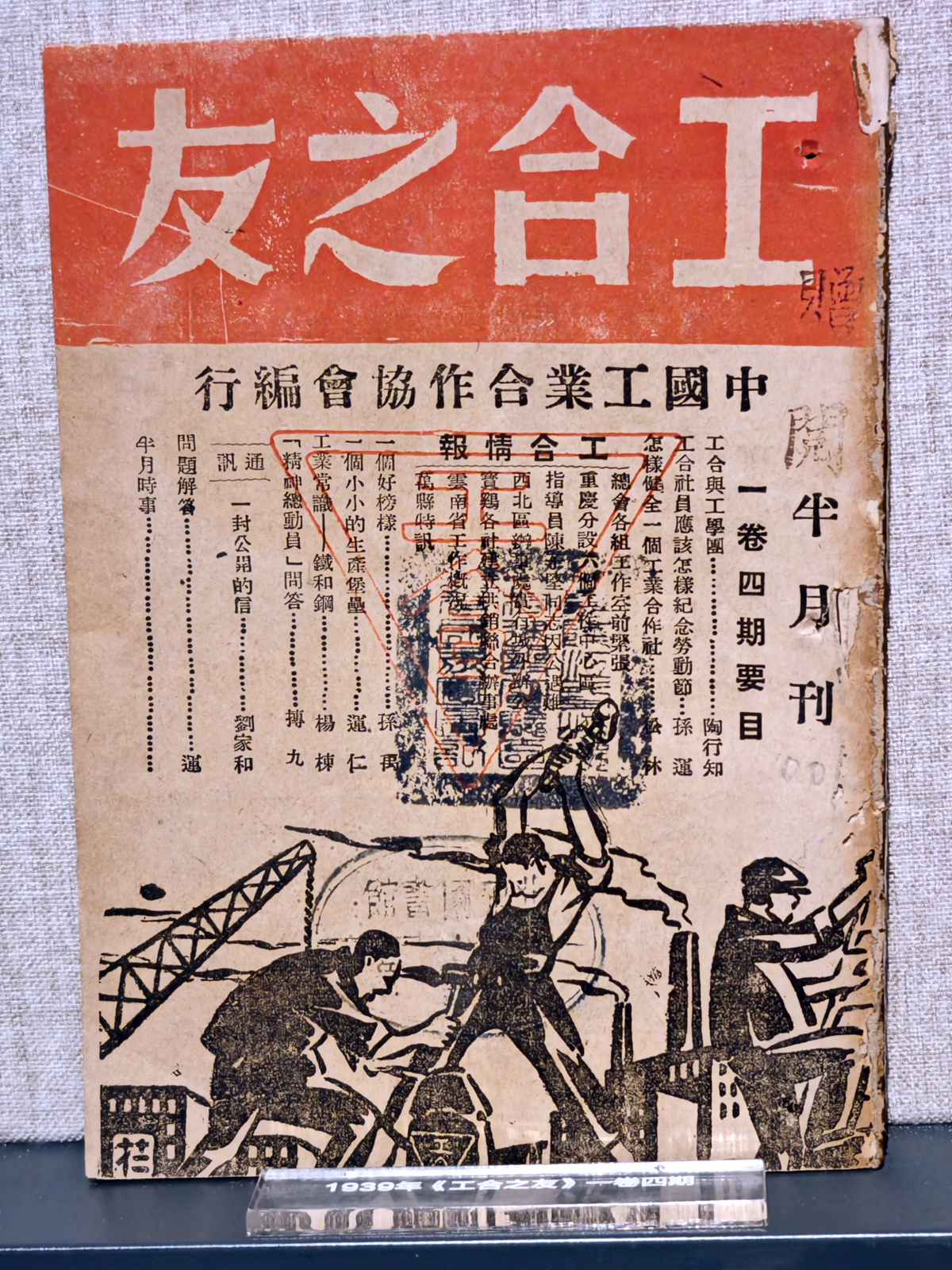
A copy of the 1939 magazine Gong He Zhi You (Friends of Gung Ho) on display at a museum in Wuhan, Central China's Hubei Province Photo: IC
In a recent address, US President Donald Trump made an unusual point of mentioning a Chinese term: "Gung Ho ('gong he' in Putonghua).""It was the United States Marines' encounter with Chinese people that inspired the Marines to adopt a Chinese phrase they still use today - gung ho," Trump said during Chinese leader's recent visit to the US, according to a report by the Xinhua News Agency on September 27.
"The Marines use it as an expression of great enthusiasm, but in Chinese, it literally means working together," Trump said.
His remarks have sparked curiosity on both sides of the Pacific. For many people in both China and the US, it was probably the first time they learned that this phrase, long since woven into American English, actually originated in a campaign from the Chinese People's War of Resistance Against Japanese Aggression (1931-45).
What exactly was "Gung Ho"? How did it travel across the ocean to the US? And what relevance does this history hold today? With these questions in mind, the Global Times reporter recently spoke with historians who have long studied the "Gung Ho" movement, as well as experts focusing on people-to-people exchanges between China and the US.
What is 'Gung Ho'?
"Gung Ho" was originally an abbreviation for the "Chinese Industrial Cooperatives" movement.
Xiao Xiaofei of the School of History, Anhui University, has spent years studying this chapter of history. Xiao said that after Japan launched its full-scale invasion of China in 1937, China's already fragile industrial base at the time was dealt a devastating blow. Some factories in eastern China were destroyed by war or looted by Japanese forces, while only a fraction was able to make the long and difficult journey inland to the rear areas of resistance.
In Shanghai, several friendly foreigners, such as American journalists Edgar Snow and Nym Wales, as well as New Zealand-born writer, social reformer and educator Rewi Alley, saw firsthand how severely China's industrial capacity had been damaged. They came up with the idea of combining industry with cooperatives, and planned to support China by establishing industrial production cooperatives.
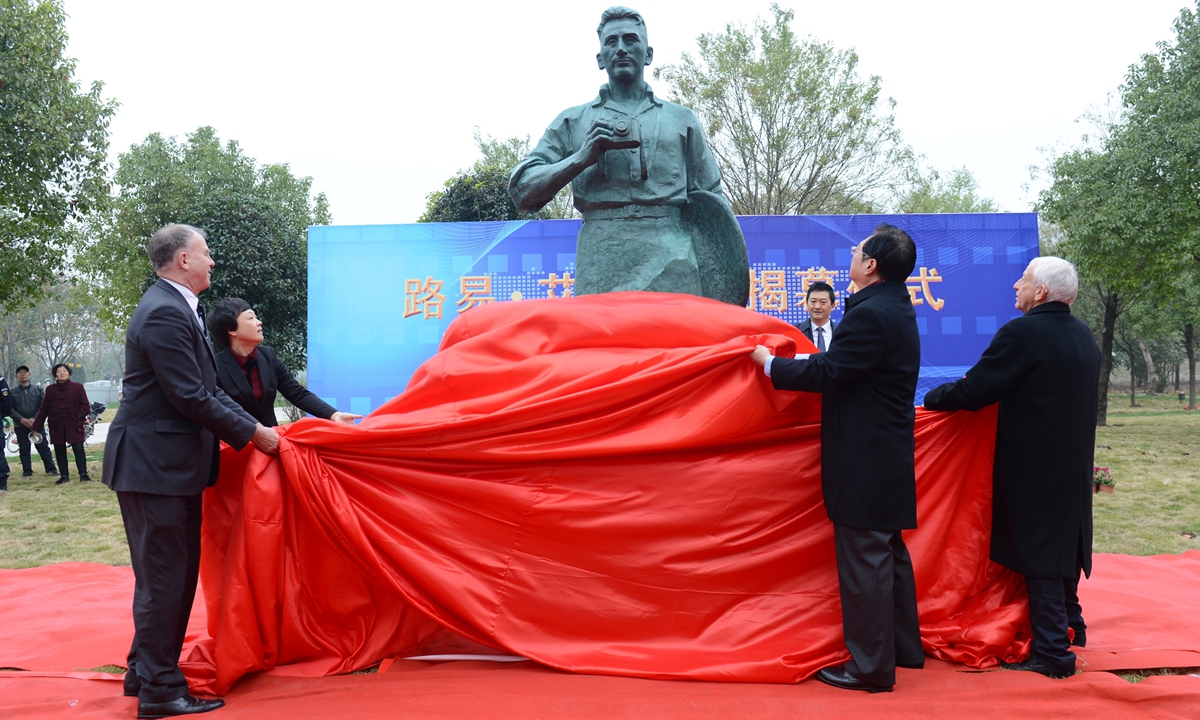
An unveiling ceremony for the statue of Rewi Alley held in Honghu, Central China's Hubei Province, on November 22, 2017 Photo: VCG
According to Xiao, the idea quickly won support among a group of Chinese figures who were also searching for ways to resist the Japanese invasion and save the nation. At a gathering, participants agreed that an organization should be founded to promote the movement, for instance, establishing industrial production cooperatives that could manufacture both military and civilian supplies while supporting a prolonged war of resistance."Gung Ho" became known as the Chinese Industrial Cooperatives in English, or CIC. But the slogan is more widely remembered as "Working Together," said Xiao. In those years, the movement drew many international supporters, including a number of Americans whose stories still move readers today.
While sorting through archival materials related to the movement, Xiao was particularly struck by one detail. He recalled Ida Pruitt, who had initially worked at a hospital in China, and by chance met Alley in East China's Zhejiang Province. The two spent the entire day talking about the vision and ideals of the "Gung Ho" movement. Pruitt later returned to the US and launched the American Committee in Aid of the Chinese Industrial Cooperatives in New York City, where she campaigned among US civil society groups for donations for China.
"The help offered to China by international friends was deeply sincere," Xiao told the Global Times.
'Working together'
How did "Gung Ho" make its way into the US Marines? Xiao points to a pivotal figure: Evans Carlson.
Carlson was born into a missionary family in the US. In 1940, he visited China, and it was then that he went to see the "Gung Ho" cooperatives in southeastern China. There, Carlson came to strongly endorse the idea of "working together."
In 1941, back to his home country, Carlson rejoined the US Marines. The following year, he began promoting the spirit of "Gung Ho" in military training. In an October 2019 story, quoted by NPR, he explained it this way: "I was trying to build up the same sort of working spirit I had seen in China where all the soldiers dedicated themselves to one idea and worked together to put that idea over."
The spirit of "Gung Ho" has not lost its relevance today. Even now, this ethos of "working together" can still be seen in people-to-people exchanges across a wide range of China-US fields, Xiao said.
This year marks the 55th anniversary of "ping-pong diplomacy" between China and the US. Hu Deping, dean of the School of Marxism Studies at Shanghai University of Sport, once shared his understanding of the close affinity between the spirit of "Gung Ho" and the spirit of sport at a symposium commemorating the 127th anniversary of the birth of Alley in 2024.
In Hu's view, the spirit of "Gung Ho" and the spirit of sport are connected by a shared patriotic foundation. They also converge in qualities such as unity and cooperation, resilience in the face of difficulty, and steadfast perseverance, while resonating with one another in their promotion of internationalism.
"Ping-pong diplomacy is a vivid example of this spirit in action. Fifty-five years ago, ping-pong diplomacy reopened the door to friendly exchanges between the peoples of China and the US, creating the much-celebrated historical story of 'the small ball moving the big ball,'" Hu told the Global Times. "Today, we should carry forward the spirit of ping-pong diplomacy and the spirit of 'Gung Ho,' and jointly write a new chapter in international friendship and exchange."
From an abbreviation for the Chinese Industrial Cooperatives, to a slogan among US Marines, to the friendly exchanges between Chinese and US athletes at the ping-pong table, the word "Gung Ho" has traveled a long path. Xiao noted that over more than 80 years, it has crossed languages and cultures, yet it has never strayed from its original meaning: working together.
RELATED ARTICLES