EU reportedly proposes new curbs on Chinese imports; trade deficit blame misplaced: expert
Brussels' push risks ‘raising costs for European businesses and consumers’

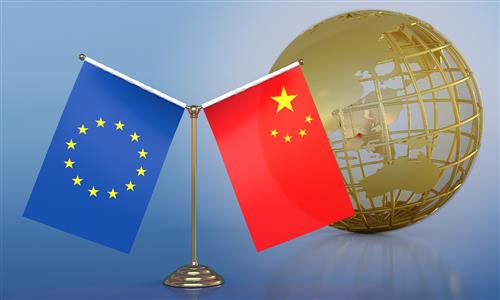
The European Union (EU) flags in front of EU headquarters in Brussels, Belgium. Photo: VCG
European Commission President Ursula von der Leyen said on Friday that the EU would propose new restrictions on Chinese imports beyond the scope of a previously agreed arrangement on hybrid cars, citing the bloc's growing trade deficit with China as pretext, according to Reuters. Chinese experts, however, said the EU was blaming China for trade imbalances while overlooking its own export restrictions, high energy costs and industrial competitiveness problems.
They warned that treating trade talks as a bargaining chip and import curbs as leverage would only drive up costs for European businesses and consumers, adding that Brussels should not underestimate China's resolve and ability to safeguard its own interests.
Speaking after a European Council summit, Von der Leyen claimed that the EU's goods trade deficit with China was running at more than 1 billion euros ($1.12 billion) a day. She argued that the existing agreement would not resolve what she described as a structural imbalance. The European Commission i s also due to make a proposal in December to limit EU companies' reliance on single sources for certain critical supplies.
Zhou Mi, a researcher at the Chinese Academy of International Trade and Economic Cooperation, told the Global Times that Von der Leyen's claim on the 1 billion euros in daily trade deficit risks stirring public sentiment rather than explaining the real impact on businesses and consumers. "If unilateral restrictions are imposed, they would undermine respect for WTO rules and erode trust in China-EU trade talks," he said.
EU ignores its own problems
"Simply focusing on the trade deficit, especially by repeatedly hyping its scale, does not necessarily explain its actual impact and may distort public perceptions," Zhou said.
Trade involves businesses and consumers with different needs, Zhou said. Importers and exporters make decisions based on their own commercial interests, while the overall trade balance does not show how the benefits of those transactions are distributed among individual market participants.
Also, China-EU trade is not limited to goods. According to China's statistics cited by China's ambassador to the EU, Cai Run, China ran a service trade deficit of $48.3 billion with the EU in 2025, and the bloc accounted for 41.6 percent of that deficit. China also paid the EU more than $10 billion in intellectual property fees.
Jian Junbo, a professor at Fudan University's Center for China-Europe Relations, told the Global Times that the trade imbalance ultimately reflected differences in industrial capacity and competitiveness. China's stronger manufacturing capacity gives its products an edge in the market, while high energy costs, innovation gaps and technological constraints have weighed on the competitiveness of European industries. He also pointed to a contradiction in the EU's approach: Brussels wants to expand exports to China while restricting exports of certain products, including lithography machines.
EU's high energy costs and weak industrial competitiveness are at the root of Europe's trade woes. The European Commission's 2026 Annual Single Market and Competitiveness Report identifies high energy costs and barriers within the single market among the issues facing European businesses. These domestic pressures are also relevant to the bloc's ability to compete internationally.
High energy costs and weaknesses in industrial competitiveness are issues Brussels needs to address at home. Restricting imports may shield some producers from competition in the short term, but it will not lower energy costs, raise productivity or make European products more competitive in China, Jian said.
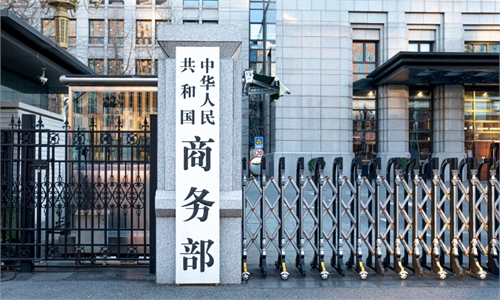
The Chinese Ministry of Commerce has urged the EU to approach trade consultations with sincerity and resolve differences through dialogue. Responding to the EU's proposed dual-track approach toward China, a ministry spokesperson said the purpose of China-EU trade consultations was to properly manage differences and accommodate each other's concerns.
"Both sides should demonstrate sincerity in resolving problems. The EU should not expect to gain benefits through pressure, and should not underestimate China's resolve and capability to safeguard its own interests," the spokesperson said.
EU's pressure tactics will backfire
Zhou said China-EU trade is based on complementary economic strengths, with businesses on both sides benefiting from access to each other's markets. Chinese imports help European companies obtain competitively priced goods and components, manage supply-chain uncertainty and ease inflationary pressures. Restricting those imports could increase costs for European manufacturers and consumers, he said, while doing little to resolve the bloc's underlying economic problems.
Zhou said the economic consequences of trade should be assessed through the interests of businesses and consumers on both sides, rather than the overall deficit alone. Importers and exporters engage in trade to meet their own commercial needs, he said. Treating the deficit itself as proof that China-EU trade is unfair risks overlooking the benefits that businesses on both sides derive from those transactions.
The EU cannot expect China to make concessions while it continues to prepare new restrictions and leaves China's concerns unresolved. Using market access as a bargaining chip risks turning trade consultations into a contest of pressure, making a lasting agreement harder to reach. If Brussels wants to improve trade relations, it needs to address the concerns of both sides rather than expect China alone to accommodate Europe's demands, experts said.
Jian warned that expanding import restrictions could have far-reaching consequences for European businesses and consumers. Many Chinese imports are intermediate goods used in production, and replacing them with supplies from other sources could significantly raise costs and weaken European companies' competitiveness. Consumers would also face higher living costs as access to affordable goods diminishes, potentially adding to inflationary pressure.
Some western media outlets have also questioned whether trade barriers can solve Europe's industrial problems. In an October commentary, the Financial Times noted that Chinese imports put competitive pressure on some European industries while providing competitively priced inputs to others. It called for reforms to strengthen Europe's long-term competitiveness.
Zhou warned that unilateral measures would undermine the foundations of trade and mutual trust, as well as respect for WTO rules. Differences between China and the EU should be addressed through established consultation mechanisms, he said. A confrontational approach, Zhou added, would make it harder for Europe to achieve its own economic goals.
RELATED ARTICLES