A landscape design of the Annual Conference of Financial Street Forum 2026 in Beijing, October 19, 2026 Photo: VCG
Editor's Note:
As China enters its 15th Five-Year Plan period (2026-30) against a complex external environment, questions about the resilience of its economy, the direction of capital market reform and its ability to attract international patient capital have moved to the center of global attention. Global Times (GT) reporter Ma Jingjing interviewed Andrew Sheng (Sheng), a member of the International Advisory Committee of National Financial Regulatory Administration.
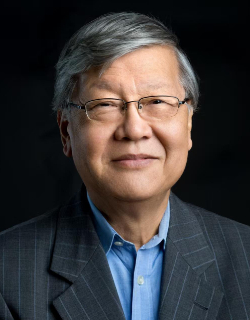
Andrew Sheng, a member of the International Advisory Committee of National Financial Regulatory Administration Photo: Courtesy of Andrew Sheng
GT: Currently, China is deepening the comprehensive reform of the investment and financing functions of its capital market, encouraging the entry of medium- and long-term funds, and fostering a culture of rational, value-driven and long-term investment. In your view, what are the key opportunities for China's capital market in the coming years with regard to institutional openness and attracting international patient capital? For global institutional investors, where does the allocation value of Chinese assets lie?
Sheng: Over the next 3-5 years, the global financial landscape is undergoing profound disruption. Nations are reassessing market models and accelerating industrial policy. Awareness is growing that stock markets serve as risk absorbers for high-technology investment, whereas rising debt in a higher-interest-rate environment carries heightened vulnerability to volatility and contagion.
Major economies are increasingly employing equity markets to fund real economic transformation. China has advanced multi-tier capital market development through the STAR Market, ChiNext and Beijing Stock Exchange, strengthening equity allocation channels. While energy and inflation pressures persist elsewhere, China has advanced in manufacturing scale and renewable energy deployment. Still, heavy reliance on debt financing for AI capital expenditure carries risks if revenue expectations are unmet and debt burdens become unsustainable.
In China, strengthening long-term institutional investors - pension funds, social security and insurance capital - will reduce volatility and align market incentives with international patient capital. Renminbi internationalization continues: Broader use in trade settlement and reserve holdings, combined with low correlation with Western indices, enhances diversification appeal. Ultimately, sustained real-sector returns remain essential; current profit compression reflects intense competitive dynamics.
Global investors like the China market for scale and diversification reasons with four particular attractions, strategic growth exposure, yield and diversification, consumption and services upgrading, and green transition leadership.
GT: This year marks the start of China's 15th Five-Year Plan. As a financial regulator who witnessed the 2008 financial crisis, how do you assess the resilience of China's economy at present? Against the backdrop of a complex external environment and deepening domestic structural transformation, where do you see the core drivers of China's long-term growth coming from?
Sheng: The 15th Five-Year Plan opens with GDP growth of 4.6 percent year-on-year and manufacturing value-added growth of 5.3 percent in the first three quarters this year. Having witnessed the 1997 Asian financial crisis and 2008 global financial crisis, I measure resilience not by peak growth but by adaptive capacity. By that standard, China's economy remains robust.
Expansion is increasingly driven by advanced manufacturing, services and domestic consumption, rather than by the property and infrastructure credit that once carried the economy. This transition is underwritten by substantial buffers. The country's foreign exchange reserves exceed $3 trillion, with sustained current-account surpluses and manageable external debt. On the domestic side, fiscal and monetary headroom remains, and targeted de-risking of real estate and local government financing has contained systemic threats.The new engines are already visible. High-tech, digital and green sectors now outpace traditional industries, while rising R&D spending, patent output and venture capital activity confirm innovation as the primary growth engine. None of this happens without friction: Deleveraging, structural adjustment and income disparities are the unavoidable costs of a transition of this scale. Yet the ability to absorb these pressures without disruption points to a resilience that is structural rather than cyclical.
Three forces will shape the longer horizon. Innovation and industrial upgrading lead the way, with China advancing toward the global frontier in artificial intelligence (AI), semiconductors, aerospace and biotech, where sustained basic research combined with large-scale manufacturing converts ideas into productivity at a speed few economies can match. Inclusive consumption and urban-rural development follow: As incomes rise and services expand, domestic demand becomes the principal engine, with pension, elderly-care and family-support systems providing a foundation for consumption that can be sustained rather than repeatedly stimulated. Green transformation completes the picture. Decarbonization is at once an environmental commitment and an industrial revolution, with renewable build-out, grid modernization, circular industries and efficiency gains together creating multi-decade opportunities in investment, technology and exports.
GT: With the rapid expansion of AI, advanced manufacturing, and green and low-carbon industries, new demands are being placed on the supply of long-term capital and multi-tiered capital market services. In your view, how should China further optimize its financing structure, leverage equity financing and long-term capital, and deepen the integration of technological innovation with industrial development?
Sheng: To meet the capital demands of AI, advanced manufacturing, and the low-carbon transition, China must rebalance its financing system - still bank-dominated - toward longer-term, risk-tolerant capital. Four priorities stand out:
First, expand equity financing: Refine listing, delisting, and disclosure across STAR, ChiNext, and Beijing Stock Exchange; deepen coordination with Hong Kong to accelerate capital-market integration. Encourage long-term institutional allocations to venture and private equity with extended evaluation horizons; improve small-cap liquidity and channel support toward youth-employing enterprises. Second, catalyze patient capital: Establish 10+ year public-private funds prioritizing breakthrough technologies; implement tax incentives and simplified registration for long-term holdings; build a complete financing chain from seed to public markets.
Third, complement with credit and debt innovation: Tailor intellectual-property and future-cash-flow lending; deploy development banks to share risk and crowd-in commercial participation; standardize green and tech bond verification; expand the corporate bond market.
Fourth, align finance with real-economy transformation: Harmonize green taxonomies and disclosure to eliminate greenwashing; link institutional performance evaluation to strategic-sector support; deepen industry-academia-finance collaboration to ground capital decisions in technological and commercial reality. Encourage companies and industries that use more youth labors to solve the youth unemployment issues.
GT: Economic and trade ties between China and ASEAN are growing ever closer, with vast room for collaboration in trade and investment, industrial and supply chains, and technological innovation. Drawing on your professional experience in Southeast Asia and international finance, how do you view the future prospects of China-ASEAN economic and trade cooperation?
Sheng: ASEAN is half China's population and half China's land area, but its maritime footprint is as large, due to huge marine life and island structure. The structural fit for neighboring economies is very complementary.
China has been ASEAN's largest trading partner for six consecutive years, with bilateral trade exceeding $1 trillion in 2025. RCEP implementation is progressively eliminating tariffs, streamlining customs, and harmonizing rules of origin. ASEAN's young, digitally capable workforce and resource endowments complement China's technological and capital strengths; supply chains are evolving toward specialization rather than pure competition - China provides capital goods, external funding and technology; ASEAN contributes labor, resources, and growing markets, serving also as a gateway to the Global South. Digital trade, e-commerce, smart cities and renewable infrastructure define new collaboration frontiers; regional integration enhances resilience against global fragmentation.
There are several fields where China and the ASEAN can deepen financial cooperation, such as local currency settlement and payment connectivity, capital market connectivity, joint investment in upgrading, stability cooperation, green and digital innovation.
RELATED ARTICLES