Rare-earth export controls on Japan aim to prevent 'remilitarization' nuclear ambitions: FM
Tokyo's reported appeal for US help over dwindling yttrium stocks won't work: expert
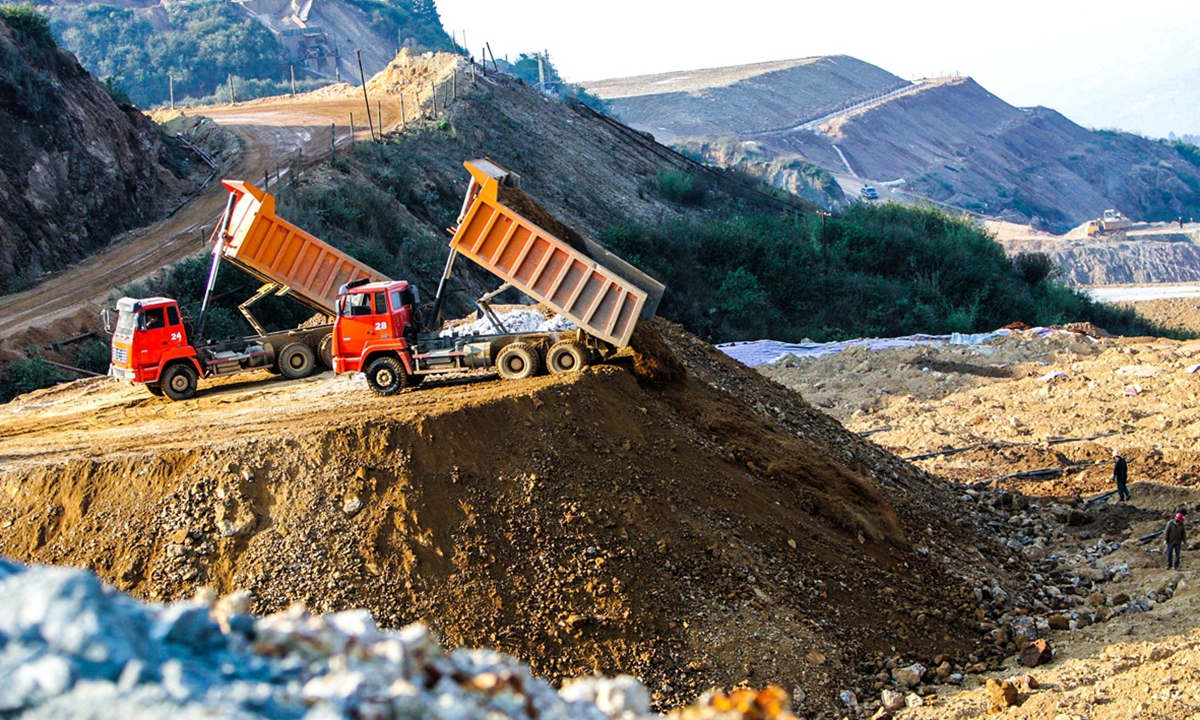
Rare earth File photo:VCG
China has imposed export controls on Japan in accordance with laws and regulations, with the aim of preventing Japan's "remilitarization" and attempts to acquire nuclear weapons, Chinese Foreign Ministry spokesperson Mao Ning said on Wednesday, responding to a Financial Times report that Japan had sought US help in urging China to ease rare-earth export restrictions amid a potential yttrium shortage.
Mao said that China's position on maintaining the stability and security of global critical mineral production and supply chains remains unchanged, and that all parties have a responsibility to play a constructive role in this regard.
The Financial Times reported on Tuesday that Japan could run out of yttrium, a critical rare-earth metal used in the vehicle, aerospace and semiconductor industries, within months. Tokyo has asked the US government and major American companies to help persuade China to ease its export restrictions, the report said, citing people familiar with the matter.
A Japanese official described the situation as "serious" for supplying downstream industries, warning that stockpiles were dwindling and efforts to conserve rare earths had limits. The official cautioned that failure to address the problem could pose "a systemic risk to the world economy," according to the report.
Japan is "muddying the waters" by conflating China's restrictions targeting Japan's military-related activities with its broader rare-earth export controls, Lü Chao, an expert on East Asian studies and a professor at the Liaoning Academy of Social Sciences, told the Global Times on Wednesday.
"Rather than reflecting on its own military development policies and the concerns they have raised, Japan is seeking to politicize its supply difficulties by rallying the US and other Western countries to exert collective pressure on China," Lü said. "Such an attempt amounts to evading responsibility for Japan's own missteps in its China policy while further escalating confrontation with Beijing."
In January 2026, China's Ministry of Commerce (MOFCOM) banned exports of all dual-use items to Japanese military users, for military purposes or for other uses that could enhance Japan's military capabilities. In February, the ministry added 20 Japanese entities involved in strengthening Japan's military capabilities to its export control list and placed another 20 on a watch list over difficulties in verifying their end users and end uses.
Lü said that China's restrictions involving Japan should be viewed against the backdrop of Tokyo's expanding military development policies and what he described as a worrying resurgence of militarist tendencies. Such measures are consistent with international practices governing dual-use items and reflect China's responsibility as a major country in safeguarding regional security, he said.
"Given Japan's history of wartime aggression and its failure to fully reflect on those crimes, China has legitimate reasons to restrict items that could contribute to Japan's military development," the expert added.
However, Japan's supply difficulties cannot be attributed to Chinese export controls. Industry analysts noted that the reported shortage is a forecast, and supplies have not yet run out. However, Japan remains vulnerable to supply disruptions because it relies heavily on imports and has few alternative processing options, with market supply and demand also affecting availability.
Despite years of diversification efforts, Japan remains heavily reliant on Chinese rare-earth supplies. China accounted for 66 percent of Japan's rare-earth metal imports in 2025, supplying 5,416 tons, according to an analysis of Japanese Finance Ministry trade data published in March 2026.
Some of Japan's economic and industrial difficulties stem from its own development choices, and "blaming these problems on China's rare-earth export restrictions is misleading," Lü said.
Japan could ease its rare-earth supply difficulties through normal commercial procurement, regulatory dialogue and industrial cooperation. But by viewing supply-chain security through the lens of strategic rivalry with China, Tokyo risks creating further uncertainty for its own manufacturing sector, the expert noted.
The MOFCOM said in February that China's export controls on dual-use items to Japan were aimed at preventing Japan's "remilitarization" and attempts to acquire nuclear weapons, stressing that the measures were fully justified, reasonable and lawful and would not affect normal China-Japan economic and trade exchanges.
Even as Tokyo seeks US help to secure Chinese rare-earth supplies, it is stepping up efforts with Washington and other partners to sideline China from critical mineral supply chains, exposing the glaring hypocrisy and contradictions in Japan's economic security strategy, analysts said.
In October 2025, Japan and the US established a framework to strengthen critical mineral and rare-earth supply chains through coordinated investment in mining and processing. In March 2026, the two countries announced an action plan to diversify supplies, including plans for a plurilateral trade agreement supported by price floors and other measures.
While neither agreement explicitly calls for excluding China, the emphasis on allied coordination, preferential investment arrangements and alternative supply chains reflects a growing tendency to tie critical mineral security to geopolitical alignment.
"Given China's dominant position in global rare-earth processing, Japan cannot expect geopolitical partnerships or new overseas resources to quickly replace established supply chains or meet its industrial demand," Lü said, pointing out that finding new deposits is far from enough to establish viable supply chains, given the challenges in mining, transportation and processing.
The MOFCOM previously urged Japan to change its erroneous course, seriously reflect on its actions and return to the right track. Analysts said that genuine supply-chain resilience requires stable economic and industrial ties with China, rather than politicizing supply chains or pursuing exclusionary arrangements that could further undermine global supply-chain stability.
RELATED ARTICLES