US labeling of Confucius Institutes a security threat exposes irony of its claimed openness, risks deepening ignorance of China: expert
By Published: Oct 25, 2026 02:00 PM

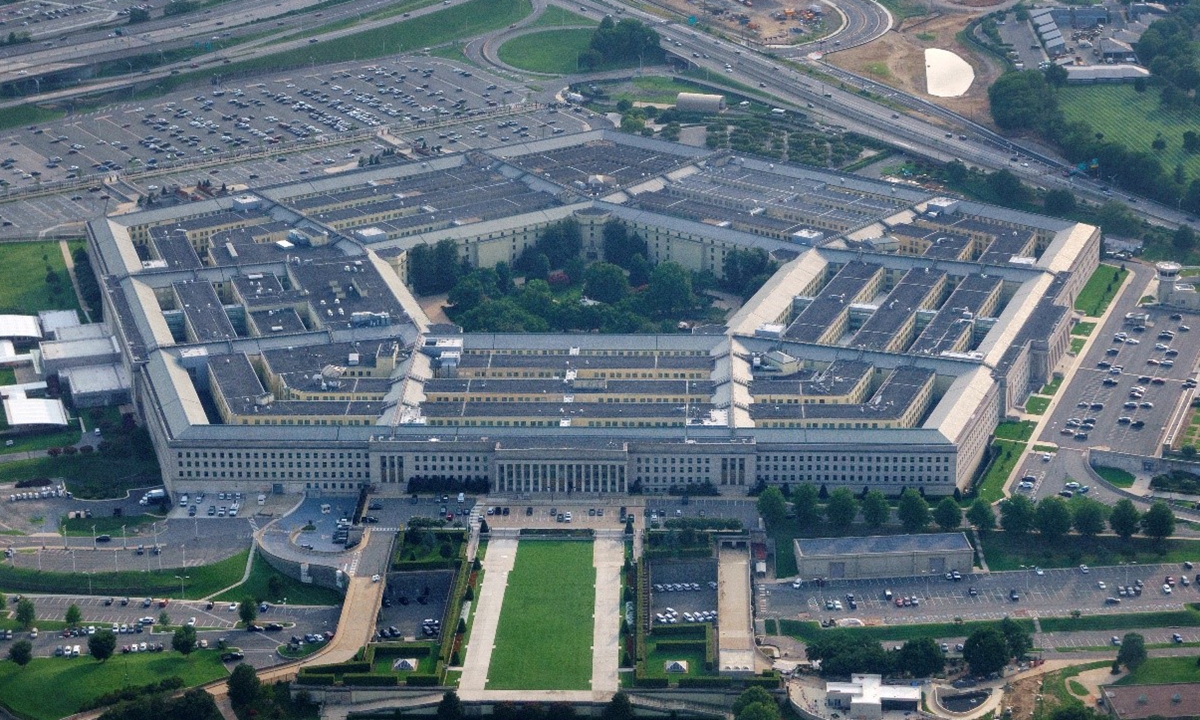
The Pentagon, headquarters for the United States Department of War, is seen on August 13, 2026 in Arlington, Virginia. Photo: VCG
The US Department of Defense's decision to designate Confucius Institutes as a national security threat has drawn a sharp rebuke from an official social media account affiliated with China's armed forces, which questioned how learning Putonghua and Chinese culture could pose a threat to the US when American culture is widely embraced in China. A Chinese expert also warned that Washington's move will ultimately undermine America's own ability to understand China.
The US Defense Department has designated Confucius Institutes as a threat to US national security, US Defense Secretary Pete Hegseth claimed on Friday, Reuters reported.
Hegseth, in a video posted on social media, claimed that Confucius Institutes were operating "under disguise of US universities" and that the Pentagon had added them to its list of institutions that threaten US national security, according to Reuters.
In response, China Military Bugle, an official press account of China's armed forces replied on X on Saturday, that "If learning Mandarin, KungFu, Chinese calligraphy and dance at Confucius Institutes poses threats to the US, then how many years and how seriously has China been threatened by the US? As so many Chinese learn and speak English, watch Hollywood and Disney movies, and drink Starbucks?"
According to statistics from the US Government Accountability Office (GAO), "the number of Confucius Institutes at US universities and colleges declined since 2019, from about 100 to fewer than five. Schools most commonly cited the potential loss of federal funding and external pressures as contributing to their decision to close their Confucius Institute."
Schools also cited pressure from US government officials, members of Congress or state representatives among other factors that contributed to their decision, according to GAO.
Hegseth's accusations are particularly absurd, as if simply learning Mandarin or exploring Chinese culture could somehow subject American students to Chinese mind control. Such rhetoric reflects a deep insecurity and anxiety about America's own cultural influence and ideological appeal, Chen Hong, director of the Country and Region Studies Institute, School of Foreign Languages, East China Normal University, told the Global Times.
Chen noted that what Washington truly fears is not that Confucius Institutes pose a threat to national security, but that Americans might develop an independent understanding of China through direct cultural exchanges - one that challenges Washington's preferred narrative.
In recent years, the US has rolled out a slew of measures to stifle normal academic and scientific exchanges between China and the US.
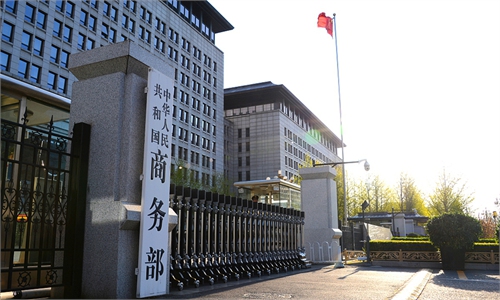
China on Friday called on the US to immediately stop its erroneous practice of taking discriminatory and restrictive measures against Chinese research institutions, saying that China would take necessary steps to safeguard the legitimate rights and interests of Chinese research institutions, according to the Ministry of Commerce.
The remarks came in response to a media query about research security mitigation results announced by the US Department of Defense on October 19. The announcement said the universities concerned had fully mitigated identified relationships with foreign entities of concern on the 1286 list, which includes many Chinese research institutions.
Such actions essentially coerce US research institutions into "taking sides" and deliberately undermine normal scientific cooperation between China and the US, the spokesperson noted, adding that such actions would only backfire on the US itself, undermining its own scientific and technological progress and innovation.
In August, the US Defense Department ordered 30 US universities to review their research, financial and academic ties with foreign entities of concern, including Chinese institutions and organizations linked to former Confucius Institutes, warning that failure to comply could jeopardize their eligibility for future federal research funding.
Such moves by the US are aimed at creating a "chilling effect," pressuring American universities, scholars and students to engage in political self-censorship when conducting exchanges with China. They will erode the foundation of trust underpinning people-to-people exchanges between the two countries. Ultimately, the US itself will also suffer, because a US that refuses to understand China will only sink deeper into cognitive isolation and strategic miscalculation, said Chen.
This also exposes the US' double standards in cultural exchanges and its cultural hegemonic mindset: When the US spreads its values around the world through films, media and education, it is seen as promoting "freedom"; yet when China introduces its language and culture through normal channels, it is smeared as engaging in "ideological infiltration," the expert noted.
For a country that prides itself on being a beacon of openness to fear even its own students' interest in learning Chinese and understanding foreign culture is ironic, Chen noted, and stands as a sharp rebuke to America's so-called "cultural confidence."
RELATED ARTICLES