China-Myanmar oil pipeline delivers over 100m tons, helping bolster energy security
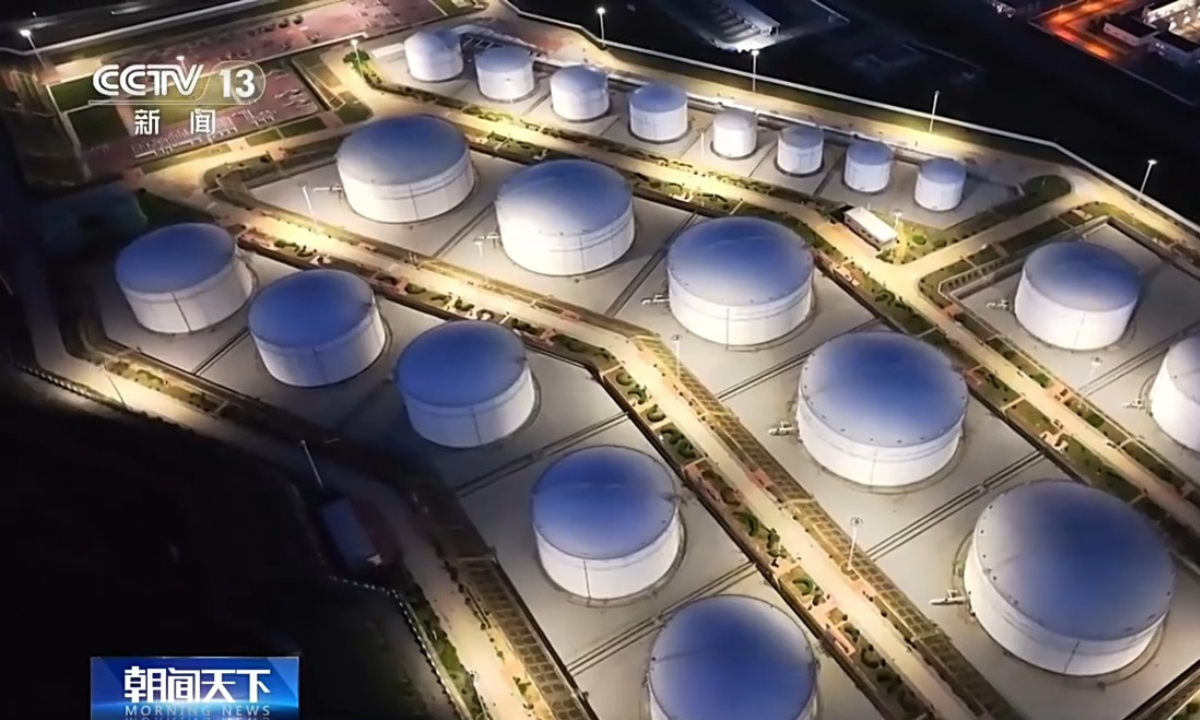
An aerial view of an oil storage facility featured in a CCTV News report on the China-Myanmar crude oil pipeline on October 26, 2026. Photo: Screenshot from CCTV News
The China-Myanmar crude oil pipeline has transported more than 100 million tons of oil since it began operations in 2017, reaching a milestone for a major energy import corridor that has strengthened energy supplies and improved energy distribution in Southwest China, according to China Oil & Gas Pipeline Network Corp (PipeChina).
The pipeline, China's fourth major energy import corridor, starts in Myanmar and enters China through Ruili in Southwest China's Yunnan Province. Its 618-kilometer domestic section extends to the Yunnan Petrochemical refinery in Anning, Yunnan. The pipeline began operations in June 2017.
Before the pipeline entered service, Yunnan relied heavily on long-distance overland shipments of refined oil products from China's eastern coastal regions, Cheng Yutao, deputy manager of the marketing department at PipeChina's Yunnan branch, told CCTV News.
Today, crude oil imported through the pipeline is refined locally at Yunnan Petrochemical, with refined products transported onward through the Southwest China refined oil pipeline, completing an integrated industrial chain covering oil imports, refining and outbound transportation of refined oil products, Cheng said.
To address operational challenges posed by Yunnan's mountainous terrain, the pipeline operator adopted intelligent management practices featuring unmanned operations, unattended stations and designated emergency response personnel. Five smart stations have been established, and the pipeline currently transports an average of 35,000 tons of crude oil per day.
The pipeline also offers China an alternative route for importing crude oil that bypasses the Strait of Malacca. On June 7, 2017, crude oil transported through the China-Myanmar pipeline reached Yunnan Petrochemical after 19 days of transportation within China, marking the successful commissioning of the pipeline's domestic section.
Compared with the route via the strait, it reduces the transportation distance by 1,820 nautical miles, helping lower transportation risks and costs, China Energy News reported.
The latest milestone comes amid China's efforts to expand oil and gas pipeline construction. More than 2,500 kilometers of new major oil and gas pipelines have been built nationwide this year, bringing the total length of the country's major pipeline network to 112,900 kilometers, covering 30 provincial-level regions and the Hong Kong Special Administrative Region.
Global Times
RELATED ARTICLES