India's baseless patrol accusations against Chinese military 'a tactical maneuver for domestic politics': expert
china india
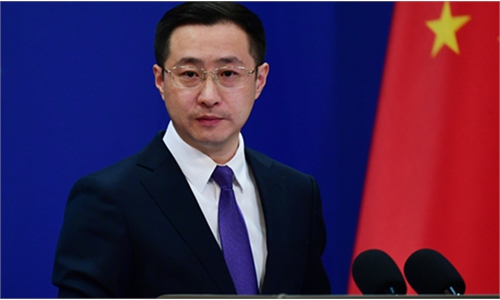
China strictly abides by the relevant agreements and common understandings reached between the two countries, and conducts normal border patrol and control activities to safeguard its territorial sovereignty and stability in the border areas, Chinese Foreign Ministry Spokesperson Guo Jiakun said at a regular press conference on Monday.
Guo made the remarks in response to India's accusations that Chinese military has disturbed the peace along the border. A spokesman from India's Ministry of External Affairs claimed that such disturbances occur when Chinese forces "diverge from established patterns."
Guo stressed that China and India maintain communication through diplomatic and military channels. We hope that India will work with China in the same direction by jointly implementing the common understandings reached between the two sides and maintaining peace and tranquility in the border areas with concrete actions, the spokesperson added.
The Chinese Foreign Ministry's response followed claims by Indian Ministry of External Affairs spokesperson Randhir Jaiswal, who said on Friday that the situation along the China-India border was disturbed from time to time "when Chinese forces diverge from established patrolling patterns," according to a report by Indian media outlet NDTV. Jaiswal also indicated that both sides continued to use existing diplomatic and military mechanisms to resolve outstanding issues and avoid misunderstanding and miscalculation along the Line of Actual Control (LAC).
Jaiswal's claims were preceded by remarks from Indian border police official Shatrujeet Kapur, who said on Thursday that face-offs between Indian and Chinese personnel had occurred at several locations along the border areas and were continuing, according to Indian media reports.
The Indian side's unsubstantiated public accusations represented a calculated tactical maneuver over patrol issues, partly reflecting domestic political considerations while leaving room for further discussions through existing diplomatic and military channels, Qian Feng, director of the Research Department at Tsinghua University's National Strategy Institute, told the Global Times.
To prevent border issues from disrupting the improving momentum in bilateral relations, India should abide by existing border management agreements and implement the consensus reached by the two leaders during their meeting in New Delhi, Qian noted. Both sides should continue to rely on established diplomatic and military communication mechanisms to manage differences, avoid misunderstandings that could affect broader bilateral ties.
On September 12, the leaders of China and India met on the sidelines of the 18th BRICS Summit in New Delhi, where they reached the important consensus that China and India should be partners, according to the Xinhua News Agency. The Chinese side urged both sides to pursue parallel progress in bilateral ties and border issues, with the two tracks reinforcing each other, so as to maintain peace and tranquility in border areas.
To prevent individual border disputes from affecting broader bilateral relations, Border issues should be addressed through established mechanisms, including talks between the special representatives from the two countries, rather than allowing isolated disputes to affect the overall relationship, Qian said. He noted that meanwhile, both sides should expand practical cooperation in less sensitive areas to offset the negative impact of differences and encourage a more rational public understanding of bilateral relations.
Stable China-India relations would help unlock the cooperation potential of the two major economies, reduce strategic pressures on both sides and contribute to peace and development in Asia, while strengthening cooperation among Global South countries, Qian said.
RELATED ARTICLES