BUSINESS / PRESS RELEASE
Beijing builds bridges for international scientific cooperation
From science city to global labs
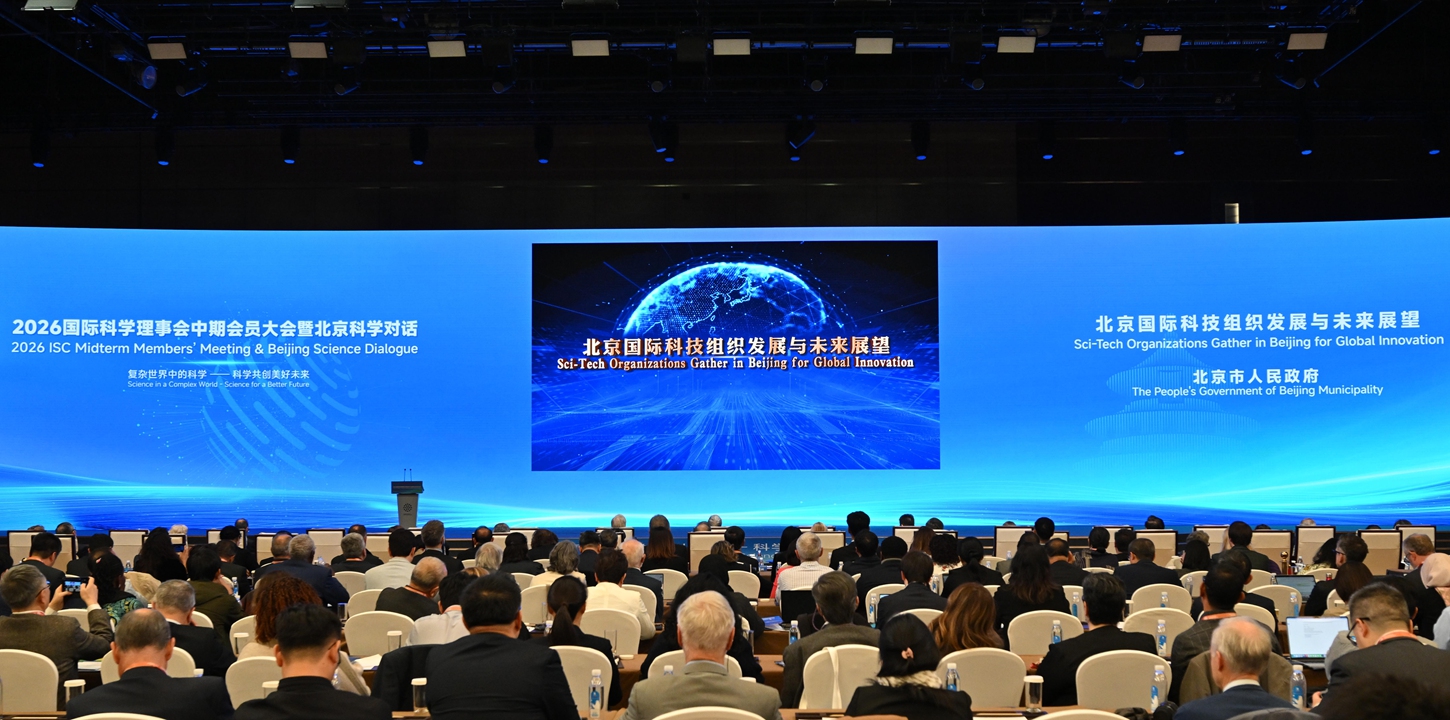
The 2026 ISC Midterm Members' Meeting and Beijing Science Dialogue is held in Beijing on October 19, 2026. Photo: Courtesy of Beijing Association for Science and Technology
"Science is one of the few unifying forces in an increasingly divided world," Robbert Dijkgraaf, president of the International Science Council (ISC), told the Global Times in a recent interview. He noted that scientific cooperation can build trust across national borders and political differences, and that such trust often takes decades to develop.As he put it, echoing a well-known observation on knowledge, "Knowledge is the only resource that grows through use and sharing."
This captures the significance of international scientific cooperation: By sharing knowledge and exchanging research findings, scientists from different countries and regions can work together to address complex problems.
Recently, more than 1,000 representatives from the scientific and technological community from 88 countries and regions gathered in Beijing for the 2026 ISC Midterm Members' Meeting and Beijing Science Dialogue. It was the first time the ISC Midterm Members' Meeting had been held in Beijing.
"Science knows no borders. Issues such as climate change, biodiversity conservation and ocean governance all require global cooperation," Dijkgraaf said. "Scientific cooperation can bring together talent and resources from around the world to achieve goals that individual countries would find difficult to accomplish on their own."
Connecting global research
For him, international scientific cooperation is about more than simply exchanging research findings. It enables scientists from different countries to tackle complex problems together and benefit from each other's knowledge and experience. For scientists, to ensure that such cooperation continues to deliver results, open exchange has to be accompanied by an environment conducive to scientific research itself.
Basic research is an essential part of that environment. Dijkgraaf stressed that scientists need the space and time to explore freely, as well as support for early-stage research ideas whose practical applications may not yet be apparent.
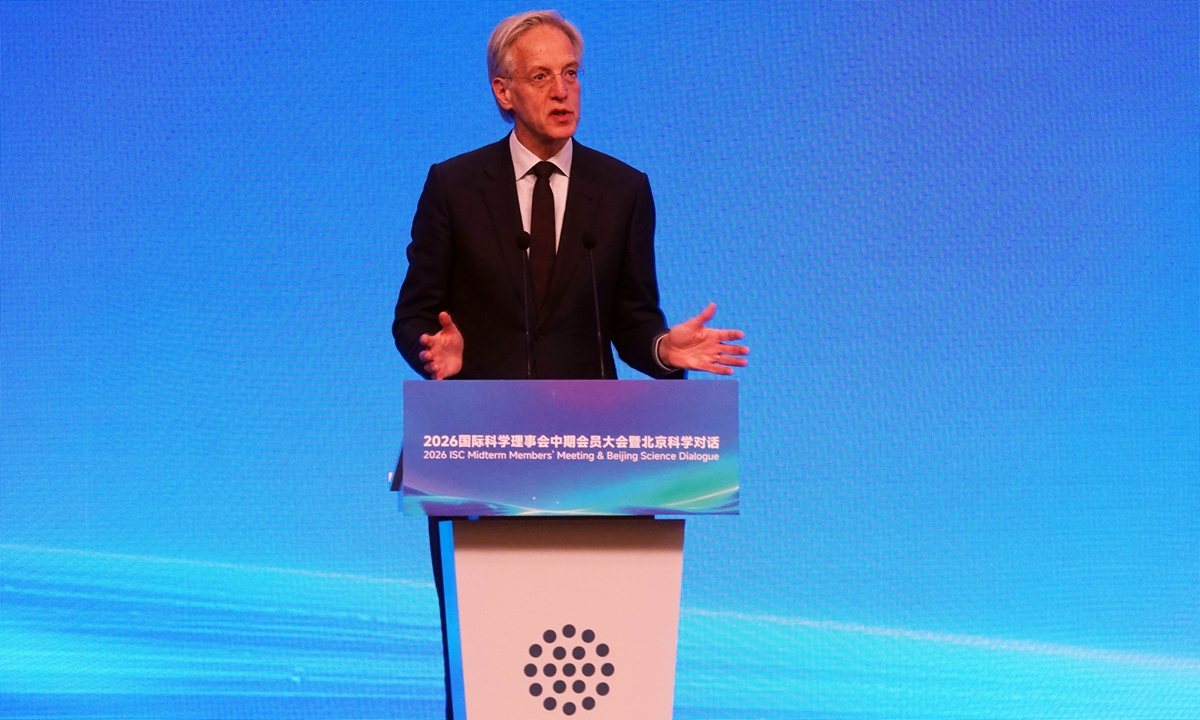
Robbert Dijkgraaf, president of the International Science Council, speaks at the 2026 ISC Midterm Members' Meeting and Beijing Science Dialogue. Photo: cnsphoto
This view echoes the China Fundamental Research Report (2026), released during the event. The report examines the development of basic research in 25 countries and regions. In addition to research outputs such as academic papers and patents, it considers research systems and long-term development.The report classifies basic research into three categories: strategy-oriented systematic research, exploratory frontier-oriented research, and applied market-oriented research. It outlines the characteristics and development needs of each type.
Zhang Pingwen, an academician of the Chinese Academy of Sciences and president of Wuhan University, said at the event that basic research requires long-term, stable investment, a more rational evaluation system and sustained efforts to nurture young researchers.
"From encouraging researchers to boldly explore to building a research system that accommodates different approaches, the development of basic research requires not only funding, but also an environment in which scientists can work with confidence over the long term," Zhang noted.
Supporting basic research and advancing scientific development also depend on exchanges and cooperation among researchers from different countries and regions. Opportunities for scientists to connect with other research teams, learn about research facilities and identify shared research interests are important to turning academic exchanges into deeper collaboration.
Connecting international exchanges with actual research resources is also a key part of Beijing's efforts to promote international scientific cooperation.
Science without borders
Li Xin, executive vice president of the Beijing Association for Science and Technology, told the Global Times that Beijing is home to 92 universities and more than 1,000 research institutions, bringing together a large number of researchers and innovation teams.
"For Beijing, hosting an international scientific conference is not just about bringing researchers from different countries together in the same venue. It is also about helping them learn about local research resources and explore opportunities for future cooperation," Li said.
According to Li, relevant parties plan to organize visits for participants to see Huairou Science City and major scientific facilities, allowing their international colleagues to see Beijing's research platforms and conditions firsthand.
Beyond introducing Beijing's research facilities to international scientists, establishing lasting channels for exchange and building connections among researchers are equally important. Beijing also hopes to expand its links with overseas research institutions and scientists through networks connecting international scientific organizations, Li said.
"Research facilities provide the conditions for scientific work, international organizations create channels for communication, and youth talent programs help develop researchers who can continue to participate in international scientific exchanges," she said. "Together, these initiatives form a practical approach to promoting international scientific cooperation in Beijing."
As international scientific cooperation continues to expand, the rise of artificial intelligence (AI) is bringing new questions to the fore.
The Beijing Science Declaration, themed "Science in a Complex World - Science for a Better Future," was released during the event. The declaration calls for an open, inclusive and cooperative global science system and emphasizes the responsible use of AI to address global challenges and the importance of strengthening trust between science and society.
The declaration's call for greater openness and trust highlights a broader point: Scientific progress depends not only on the accumulation of knowledge, but also on researchers' ability to share discoveries, exchange ideas and work together to address common challenges. Through such collaboration, scientific advances can have an impact far beyond national borders.
RELATED ARTICLES